San Luis is moving forward with repaving José Santos Ortiz Avenue, the former alignment of National Route 7 that functions as an urban highway between the capital and Juana Koslay. The project covers twelve kilometers from the Rosendo Hernández racetrack to the Los Puquios roundabout and targets a strategic commuter and regional corridor.
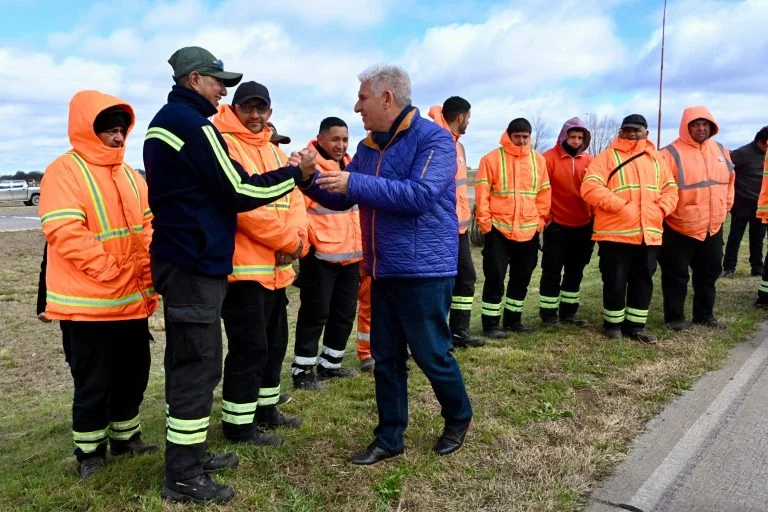
Claudio Poggi said the project is 17%–18% complete and that some sections are already reopening. The province is investing 12 billion pesos. The contract ends March 31, 2027, but authorities expect the road to be operational by late February if no unexpected problems arise, in time for the school year.
The work goes beyond a new asphalt layer. It includes shoulders, horizontal and vertical markings and reinforcement of lighting structures. Those components are essential for safety. Drainage, side access, crossings and conditions for motorcycles, pedestrians and public transport should also be verified.
An agreement with the federal government allowed San Luis to intervene and finance a road still under national jurisdiction. Poggi said it will later be transferred to the province. The transfer must specify ownership, maintenance, responsibilities and funding because an urban highway carries permanent costs.
The corridor serves expanding urban areas and heavy traffic. Its deterioration increased travel times, vehicle wear and crash risk. Repaving can improve connectivity but may also increase speed and volume, requiring enforcement, safer roundabouts and metropolitan transport planning.
Finishing before classes begin has social and economic value by reducing diversions for students, workers and suppliers. Speed, however, should not reduce quality controls. Pavement resistance, thickness, compaction and technical acceptance will determine whether the investment lasts.
Because the source is the provincial government, independent monitoring matters. Authorities should publish certificates, contractors, changes, physical and financial progress and test results. The 12-billion-peso budget should be compared with quantities and unit prices.
The next step is completing pending sections and formalizing the transfer. Opening should include an annual maintenance plan, traffic and crash measurements and municipal coordination. The work will matter if it becomes part of a safe and sustainable metropolitan mobility policy.