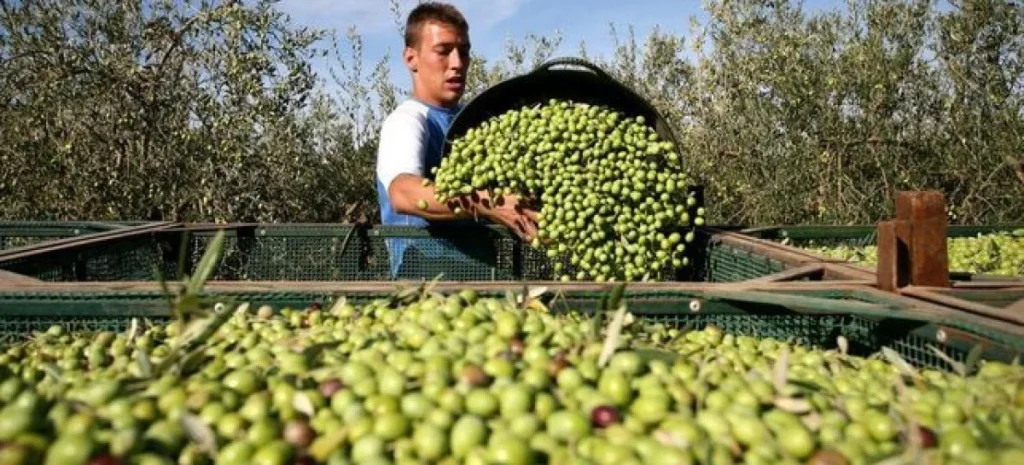
The 2026 olive harvest in La Rioja was assessed as good, although not as a record. The province maintains national olive leadership and concentrates activity in the Capital, Arauco, Chilecito, and Castro Barros. In favorable campaigns, sector references place the combined volume between 60 and 70 million kilos intended for table use and oil production.
For table olives, backgrounds of between 30 and 35 million kilos were mentioned, while the olive oil industry can process between 50 and 60 million in different cycles. The figures are indicative ranges and should not be automatically added because they correspond to references from different campaigns and destinations. The balance of 2026 was characterized by its good level, without confirming a historical maximum.
The Arauco variety, originating in Aimogasta, retains a distinctive value. It is dual-purpose and was noted as the only Argentine variety recognized by the Consejo Oleícola Internacional. The chain promotes a designation of origin to strengthen that territorial identity, differentiate the product, and link its quality to the area where it is developed.
The agreed price for the harvesting task was 5.200 pesos per crate, including a non-remunerative bonus. For the producer, values of between 800 and 850 pesos per kilo were mentioned, around USD 0,70 depending on variety and commercial conditions. The labor negotiation had remained stalled since October of 2025 and reached an agreement on 3 of February of 2026.
Brasil, the main market for the Riojan product, went through a contraction that affected export demand. At the same time, water availability and irrigation efficiency remained among the structural challenges of the activity. These constraints limit competitiveness even when the harvested volume is satisfactory and the province retains consolidated productive capacities.
The campaign mobilized between 2.000 and 3.500 migrant workers, below the approximately 7.000 registered in other years according to local union references. The olive complex generates around USD 80 million annually in foreign currency, but that figure describes the scale of the chain, not the exact result of 2026. The harvest was positive and, at the same time, faced commercial, water, and labor limitations.