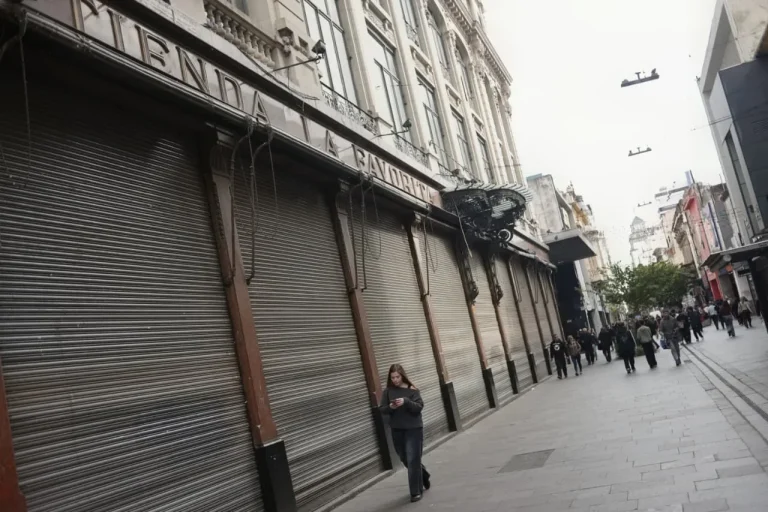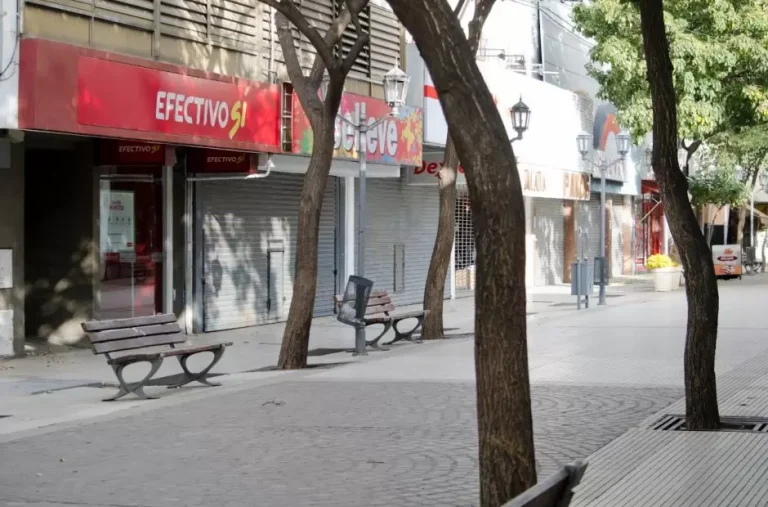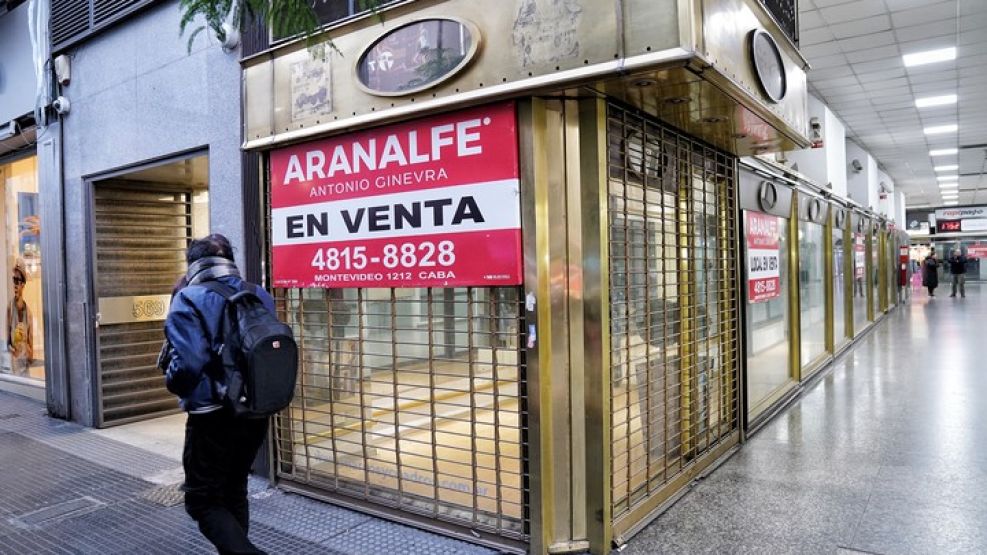
La Ciudad de Buenos Aires recorded 291 premises without activity, for rent or for sale during the May-June two-month period of 2026. The survey by Cámara Argentina de Comercio y Servicios detected an increase of 22,3% compared to the same period of 2025 and of 5,1% compared to March-April. The category includes different real estate situations, so the total does not represent 291 closures that occurred in those two months.
The real estate offer showed especially intense movements. Rental properties grew 8,6% compared to the previous two-month period and 129,5% in the year-on-year comparison. Those offered for sale increased 76,9% against March-April and 4,5% compared to May-June of 2025. These variations indicate greater commercial availability, although they do not allow identifying by themselves the date or cause of each vacancy.
The deterioration was also not uniform among corridors. On Cabildo Avenue, vacant storefronts went from 18 to 36 in one year. On Santa Fe Avenue, they increased from 35 to 68. Pueyrredón, Rivadavia, and Cabildo also worsened compared to the previous two-month period, while Avellaneda Avenue showed no changes. The territorial concentration shows that the city's average hides very different routes.
Florida and Córdoba Avenue offered the partial flip side: the number of vacant premises fell by 36% and 32,1%, respectively, compared to March-April. However, both areas remained above the levels observed a year earlier. There were also sections of Santa Fe and Corrientes with bi-monthly improvements. The specific reduction in vacancy, therefore, did not reverse the negative year-on-year balance of the whole.
The increase coincided with a still weak mass consumption. In May, the cited measurement recorded a year-on-year decrease of 1,6%, an accumulated contraction of 3% during the first five months, and barely a monthly improvement of 0,1%. In La Plata, included as a comparison, 18 localities without activity were recorded, and there were no year-on-year or bimonthly variations in the observed areas.
The next measurement should show whether the increase in Buenos Aires was transitory or if a more extensive vacancy is consolidating. To evaluate that result, it will be necessary to separate closures, relocations, properties for sale, and new effective rentals. The current data confirms pressure on commercial avenues, but it also requires avoiding a linear reading: some areas worsen rapidly, others partially correct, and no isolated variation describes the entire City.