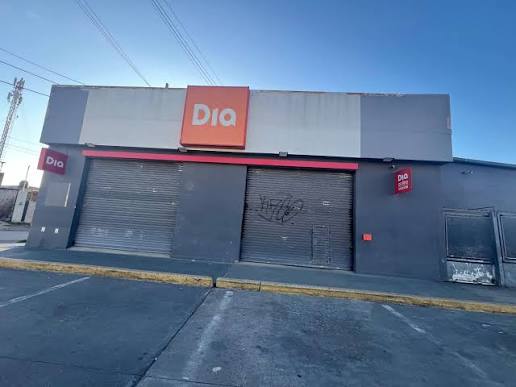
In Flores, the garbage problem begins before the truck passes. In the commercial corridor of Avenida Avellaneda and Felipe Vallese, many wholesale stores open early and close between 4 p.m. and 6 p.m. When they lower their shutters, the official time for putting out waste has not yet begun. If they leave bags or cardboard at the end of the workday, they face fines and closures; if they wait until 7 p.m., they must keep staff on site or return to a business that has already finished its activity.
The Buenos Aires City rule establishes that waste must be placed inside containers between 7 p.m. and 9 p.m., every day except Saturdays. The criterion seeks to reduce the time garbage remains on the street and coordinate its disposal with nighttime collection. The conflict appears when that uniform scheme is applied to areas whose commercial activity ends several hours earlier.
Merchants from the Chinese and Korean communities say the penalties can exceed one million pesos and that some businesses remain closed for more than a week until reopening procedures are completed. It is not a rule written specifically against those communities, but their working hours make the impact especially burdensome. A regulation that is the same for everyone can produce unequal effects when it ignores how each activity functions.
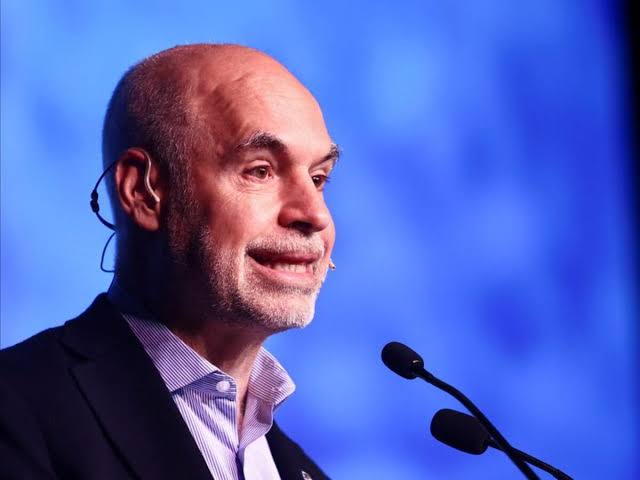
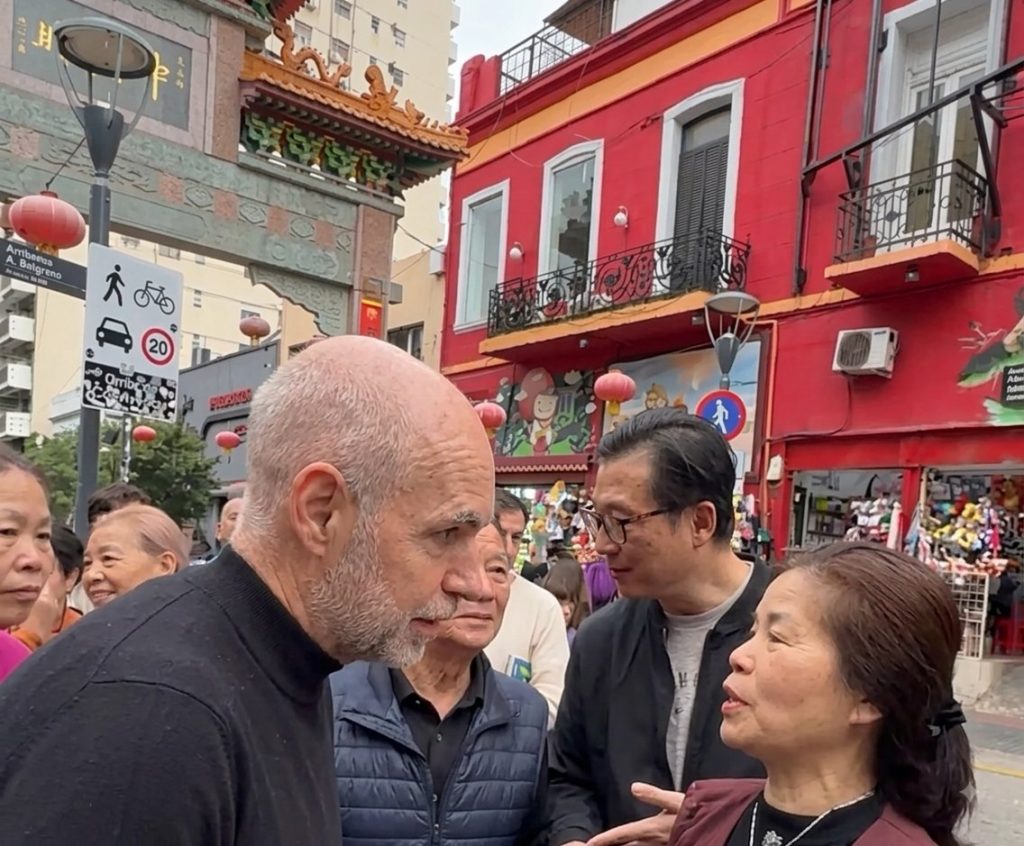
Horacio Rodríguez Larreta picked up that complaint and questioned the use of closure as the first response. “Putting out garbage or removing waste is a service. You cannot close down merchants who should be beneficiaries of the service,” he said before Chinese and Korean merchants. After hearing the amounts of the fines and the days without being able to open, he was more direct: “That is an aberration.”
The argument does not mean denying the need to clean and organize the City. The city government maintains that inspections seek to prevent bags from remaining on sidewalks for hours and that businesses can regularize their situation. However, enforcement intensified in recent months and reached clothing stores, supermarkets, pharmacies, restaurants and even movie theaters. Affected business owners also warn that between the preventive closure, the intervention of the misdemeanor controller and the reopening, several days of revenue can be lost.
The discussion comes at a particularly delicate moment. SME retail sales fell 3.8% year-on-year in July and accumulated a 2.7% decline during the first seven months of 2026. On Avenida Avellaneda, merchants had already been pointing to a combination of lower consumption, high rents, empty stores and fewer buyers from the interior. In that context, a week with the shutter down is not a minor administrative sanction: it can decide the continuity of a business.
The second demand is the return of the buses that brought wholesale buyers from other provinces. The restriction on their entry reduced the movement of people and merchandise, although their circulation without rules had also created problems of traffic, parking and coexistence with neighbors. “Banning buses in Flores is destroying textile businesses. Order has to be created, but while protecting the work of Buenos Aires City residents and understanding the ties of interdependence with other economies outside the City,” Larreta said.
In this case, the former head of government accompanied the criticism with a concrete proposal. On July 31, together with other legislators, he presented a bill to regulate the entry and operation of buses in the Avellaneda area. The initiative, currently in committee, provides for designated boarding and drop-off areas, waiting lots outside the corridor, digital time slots and a maximum stay of thirty minutes. The system would operate on business days between 5 a.m. and 4 p.m., in order to recover buyers from the interior without returning to the disorderly parking of large vehicles.
The bill's grounds describe the corridor as an ecosystem of more than 7,000 businesses spread across about 80 blocks and state that the arrival of buyers from other provinces was one of its engines for decades. They also acknowledge the other side of the problem: the streets are not prepared to host buses without regulation, and it is necessary to protect pedestrian circulation, loading and unloading zones and residents' daily life. The alternative, therefore, is not to choose between chaos and prohibition, but to build a system that allows work without blocking the neighborhood.
The intervention also has a political reading. Jorge Macri made order and enforcement central axes of his administration, while Patricia Bullrich promoted from the national government a conception of migration policy linked to security and the control of transnational threats. That does not by itself prove a deliberate persecution of Chinese or Korean merchants —the city government itself has publicly recognized the contribution of the Korean community—, but it does open a discussion about the effects of governing economic and urban problems exclusively from a punitive logic.
Larreta seeks to place himself in another register: defending order without turning every breach into a show of force, and recognizing that behind the shutters there are families, employees and commercial networks that connect Buenos Aires with the rest of the country. “You cannot take reprisals against communities that have lived in the City for years, generating employment and economic growth,” he said.
The challenge is less ideological than practical. A reasonable administration should be able to keep the streets clean, organize the buses and apply rules without destroying the little activity that still remains standing. In Flores, where it is increasingly difficult to sell and keep a store open, the effectiveness of the State is not measured by the number of closure seals, but by its ability to solve problems without turning off work.