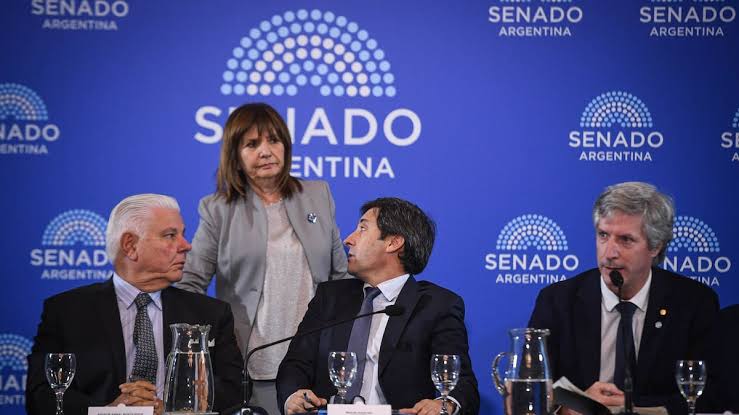
Uncertainty over the committee report on the Central Bank charter reform was resolved at the joint meeting of the Finance and Budget committees. The text received 44 signatures among 69 deputies present and accepted the changes introduced by the Senate. With that decision, the ruling coalition abandoned its effort to restore the lower house's original wording and left the bill ready for final consideration.
The central difference concerns the appointment and removal of monetary authorities. The version first approved by Deputies required a two-thirds majority in both chambers to remove the president, vice president or directors of the Central Bank, a lock intended to make changes difficult after a future political turnover. The Senate replaced that system with exclusive upper-house authority and an absolute majority for both appointment and removal.
The revised version also establishes six-year terms for board members. The executive will retain the power to nominate officials, but every appointment must win an absolute Senate majority. Any removal initiated by the President would require the same approval. The mechanism seeks to balance institutional stability and political control, although it removes the lower house from the composition of the institution.
The debate over leadership is only one part of a much broader reform. The bill redefines the Central Bank's primary mission as preserving the value of the currency and eliminates the multiple-objective approach introduced in 2012. It follows Javier Milei's monetary interpretation of inflation: the institution should not use issuance or directed credit regulation to pursue productive, social or sectoral goals.
The articles ban temporary advances to the Treasury, loans to the federal government, provinces, Buenos Aires City and municipalities, the use of non-transferable notes and the purchase of public securities in the primary market. They also prevent accounting profits from being converted into transfers to the Treasury and remove powers to direct credit toward selected activities. The official aim is to stop future governments from using the Central Bank as direct financing.
The legislative history explains why the ruling coalition accepted the Senate text. Deputies initially approved the bill by 144 votes to 102, with nine abstentions. The Senate later passed its version by 46 votes to 22, a two-thirds majority that would be difficult to overturn. To insist on the earlier wording, the lower house needed an enhanced majority it had not reached in August.
Political disagreement continues despite the committee report. La Libertad Avanza argues that a single mandate and the ban on Treasury financing protect workers and savers from inflation. Unión por la Patria welcomes the Senate's softer removal mechanism but rejects separating monetary policy from employment, production and welfare objectives. Other blocs support independence while demanding a more federal board.
The next step is debate on the floor. Deputies must finally accept the revised version for the reform to become law. The dispute is not limited to Central Bank autonomy: it defines which tools the state retains to confront crises, finance itself and direct credit. The committee report resolved parliamentary engineering, but the reform's economic and institutional reach remains at the center of confrontation.