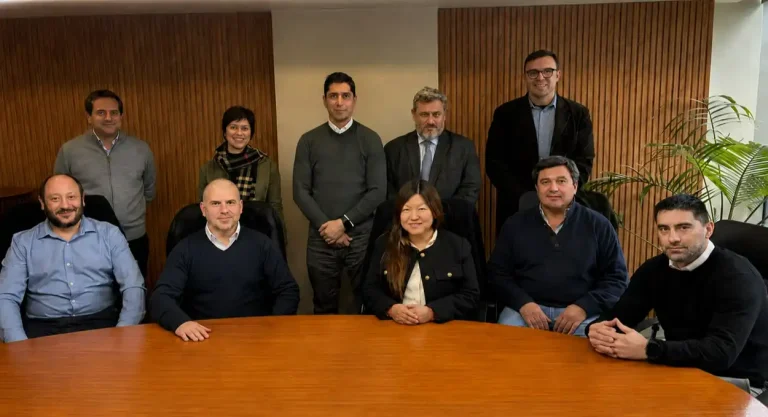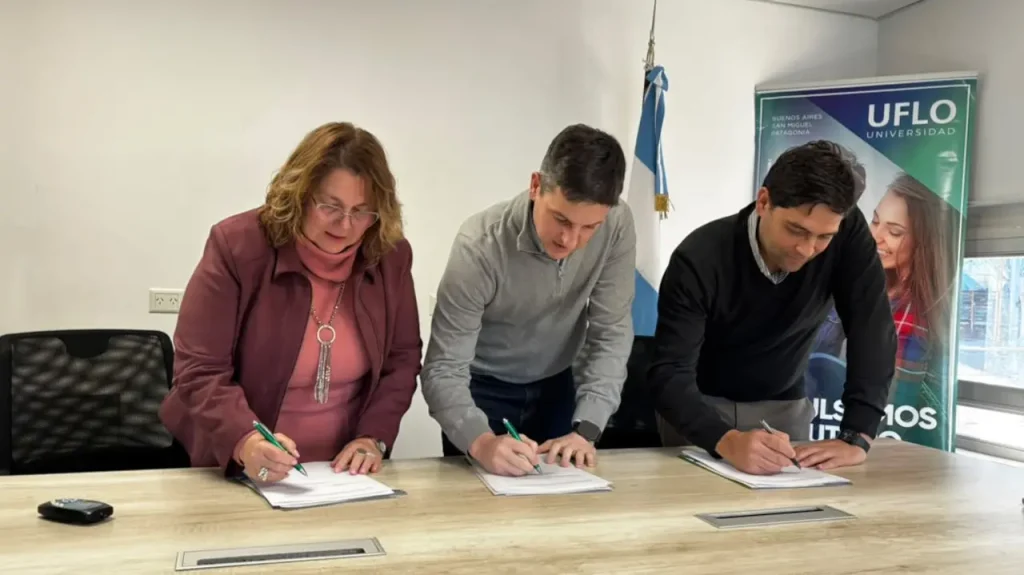
The Secretaría de Minería de Río Negro will incorporate a diploma in artificial intelligence for its teams through an agreement with the Provincial Institute of Public Administration and the Universidad de Flores. The minutes were signed in Cipolletti and the training would begin the following week. The initiative aims to apply technological tools to the daily work of the organization.
The program aims to strengthen technical capacities and modernize administrative processes. The planned applications include task planning, document preparation, information organization, and procedure optimization. It is a training project for mining public management, not an already deployed automated system to authorize projects, supervise operations, or replace officials' decisions.
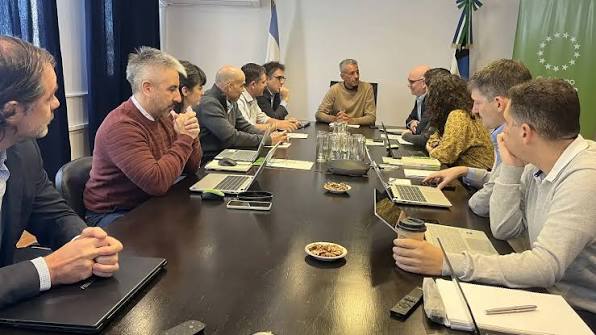
Juana Benítez, president of IPAP, Christian Kreber, general vice-rector of UFLO, and Joaquín Aberastain Oro, Secretary of Mining, signed the agreement. Benítez pointed out that the administration needs to learn to work with artificial intelligence to improve the tasks of its teams and responses to the public in a context of productive transformation.
The diploma program will have a mixed modality, with synchronous sessions and asynchronous activities on the IPAP platform. The Universidad de Flores will assume academic responsibility, teaching coordination, and university support. The IPAP will manage the platform, registrations, and follow-up, while the Ministry of Mining will be the promoting and funding body. Certificates will be issued jointly.
The proposal continues a previous experience of training public agents and now introduces a specific path for Mining. Its declared objectives include efficiency, closeness, and transparency. These goals express the purpose of the program, but the note does not provide the number of participants, budget, duration, performance indicators, or protocols on data protection and human review. It also does not list specific technological tools that will be used during the course.
The next step will be the actual start of the course and the application of the learning to concrete situations. Later, it will be possible to evaluate whether the training reduces time, improves documents, or strengthens decisions. Until that evidence is available, the news is institutional and educational: Río Negro prepares its teams to use artificial intelligence, but does not report operational results already obtained by the tool. The training opens a possible capability, not an already demonstrated administrative transformation.