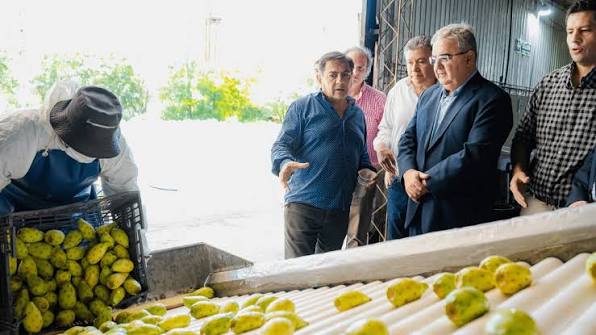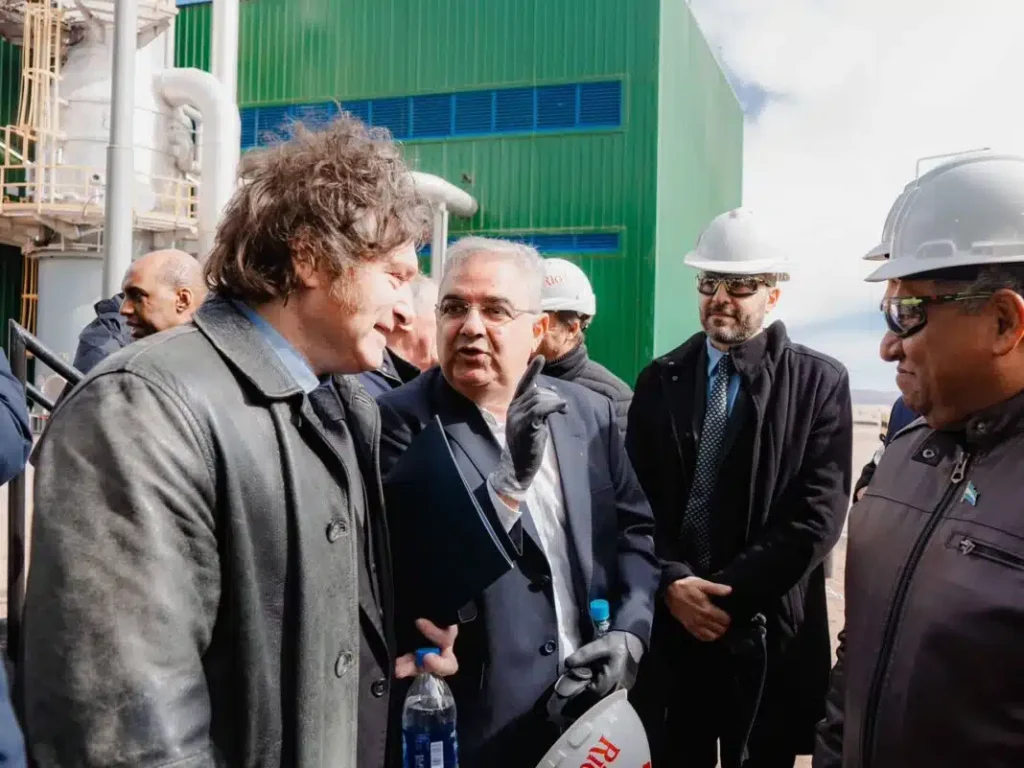
The opening of the Fénix 1B expansion and the Sal de Vida operation at the Hombre Muerto salt flat turned Catamarca into the stage for a joint defense of the Large Investment Incentive Regime. Javier Milei and Raúl Jalil presented Rio Tinto's new facilities as evidence that fiscal, customs and exchange-rate stability accelerates mining projects. The two operations represent about US$1 billion and add roughly 25,000 tons of lithium carbonate a year.
Both plants began producing during the second quarter of 2026, ahead of schedule. The federal government uses that advance to defend a framework offering long-term guarantees to investors. Milei argued that a fiscal cost cannot be assigned to an investment that, in his view, would not have existed without the regime. Critics challenge that premise and demand comparison between benefits granted, future revenue and alternative industrial policies.
Figures presented at the ceremony seek to show national scale. The executive reported 29 approved RIGI projects worth nearly US$80 billion, including thirteen mining projects totaling about US$28 billion. Catamarca has five approved projects and, together with San Juan, accounts for ten initiatives worth almost US$23 billion. Official data link them to more than 19,000 jobs in the province, a figure requiring monitoring of direct, indirect and temporary employment.
Supplier participation was presented as another measure of spillover. Fénix 1B awarded US$310 million in contracts to Argentine companies, of which US$153 million went to Catamarca firms. That volume shows local participation but also raises questions: how much technology those contracts contain, what share reaches small and medium-sized companies and whether the chain can survive after the construction-intensive stage ends.
Milei listed mining-related works in Antofagasta de la Sierra: a hospital, two wastewater plants, improvements to Provincial Route 43, a health center in El Peñón and electrification for about fifty families in Ciénaga Redonda. Jalil said the RIGI allows growth through local resources and finances roads, tourism and services. The territorial test is whether those works are completed, operate properly and match the use of water, energy and infrastructure.
The event also had a political dimension. Milei praised governors who joined the regime and criticized Ricardo Quintela for keeping La Rioja outside it. Jalil, a Peronist governor, defended the RIGI as state policy and thanked lawmakers from different parties. The convergence shows how mining can create cross-party alliances while deepening differences among neighboring provinces adopting different tax and regulatory strategies.
Reform of the Glaciers Law appeared as part of the same model. The President said provinces need greater power over natural resources and that environmental protection and development are compatible. That claim must translate into reliable inventories, cumulative impact assessment, water monitoring and public information. In the high Andes, social acceptance depends not only on announced investment but on the state's ability to measure impacts and demand corrections.
The next assessment must go beyond the ceremony. Real production, exports, stable jobs, local purchases, royalties, tax revenue and completed infrastructure must be tracked alongside environmental indicators. Fénix 1B and Sal de Vida increase capacity and strengthen Catamarca's place on the lithium map; the model's success will be defined by how much of that growth becomes verifiable territorial development rather than only extracted volume.