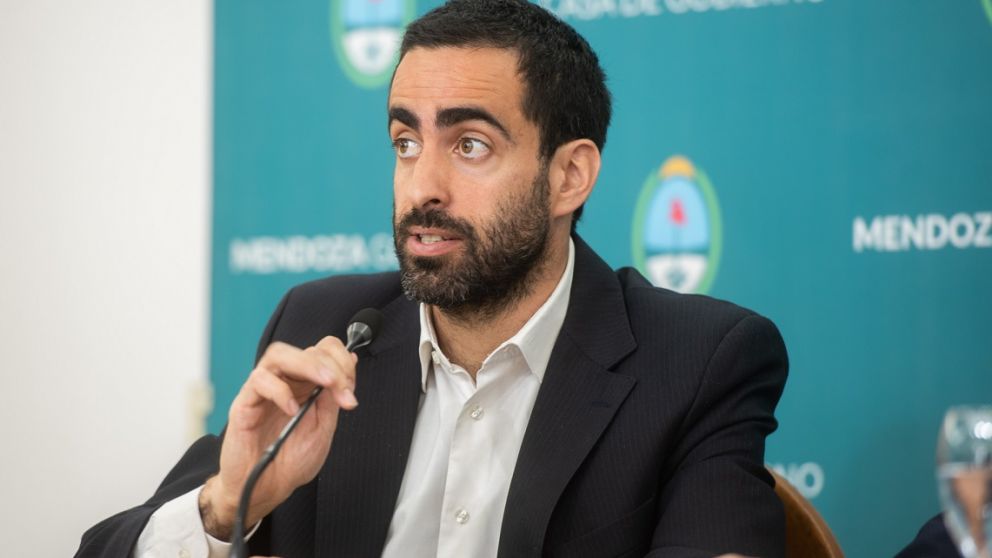
The Minister of Finance of Mendoza, Víctor Fayad, confirmed that the Province will continue to claim funds from the national Government even after the agreement that recognizes liabilities of ARS 121.282 million. The official presented the scope of the understanding during its discussion in the Legislature and stated that there are still obligations related to works carried out or financed by the Mendoza administration. The negotiation, therefore, does not constitute a full settlement of the differences between the two jurisdictions.
Within the recognized amount, Fayad indicated that National Roads Directorate admitted ARS 80.000 million related to investments in national routes 40 and 143. Mendoza would have allocated around ARS 17.000 million of its own resources to works that originally had national commitments. The agreement would allow recovering a significant part of that effort, although the communicated figures do not by themselves explain the update mechanism, the payment deadlines, or the final budgetary destination of each credit.
The minister stated that provincial works did not stop despite the withdrawal or delay of national funding. That statement is part of the political defense of the agreement and should be compared with the certifications, schedules, and execution statuses of each intervention. Recognizing a debt does not necessarily equate to an immediate disbursement: the fiscal effect will depend on the planned form of payment, legislative approval, and subsequent fulfillment of the assumed obligations. It is also important to know whether the agreement uses cash, offsets, securities, or other assets, because each method has different timings and risks for provincial accounts.
Fayad also clarified that the agreement does not modify the Mendoza project to collect tolls on the intervened corridors. The scheme would reach Ruta Nacional 40, especially Acceso Sur, and Ruta Nacional 143 between San Carlos and San Rafael. The Government maintains that this collection will generate a specific source to maintain the infrastructure once the works are completed. Rates, categories, exemptions, collection points, operating costs, and control mechanisms still need to be determined.
The continuation of the toll opens a debate different from the recognition of claims. If the Nation reimburses previous expenses and the Province charges for future use, the authorities will have to explain which component finances each instrument and avoid an unjustified overlap. It will also be necessary to establish the legal framework to intervene and set tariffs on national routes, the distribution of maintenance responsibilities, and the treatment of frequent users, productive transport, and residents of the affected areas.
Among the claims that were left out of the agreement, Fayad mentioned water, sanitation, and irrigation works paid with resources from Mendoza despite federal commitments. He did not report a consolidated amount for these cases or a resolution schedule. The strategy will be to negotiate them in stages and seek new agreements. This procedure can facilitate partial agreements, but it requires maintaining a public record that allows knowing the capital, updates, supporting documentation, and status of each process.
The understanding for ARS 121.282 million is an administrative and political advance for Mendoza, not the closure of the financial relationship with Nación. The Province maintains pending claims and upholds its own policy of cost recovery through tolls. The full evaluation will depend on the wording of the agreement, its execution, and the tariff design. Until these elements are public, it is appropriate to differentiate recognized amounts, payments actually received, and future resources projected to be collected from users. The Legislature has the opportunity to demand annexes, schedules, and accountability criteria before authorizing an agreement that commits infrastructure and long-term fiscal relationships. That information will also be necessary for carriers and residents to assess the future cost of commuting. Oversight must continue after legislative approval.