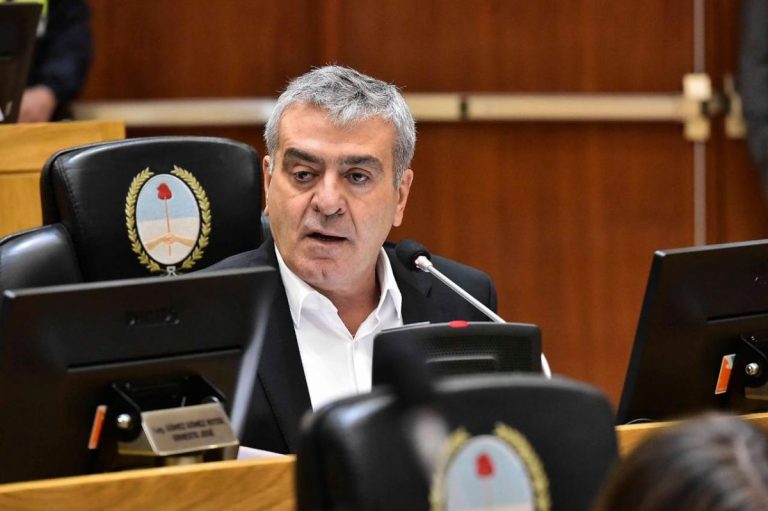
The Buenos Aires City Legislature closed a months-long institutional negotiation and, in the same session, approved mandatory Comprehensive Digital Education. PRO secured 51 affirmative votes and two abstentions to appoint Paola Michielotto as president of the Public Services Regulatory Agency. The four board seats passed with 50 votes and three abstentions.
The board reflects a political and institutional distribution. Peronism obtained two seats through Eugenio Begué and Silvina Fazio; José Pafundi represents consumer associations; and libertarians retained participation after an internal dispute forced Pilar Ramírez to withdraw a nominee. The episode showed Jorge Macri's minority government can build majorities through broader agreements.
The regulator oversees public services and is supposed to act independently from both the executive and providers. Michielotto proposed moving from reactive to predictive oversight through data, geolocation and artificial intelligence. That promise requires public rules on data use, privacy and performance indicators.
The agreement cannot be judged only by vote totals. A plural board can improve oversight if members act autonomously, publish decisions and disclose conflicts of interest. If seats become party quotas, the institution risks reproducing the bargain that created it and weakening enforcement.
The second major decision was approval of the Comprehensive Digital Education Law by 43 votes, with no opposition and 13 abstentions. It introduces mandatory content on digital citizenship, artificial intelligence, social networks, privacy, personal data and online violence in public and private compulsory education.
The law provides for accessible multimedia materials, family workshops, pedagogical facilitators and criteria for AI use. A central principle says AI cannot replace teachers in knowledge construction. Periodic surveys of students' technology habits are also expected to guide prevention and curriculum.
Implementation will be harder than passage. Schools need connectivity, devices, maintenance, teacher training and institutional time. Digital literacy must include critical thinking, fact-checking, security, platform design, the attention economy and the rights of children and adolescents.
The next step is twofold: the new board must prove independence and results, while the Education Ministry must regulate the law with funding, curricula and evaluation. The session's legitimacy will depend on appointments becoming genuine oversight and digital education reaching every school.