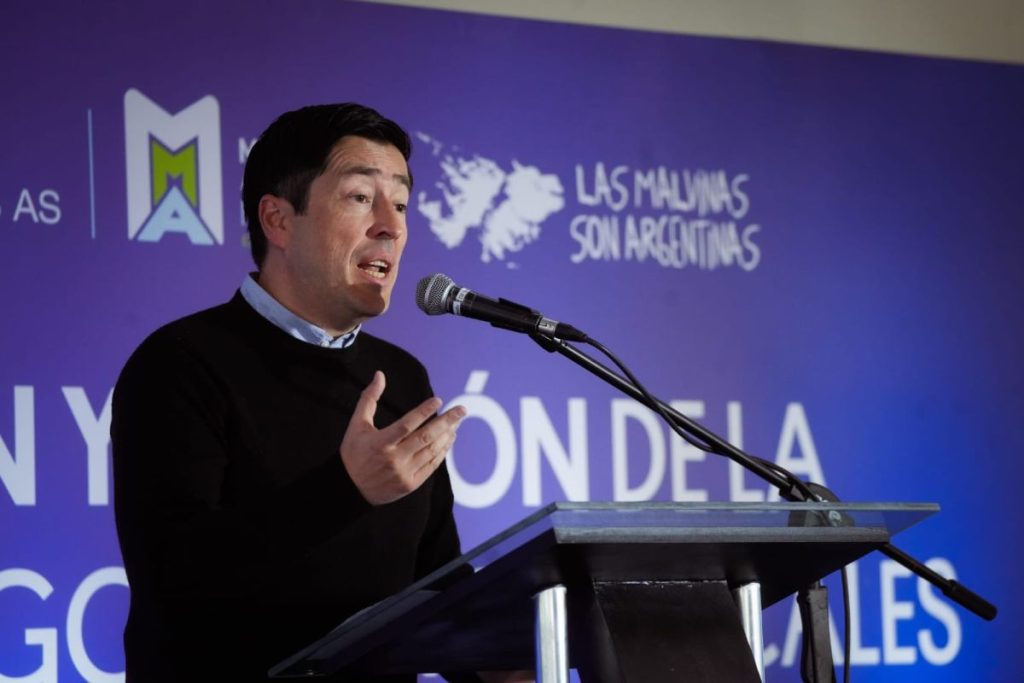
Leo Nardini moved to the top of CB Global Data's Greater Buenos Aires mayoral ranking and turned a local approval figure into a political signal for 2027. The mayor of Malvinas Argentinas reached 61.2% positive image, 36.4% negative and a favorable net score of 24.8 points. He also improved 5.5 points from October and displaced Fernando Gray from first place.
The survey was conducted from November 1 to 3 among 14,842 adults in 24 municipalities. It used online questionnaires and reported a district-level margin of error of 3% to 4%. The sample is useful for comparing local reputation, but it does not replace a province-wide electoral poll or automatically predict behavior beyond the metropolitan area.
Competition at the top was close. Ariel Sujarchuk of Escobar ranked second with a 24.5-point net rating, Federico Otermín of Lomas de Zamora followed with 22.8, and Fernando Gray of Esteban Echeverría recorded 22.5. Jaime Méndez, Federico Achával, Soledad Martínez and Juan José Fabiani also performed well, showing that municipal approval cuts across party lines.
Nardini wants to turn a decade in Malvinas Argentinas into a credential for the succession of Axel Kicillof. His team highlights paving, public-space recovery, expanded services and public-private projects such as Paseo de la Laguna. It also points to the district's industrial base, where the local government says more than 700 companies operate.
Moving to the provincial level requires more than strong local approval. Governing Buenos Aires means coordinating 135 municipalities and managing education, health, security, infrastructure and debt. A mayor can demonstrate proximity and execution in one district, but must prove that the model works across regions with very different fiscal and social structures.
The ranking is not a voting-intention poll. It orders mayors by the difference between positive and negative image and does not ask who should become governor. A provincial race also depends on name recognition, party identity, alliances, evaluation of the provincial government and national political figures.
The lower end of the study also warns about municipal erosion. Gustavo Menéndez, Julián Álvarez and Lucas Ghi have the most negative balances, while Ramón Lanús improves from October but remains below zero. Monthly movement shows that the ranking is sensitive to services, conflict, media exposure and local events.
Nardini's next step is to convert recognition into a provincial organization and program. He needs mayors, interior leaders, technical teams and a narrative that goes beyond Malvinas Argentinas. First place gives him greater weight in the 2027 discussion, but the real test is whether local management becomes a broad, financeable and competitive provincial proposal.