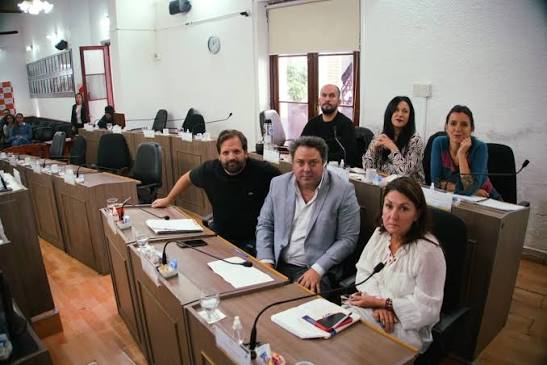
The pro-government bloc of Mayor Gastón Hissa rejected in the Deliberative Council of the city of San Luis a project for the Municipality to participate institutionally in the debate on the constitutional reform promoted by Governor Claudio Poggi. The initiative had been presented by the Justicialist Party and sought for the capital to demand a formal stage of intervention before the text completed its legislative process. The rejection aligned the municipal government with the provincial leadership.
The opposition based the request on the fact that the reform addresses issues related to municipal autonomy and modifies rules that affect mayors and councilors. It also proposed expanding the debate to municipal commissioners, other deliberative councils, universities, unions, civil organizations, and professional associations. The aim was to open a broader institutional discussion, not to approve or reject the complete content of the reform from the Council. Hissa's bloc prevented that proposal from moving forward.
Councilor Andrés Russo held Hissa and Poggi responsible for the outcome and stated that the ruling party does not want to listen to the institutions. He also argued that behind the reform there would be the purpose of enabling a new re-election of the governor. That accusation belongs to the opposition and does not constitute a legal conclusion about the text. The provincial executive presents the initiative as an institutional modernization. The controversy requires examining articles, transitional provisions, and concrete effects on mandates.
The reform has already obtained preliminary approval in the Senate provincial and must continue in the Chamber of Deputies. Therefore, it is not yet definitively sanctioned. The municipal debate did not directly modify that procedure, but it could produce a formal position of the capital and request participation. The decision of the Council closed that specific institutional route. It does not prevent councilors, mayors, or organizations from intervening through other political, public, or legislative channels during the remaining process.
Municipal autonomy is the core that makes the episode relevant beyond partisan confrontation. A constitutional reform can alter the duration and synchronization of terms, powers, and relationships between the Province and municipalities. If these changes affect local governments, the quality of the process depends on the available information and the possibility for the affected institutions to make observations. Rejection does not by itself demonstrate that the reform reduces autonomy, but it limits a concrete proposal to discuss its consequences from the capital.
Hissa was politically aligned with Poggi on an issue that could define future rules of provincial and municipal power. That alignment can organize the ruling party, although it also allows the opposition to present the reform as a concentrated decision. To evaluate that criticism, it will be necessary to observe the treatment in the Chamber of Deputies, the hearings or consultations that are enabled, the majorities required, and the final text. The controversy over participation is different from the constitutional validity that the sanctioned reform may eventually have.
The immediate result was the rejection of a municipal project, not the approval of the constitutional reform nor the authorization of a re-election. The provincial initiative continues its legislative course, and its articles may change. Publicizing the text and its modifications will be essential so that the controversy is not reduced to slogans about modernization or staying in power. It will also allow for a comparison of the proposed system with the current Constitution and to understand which clauses directly affect the capital. The episode shows how a discussion about general rules turns into a dispute over who can intervene before its enactment. The next stage in the Chamber of Deputies will determine whether the ruling party expands the debate or maintains a process limited to its legislative majorities. There the real extent of the opposition's demand will be tested.