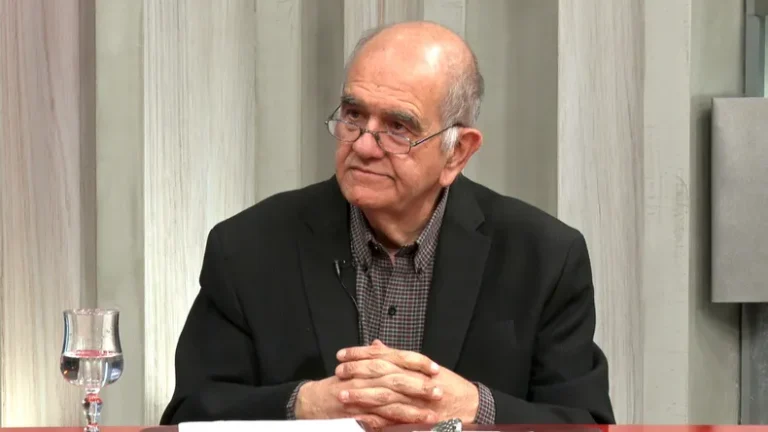
A conference on human rights and totalitarianisms scheduled for 24 August in Legislatura de la Ciudad de Buenos Aires had to be moved to Club Alemán. The event was part of the annual program of the Center for the Opening and Development of Latin America, CADAL, and included a panel with Dolkun Isa, a Uyghur activist based in Germany and president of Congreso Mundial Uigur. The meeting eventually took place, but outside the legislative setting initially announced.
The institutional explanation and the complaint of the organizers do not match. Legislative authorities confirmed that the room had been requested, but stated that administrative requirements were missing to complete the authorization. CADAL and various sources cited by journalistic publications stated, on the other hand, that the Chinese Embassy asked the Argentine Foreign Ministry to intervene and that national officials relayed that objection to the City. No written instruction was released that would allow reconstructing the entire chain of decisions.
The panel in which Isa participated focused on the possibilities of defending human rights internationally and also included Marcelo Alegre and María de los Ángeles Lasa. CADAL linked the change of venue with a restriction on freedom of assembly and expression, especially because the Legislature had established August 23 as a day of remembrance for the victims of totalitarianisms. The entity presented the episode as a case of transnational pressure, a characterization that should be attributed to those responsible.
The Chinese delegation had previously objected to activities critical of its political system in Argentina. In April, another presentation on communication and power in China scheduled at the University of Belgrano was canceled following diplomatic objections, according to its organizers. That precedent fueled the reading of the new episode, although each institution made its own decision, and there is so far no judicial ruling or public administrative investigation determining responsibility.
The case also fits into a growing competition between China and the United States within the Argentine agenda. In August, the U.S. embassy questioned the cooperation between a company from Neuquén and Huawei, and the Chinese representation responded by accusing Washington of obstructing commercial ties. The controversy in the Legislature is different and refers to a public activity, but both situations show how the rivalry between the two powers reaches local business, academic, and institutional decisions.
The situation of the Uyghur population in Xinjiang is the subject of international denunciations and a political dispute over the description and scope of Chinese policies. Isa is an active figure in that controversy and Beijing rejects the accusations promoted by Uyghur organizations and Western governments. The existence of opposing positions does not eliminate the Argentine institutional problem: it is necessary to establish whether a foreign representation influenced the use of a public building and which authorities were involved. The examination does not require agreeing with all the organizers' arguments, but rather applying equal rules for reserving rooms, communicating rejections, and protecting public debate from interferences incompatible with institutional autonomy.
What has been confirmed is that the legislative venue was not granted and that the conference was able to take place elsewhere. What has been reported, but not yet officially documented, is that the decision responded to a Chinese request channeled through the Ministry of Foreign Affairs. A transparent explanation from the Legislature, the Buenos Aires Government, and the Ministry of Foreign Affairs would allow distinguishing an administrative failure from a restriction motivated by diplomatic pressure and establish predictable criteria for future activities. It should include dates of the request, required documentation, consulted officials, and the final basis for the refusal. The traceability of that process is the main institutional debt of the episode.