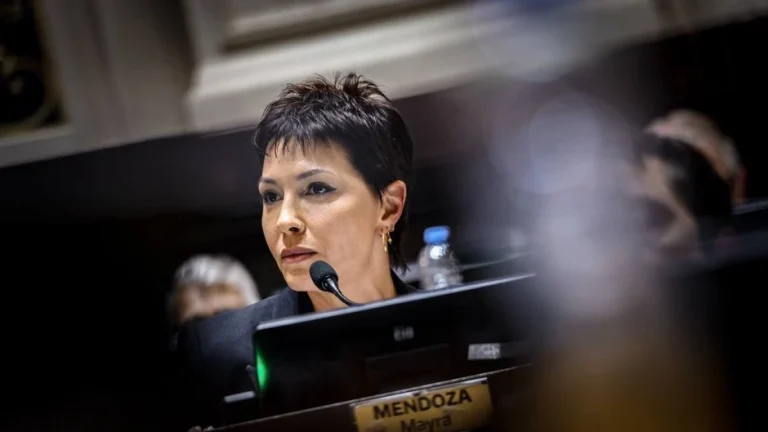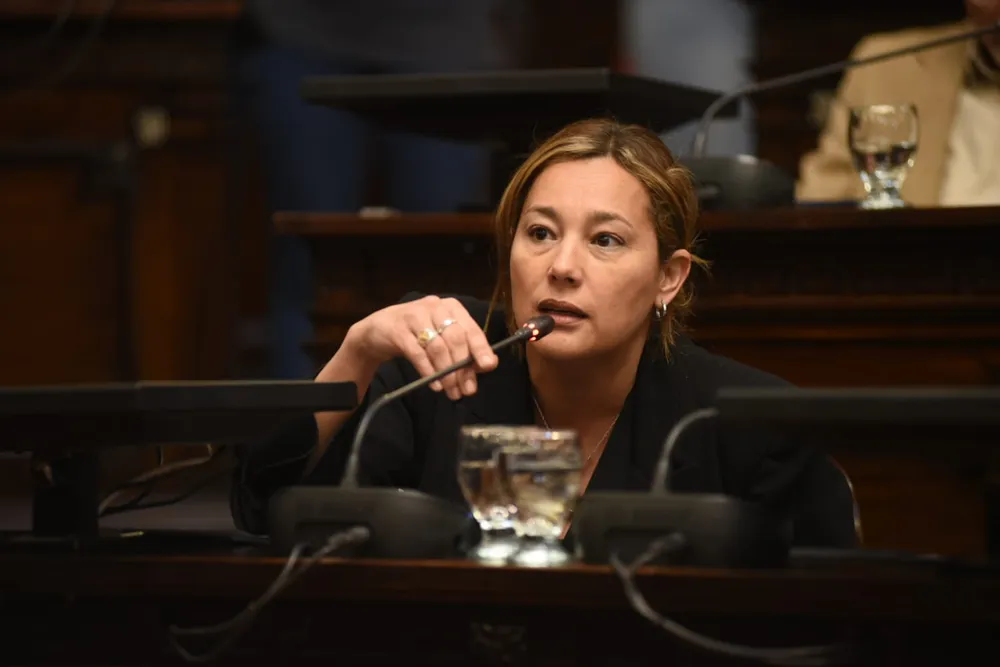
The opposition in Mendoza questioned the decision of Alfredo Cornejo's government to keep the ARS 325.000 million received as an advance from national revenue sharing in an countercyclical fund. The Minister of Finance, Víctor Fayad, defended the reserve as a practice aimed at covering financial gaps and potential climate contingencies. The criticisms sparked a dispute over the origin, the amount actually available, and the usage priorities, but they have not yet resulted in a formal reallocation.
The advance was disbursed by the Nation in three installments: ARS 100.000 million in April, ARS 175.000 million in May, and ARS 50.000 million in August. The agreement provides for repayment through withholdings on revenue-sharing funds and an annual nominal rate of 15 %. The provincial Executive maintains it as a margin of maneuver against drops in income and expenses that are difficult to adjust quickly. That financial explanation coexists with municipal claims for preventive resources in response to the phenomenon called Super Niño.
Adriana Cano, head of the PJ bloc in the provincial Senate, stated that an countercyclical fund should be established with revenue surpluses and not with loans or advances. She also recalled that Mendoza obtained legislative authorization to take on debt of more than ARS 400.000 million in April. Her interpretation is that the advance strengthened the cash flow and Cornejo's negotiating position with the Nation. This is an opposition assessment, not an accounting or judicial conclusion on the legality of the operation.
Lucas Ilardo, head of the Fuerza Patria bloc in the Chamber of Deputies, focused his objection on the payment of public salaries. He stated that at noon on August 31 the wages had not yet been deposited and criticized the Government for withholding funds while the workers awaited them. The controversy combines financial availability and the payroll schedule. To assess the episode, the actual date of accreditation, budgetary obligations, and accessible liquidity must be verified, without assuming that all cash balances can be used indiscriminately.
Jorge Difonso, from La Unión Mendocina, also discussed the amount. He pointed out that ARS 80.000 million would already be allocated to works on routes 40 and 143, as part of debt compensation with the Nation. That is why he maintained that the fund would not be entirely composed of ARS 325.000 million available funds. He also demanded that the resources be applied to climate prevention, economic emergency, and reactivation programs, with the participation of the municipalities.
The debate exposes various categories that should not be mixed. An advance on revenue sharing is a loan to be repaid; a counter-cyclical reserve is a mechanism to manage risks; an allocation for roads reduces availability; and a municipal expense requires a transfer instrument. Knowing the bank balance is not enough to determine the usable amount: commitments, repayment schedule, returns, authorizations, and rules of allocation are needed.
The subsequent control must reconstruct how much remains liquid, which part was compromised, where it is invested, and under which regulation its use will be decided. It will also be necessary to verify whether the Senate ratifies the compensation and rescheduling agreements with the Nation. The publication of yields and maturities will allow distinguishing value preservation from a speculative decision, a category used by the opposition but not evidenced in the announcement. The municipalities, for their part, will need to know whether they will be able to access it through automatic transfers, agreements, or competitive programs. The official position is to maintain response capacity; the opposition calls for prioritizing salaries, municipalities, and prevention. The confirmed fact is the reservation of the advance and the political controversy. The final destination of each peso will remain open until there are verifiable administrative acts and budget executions. A distinction must also be made between temporary savings and permanent allocation, because that difference conditions how much the Executive can commit.