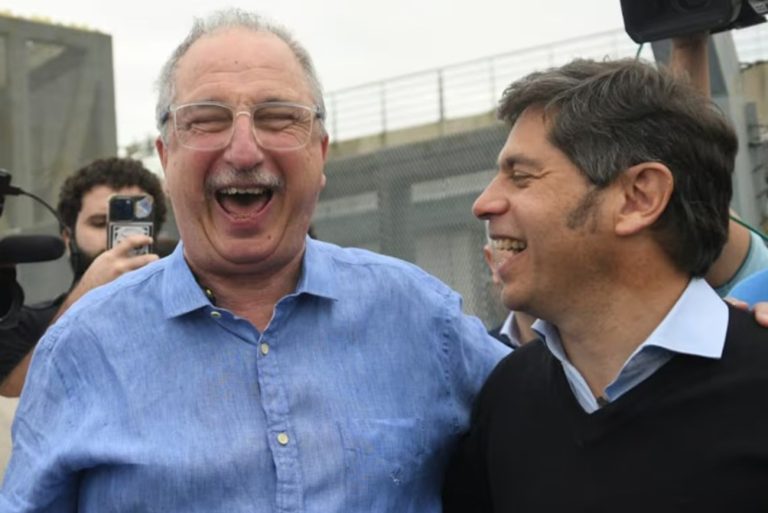
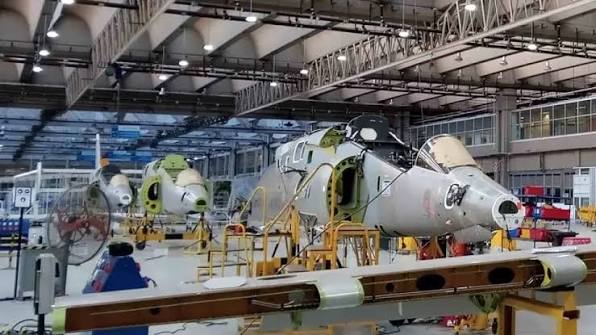
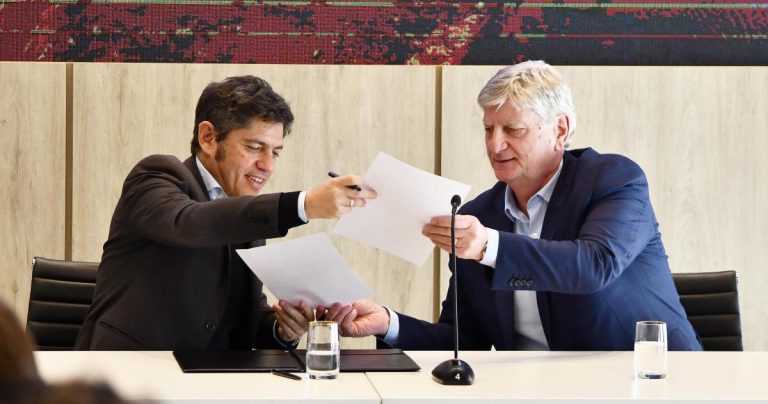
On 3 September, Axel Kicillof brought together business owners, industry-chamber representatives and trade union leaders at the Aeronautical Technology Industrial Park in Morón, turning the meeting into an explicit defence of Buenos Aires province's manufacturing base. The governor argued that industrial decline was not a temporary accident but the result of a deliberate national-government policy, linking that course to factory closures, job losses and a profound reshaping of Argentina's productive structure.
The intervention sought to give political form to a diagnosis already felt by the invited sectors in their accounts, activity levels and workforces. Kicillof said conditions were worsening month by month and that the current course offered no sign of recovery. In his assessment, Javier Milei's programme aims to reduce industry's weight and redefine the country's international insertion, with effects extending beyond any single branch to economic sovereignty, technological capacity and employment.
Kicillof contrasted that direction with the policies used by other countries to protect strategic capabilities. He said industrial policy is employed worldwide for productive, technological and sovereignty reasons, and rejected the idea that Argentina should accept a mainly primary specialisation. In that framework, he described industry as a material foundation of development and warned that fewer factories also mean fewer formal jobs, weaker labour rights and less capacity to sustain domestic value chains.
Vice-governor Verónica Magario described the situation through three combined pressures on firms: high production costs, indiscriminate import opening and shrinking domestic consumption. Her remarks moved the discussion from broad declarations to the daily operation of plants, where falling sales coincide with greater difficulty in meeting expenses. Magario called for a profound change capable of restoring production, Argentine employment and a prospect of continuity for the affected companies.
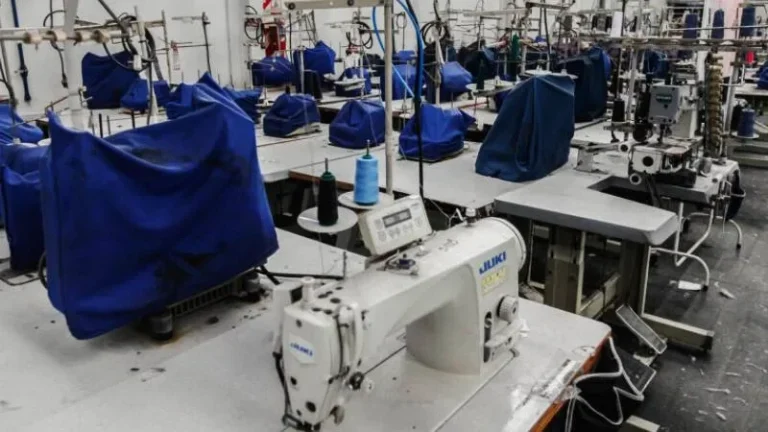
Augusto Costa, the provincial minister for Production, Science and Technological Innovation, supplied the numerical dimension. He said that since Milei took office, 1,597 companies had closed in Buenos Aires province and more than 46,000 industrial jobs had been lost. Costa held the national government responsible and contrasted its appreciation of speculative activities with the daily effort of those maintaining factories, investment, suppliers and employment amid weaker demand.
The meeting was held under the slogan “With production and work, there is another path”, summarising the provincial government's effort to bring employers and unions around a shared agenda. That convergence does not erase their respective tensions, but it foregrounds a common concern: productive capabilities, once dismantled, require time, credit, knowledge and demand to rebuild. The event also served as a political signal of support to those keeping operations alive under adverse conditions.
Kicillof maintained that the process could be reversed, while warning that recovery would be neither automatic nor immediate. He called for intelligent and sovereign policies able to reindustrialise the economy and argued that public decisions should be judged by their effects on the population rather than by ideological or personal affinities. Through that argument, he sought to distinguish provincial intervention from national withdrawal and to present Buenos Aires as a space for protection, coordination and a productive alternative.
The unresolved challenge is to turn that political agreement into instruments that preserve firms and jobs while the disputed national programme remains in force. The provincial administration will have to sustain dialogue with chambers and unions, identify the most exposed sectors and translate the diagnosis into measures within its powers and resources. For Kicillof, the debate is no longer only about a downturn in activity: it concerns the economic structure Argentina will retain and the place industrial work will occupy within it.