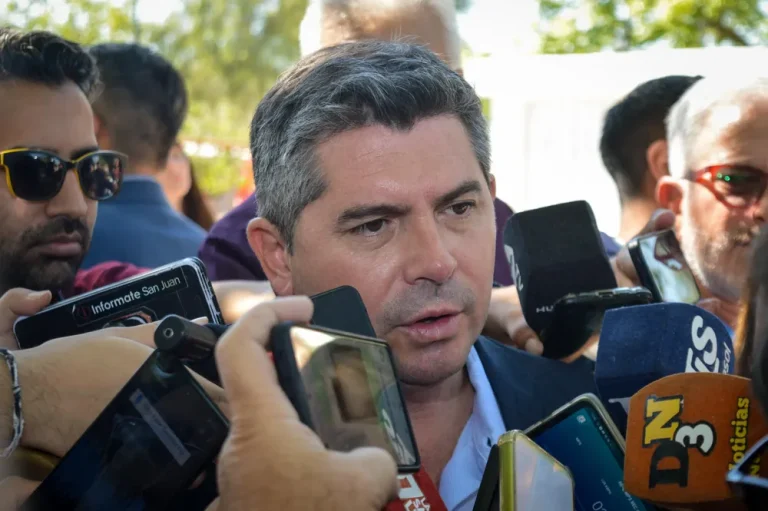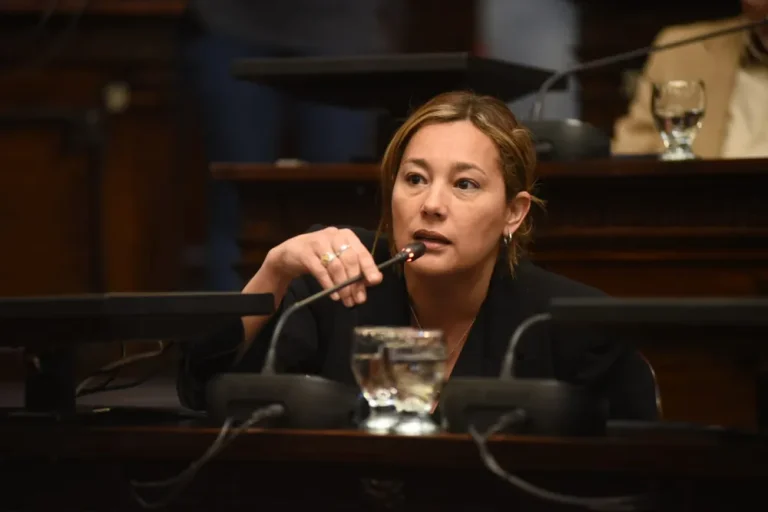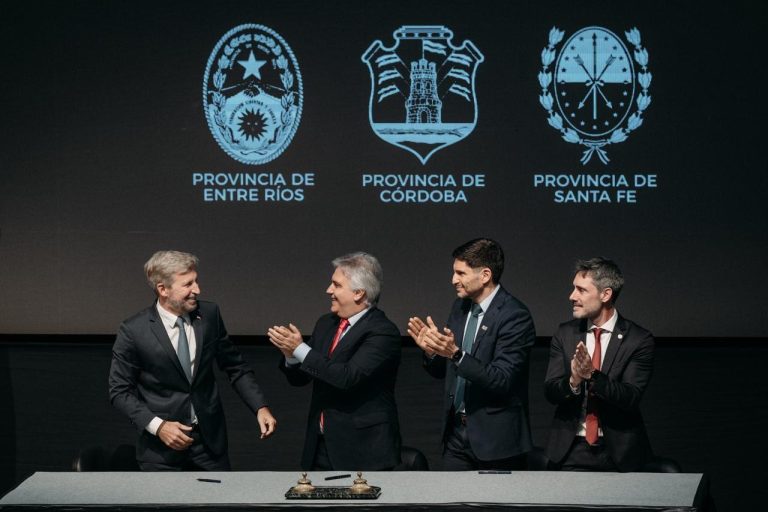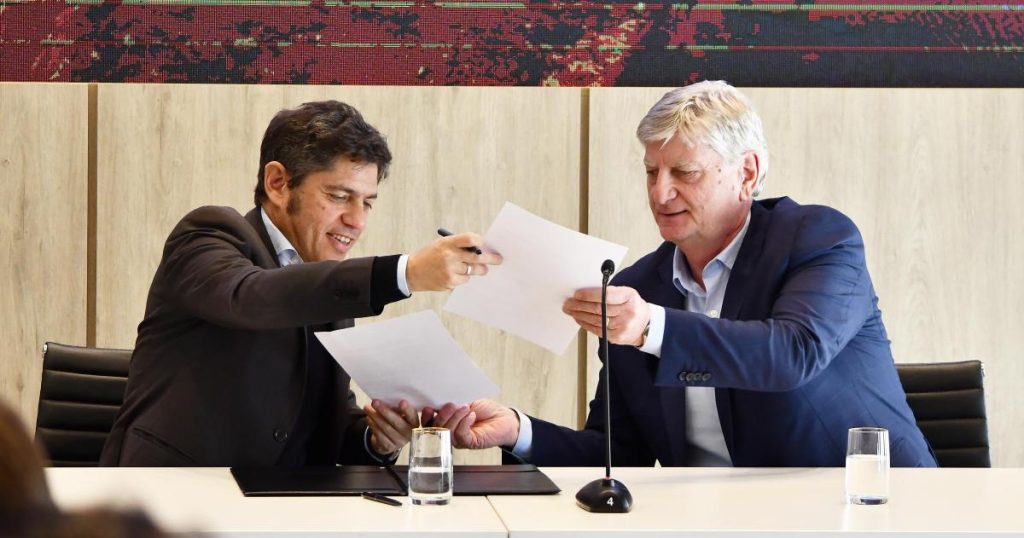
Axel Kicillof and Sergio Ziliotto agreed to coordinate actions between Buenos Aires and La Pampa to reduce the effects of the El Niño phenomenon on the shared region. The meeting took place in Santa Rosa and included the company of agreements on water management and other management areas. The leaders took advantage of the event to demand from the national government resources destined for infrastructure and emergency care. The meeting produced concrete interprovincial commitments, but not a transfer of national funds nor the immediate awarding of new works.
The water agreement foresees planning interventions jointly, improving the integrated management of the resource, and sharing hydrometric and pluviometric records in real time. It also contemplates strengthening coordination in the face of climatic events that may simultaneously affect both provinces. This design acknowledges that water does not respect administrative boundaries and that the decisions of one jurisdiction can modify risks upstream or downstream. However, the announcement has not yet specified budgets, the location of works, execution timelines, or mechanisms to distribute costs.
Kicillof stated that the national government has not executed ARS 290.000 million of Fondo Hídrico, collected through the tax on liquid fuels. According to his argument, these funds should be applied to flood control works and not remain immobilized or placed in financial instruments. He also stated that the Nation withholds ARS 2,1 trillion corresponding to the National Treasury Contributions fund. Both figures were part of a political accusation from the provinces and not an official announcement of release, transfer, or debt recognition by the Casa Rosada.
The visit also had a federal and electoral dimension. Kicillof left Buenos Aires again accompanied by ministers of Infrastructure, Community Development, Security, and Government, while Ziliotto met with officials and legislative representatives from La Pampa. The governor of Buenos Aires has not yet confirmed a presidential candidacy for 2027, and the Peronist governors have also not proclaimed a common candidate. Their movements, agreements, and tours increase their national visibility, but they should not be presented as a nonexistent formal launch.
The leaders reaffirmed the framework agreement signed on June 28, 2024, and added agreements on social development, health, tourism, security, and collaboration between public banks. This breadth shows a cooperation strategy that goes beyond the climate emergency. At the same time, the effectiveness of each signature will depend on programs, responsible parties, budgets, and verifiable goals. Signing an instrument creates an administrative basis for work; it does not demonstrate that the projects are financed, contracted, or completed.
In the subsequent conference, the debate over the PASO also appeared. Kicillof explained that leaders and block chiefs of the Peronism agreed to defend the primaries against the official initiative to eliminate them. He criticized that the Chief of Cabinet, Diego Santilli, links his tours of the provinces with the search for support for electoral reform. The proposal connects fiscal federalism and competition rules, but they are different discussions: an electoral modification requires legislative votes, and funding claims depend on budgetary rules and administrative decisions.
Monitoring should separate prevention, financing, and political positioning. On the climate level, it will be necessary to identify the prioritized projects, the data exchange system, and the emergency protocols. On the fiscal level, it will be appropriate to verify the existence, availability, and destination of the claimed funds, along with any national response. On the electoral level, it will be necessary to distinguish Peronist coordination from the presidential candidacy. The communication of real-time data will also require common measurement criteria, technical responsibles, and alert channels understandable to municipalities and the population. The verifiable fact is that Buenos Aires and La Pampa formalized cooperation and filed a joint claim; the national money and material interventions remain pending.