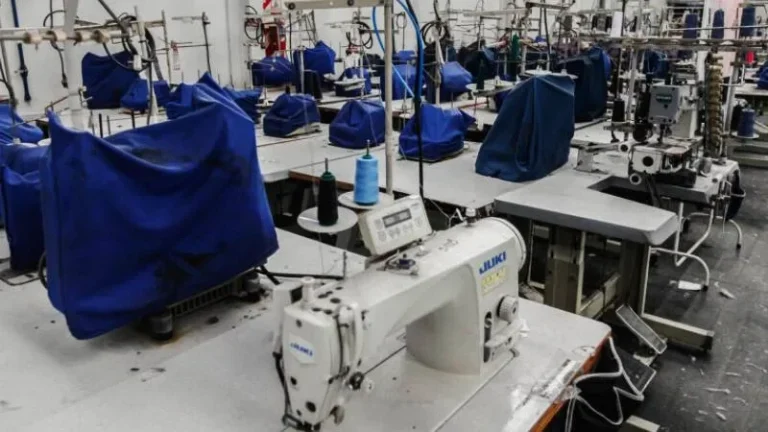
Tierra del Fuego's industrial promotion regime has returned to the center of Argentina's economic debate after the World Bank described it as a failed case of industrial policy. The criticism focuses on the scheme's fiscal cost, its weak productivity results and its limited ability to generate a solid export-oriented production base.
The assessment looks back at the regime created by Law 19,640 in 1972, originally designed to populate and develop Argentina's far south. On demographic grounds, the outcome appears favorable: Tierra del Fuego's population grew from 13,500 inhabitants in 1970 to about 190,000 in 2022. The current discussion, however, no longer revolves only around settlement, but around the quality and sustainability of the productive structure built around the incentives.
The report warns that prolonged support without clear reduction procedures or performance requirements can end up creating perverse incentives. The regime's latest extension, approved in 2021 and in force until 2038, appears in that context as part of the problem: it preserved benefits without establishing a productive transition or verifiable conditions for technological improvement, productivity or exports.
The fiscal dimension is central to the criticism. The estimated annual cost of the regime was placed at around 1.07 billion dollars, equivalent to 0.22% of gross domestic product. That scale was compared with sensitive national budget items, including the Conicet budget and public spending on Science and Technology, to show the weight of the scheme on public accounts.
The diagnosis also reaches consumers. Decades of protection for Tierra del Fuego's electronics industry are said to have sustained higher prices for certain goods, without that effort producing equivalent gains in quality, innovation or international insertion. For the World Bank, the case shows the limits of an industrial policy that maintains benefits without an exit route or enforceable targets.
The discussion leaves Tierra del Fuego facing a deeper tension: defending a structure that explains employment, population and economic activity in the province, or reviewing a model questioned for its cost and results. The debate is no longer limited to the formal continuity of the regime, but to whether it can become a tool for competitive development without breaking the social and territorial balance it helped build.