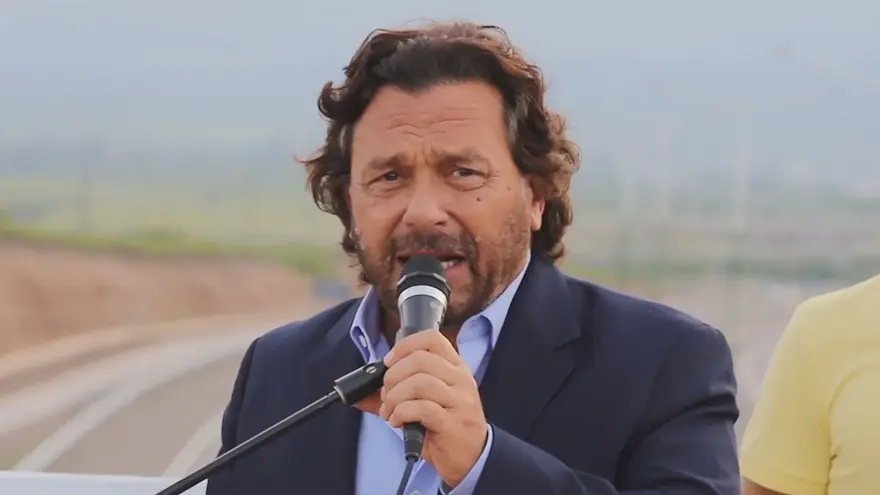
The governor of Salta, Gustavo Sáenz, criticized the speed of response of national government in the face of the population's immediate needs. He stated that the political timelines of Javier Milei do not match those of the people and focused his complaint on the cost of electricity in the North, the condition of the roads, and the responsibilities that the Nation transferred to the provinces.
Sáenz explained that the governors of Norte Grande accompanied a reduction in subsidies for cold areas on the condition that an equivalent benefit be created for warm regions. His argument is that higher energy consumption does not depend solely on heating: in northern provinces, high temperatures force the use of air conditioning and increase household electricity expenses.
La Energy Secretariat analyzes a resolution that would subsidize between 50% and 80% of the electricity cost for users located in warm or very warm areas. The governor of Salta stated that the claim corresponds to the users and not to a particular governor. He also requested that the scheme be based on objective and permanent criteria, to prevent a temporary measure from leaving the same problem open later.
The governor linked the tariff discussion to a broader transfer of obligations. He pointed out that provincial administrations took on road maintenance, teacher incentives, and the provision of medicines despite having limited resources. He warned that this accumulation reduces local response capacity and stated that the provinces cannot continue covering every function that the national government stops financing.
Sáenz was especially critical of the national roads. He stated that they have gone two and a half years without sufficient maintenance, even though taxpayers pay a tax intended for their upkeep. The argument thus links road deterioration with a fiscal discussion: the provinces demand that funds with specific allocation be translated into works or that the Nation explain how it will attend to those responsibilities.
The energy resolution is still under analysis and was not presented as a final decision. Nor were new allocations announced in these statements for roads, medicines, or education. The political outcome is a demand from Norte Grande for stable rules, territorial equity, and financing, accompanied by the warning that provincial governments have reached a limit in absorbing national tasks.