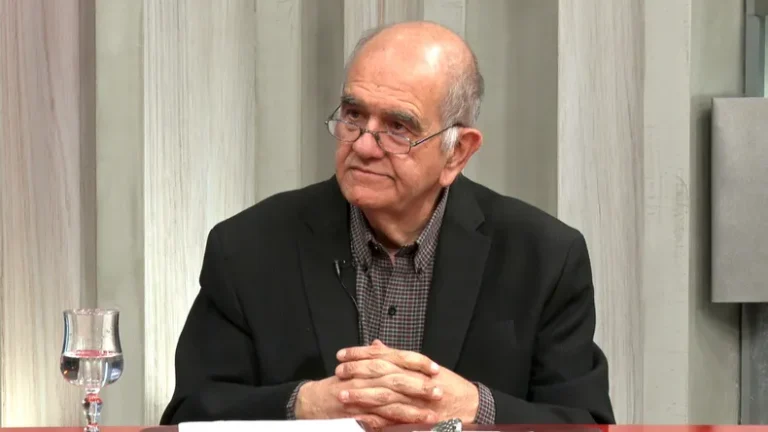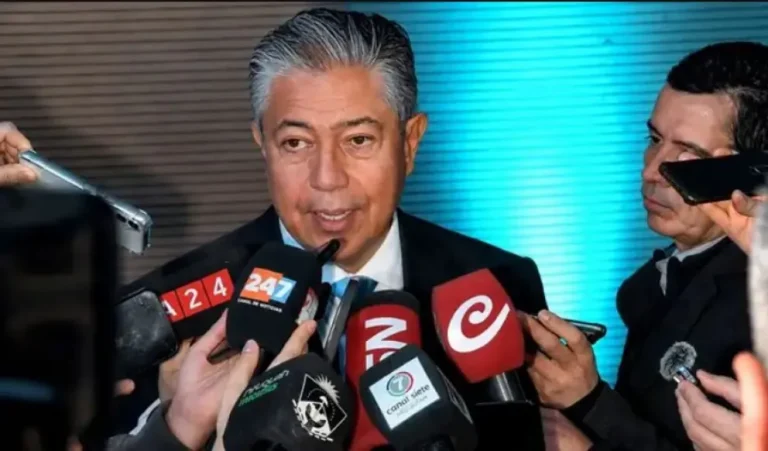
Governor Marcelo Orrego stated that San Juan will follow the national electoral debate before finalizing the rules with which it will vote in 2027. The Province is working on its own reform, but wants to know if Congress modifies or eliminates the national open primaries. That decision will especially influence a possible unification of calendars. The wait does not imply abandoning the local project, but postponing some components until having a clearer federal scenario.
Orrego reiterated his rejection of the Ley de Lemas and described it as a mechanism that does not serve the citizens. His proposal is to move towards the boleta única de papel, to which he attributes a simpler procedure, lower cost, and reduced environmental impact. The governor's political definition sets the general direction of the reform, although the full text of the system, the design of the ballot, and the rules for categories and alliances still need to be known.
Lieutenant Governor Fabián Martín pointed out that the Executive and the Legislature have an advanced project, but they are waiting for the national outlook to become clear. He explained that if the Nation eliminates the PASO and concentrates its calendar, it would increase the possibility of holding the San Juan elections on the same date. If the federal scheme is maintained, the Province will have to decide whether to separate the elections and how to organize the selection of candidates within each party. That selection can be left in the hands of party mechanisms, primaries, or agreements, depending on what the rules and organic charters ultimately establish.
San Juan already stopped using provincial primaries during the previous administration, but it retains the Open Democratic Participation System, SIPAD, associated with the law of slogans. Martín stated that there is consensus to repeal it and recalled that the governor sent an initiative with that purpose. The repeal, however, does not by itself complete the system: it is necessary to approve the mechanism that will replace it and regulate the transition to the single ballot.
The national and provincial elections respond to different authorities and regulations. Coordination can simplify logistics for the voter, but it also requires compatibility between instruments, officialization of lists, counting, and financing. A reform close to the electoral calendar must also provide predictability to parties, municipalities, and oversight bodies. For this reason, the date of enactment is as important as the technical option chosen. Training of polling station authorities and voters also needs time if a ballot different from the one previously used is introduced.
Martín placed the period in which the Province should move forward and resolve the rules between October and November. It is not yet a legal date nor an electoral call, but a political horizon expressed by the lieutenant governor. He also reported that the Chamber will not meet this week and that it has pending judicial lists, interviews, and agreements that must go through committees before the next meeting.
What is defined is the intention to eliminate the SIPAD and adopt the boleta única de papel; what is pending is the final text, its approval, and the relationship with the national calendar. The Government presents the reform as a simplification aimed at future generations, but its legitimacy will also depend on an open debate and stable rules for all competitors. Until legislative approval, the people of San Juan do not yet have a new electoral system in force for 2027. The early publication of the project and ballot simulations would help evaluate costs, accessibility, and possible confusions before voting on the regulation. Hearings with specialists, parties, and civil organizations could improve the design without altering the already announced political objective. The national calendar should not prevent that provincial deliberation. Predictability must be a central objective.