The government has begun organizing Javier Milei's reelection campaign with more than a year still to go before the 2027 vote. Its starting point is less comfortable than during the first half of his term: internal polling shows that the erosion of the president's image has stopped and that La Libertad Avanza retains a floor near 30%, but it also shows disapproval exceeding approval. This new balance forces the governing coalition to prepare for a contest in which repeating the anti-establishment momentum of 2023 will no longer be enough.
Milei no longer occupies the position of a leader standing outside traditional politics. The recruitment of officials with government experience, many of them from PRO, together with scandals that affected the administration, weakened its banners against the “caste” and its claim to moral superiority. The electoral consequence is concrete: faced with the possibility of a runoff, the Casa Rosada needs to broaden its alliances while preventing a center-right candidacy from splitting the vote that currently supports the president.
Governors are emerging as the first bridge for that expansion. The image of thirteen provincial leaders alongside Milei in Tucumán, compared with the three who attended a year earlier, showed a willingness to engage that Interior Minister Diego Santilli is trying to turn into agreements under Karina Milei's supervision. The governors are making two demands: funding for their administrations and limited intervention by La Libertad Avanza in local elections, where several will seek reelection or the continuity of their political organizations.
Electoral reform is the main bargaining currency, although it also exposes disagreements. The government is considering ending the PASO primaries and allowing allied lists on the single paper ballot, so provincial candidates for Congress could attach themselves to Milei's presidential bid. Some governors see the mechanism as a way to protect their organizations, while others associate it with the ley de lemas system and reject multiplying lists tied to the same top-level candidacy.
Nor is there a common position on primaries. Raúl Jalil again opposed the PASO system, Osvaldo Jaldo wants to retain it, and Alfredo Cornejo is considering different decisions for Mendoza and the national election. That dispersion is compounded by several governors' intention to separate their contests from October and vote between April and May. Their aim is to secure provincial control first and negotiate presidential support later from a less vulnerable position.
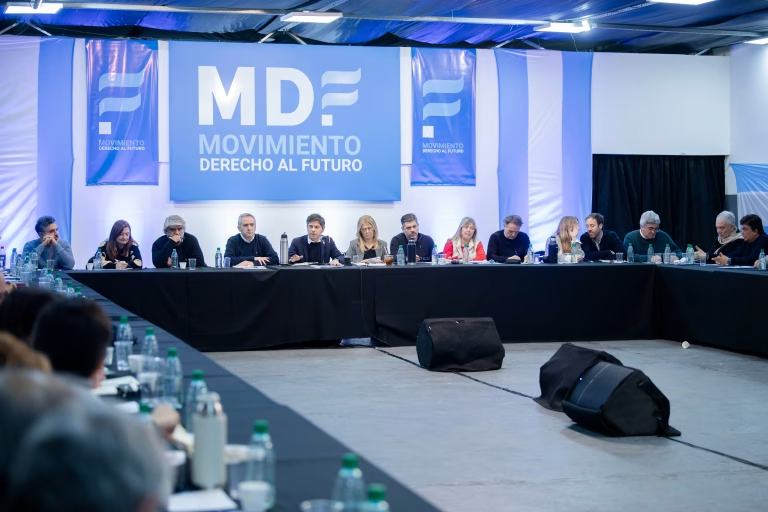
The relationship with the Casa Rosada will vary by territory. Radicals such as Leandro Zdero face genuine electoral threats in their districts; the organizations of Rolando Figueroa and Alberto Weretilneck answer to provincial traditions; and the governing coalitions in Misiones and San Luis show fractures that La Libertad Avanza could exploit. At the opposite end, the Peronist wing led by Axel Kicillof will seek to preserve the primaries and block the return of allied lists.
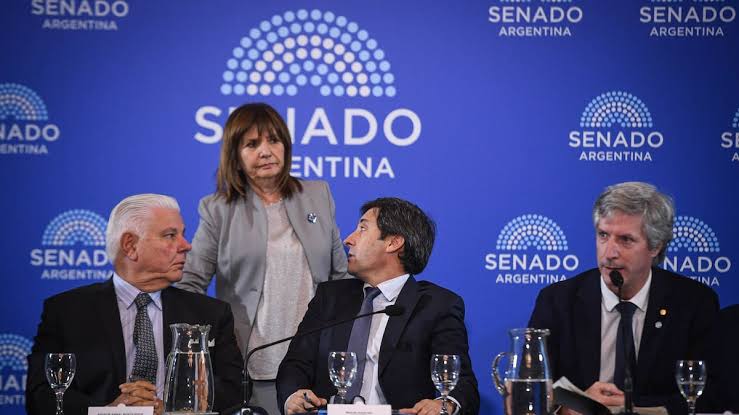
As Milei tries to organize that network, a dispute over his political legacy is growing within the governing camp itself. Victoria Villarruel keeps in contact with provincial envoys from the Senate and used her visit to Tucumán to defend local industry and promote the biofuels law. Patricia Bullrich also retains ambitions for 2027 and appears, alongside Kicillof, among the figures with the lowest rejection in a Management & Fit poll. Both are trying to build autonomy without yet breaking with the president's leadership or Karina Milei's electoral authority.
Whether this architecture can be completed will depend on the economy. One poll puts Milei's positive image at 37% and finds that 44% prefer to maintain the model, although the government has lost support in recent months. The accumulation of reserves is intended to remove doubts about maturities in 2026 and part of 2027; the pending challenge is to carry the macroeconomic improvement into everyday life. If that bridge fails to emerge, the president will reach the election without the outsider's appeal and will have to finalize provincial agreements, define the electoral rules and contain a succession struggle that is already under way.