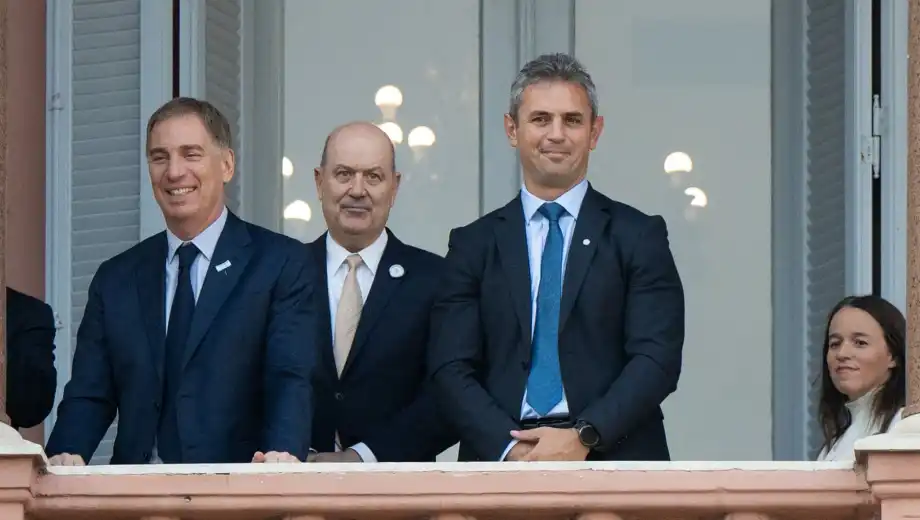
The political table of Gobierno nacional met for almost three hours to rearrange the parliamentary agenda after a setback in the Senate. The meeting took place in the office of Ministerio del Interior in Casa Rosada and had a rare presence: Federico Sturzenegger, Minister of Deregulation and State Transformation, participated to explain the timeline of the projects developed by his department.
The first definition was to promote the bill concerning capital markets. The ruling party presented the deregulation initiatives as a central component of its economic program, even though within the same space there are criticisms about the preparation and the legislative path of some proposals. The meeting sought to organize timing and reduce new setbacks, not to announce that the entire agenda already has the necessary votes.
The table also reviewed the projects that have already entered Congress. Among them is the Ley de Inviolabilidad de la Propiedad Privada, which obtained half-approval in the Senate. Also appearing is the reform of the charter of Banco Central, to which Javier Milei assigned absolute priority, along with an economic package intended to complement those institutional changes.
The political agenda includes a reform that contemplates the elimination of the Open, Simultaneous, and Mandatory Primaries. To that set are added Inocencia Fiscal II and an initiative linked to Zonas Frías. Casa Rosada reported that it worked on the calendar to address all the proposals, but did not communicate what order they will have after the capital markets bill.
The presence of Sturzenegger had an operational significance: to explain the current status of each initiative and how it is linked to the others. The meeting did not publicly resolve internal resistances nor did it detail agreements with opposition blocs. Therefore, the list should be understood as an official roadmap and not as a legislative program guaranteed in both chambers.
The next indicator will be the effective submission or processing of the capital markets bill and the sequence adopted by the remaining reforms. It will also need to be seen whether the internal organization translates into sufficient negotiations to build majorities. The political committee defined a first step and gathered the agenda, but left the decisive question open: which initiatives will advance, within what timelines, and with what modifications during the parliamentary debate.