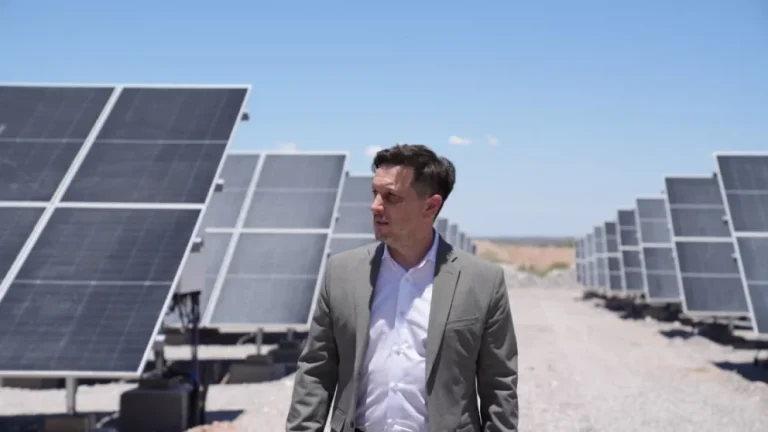
For the second time in a week, communities in the interior of Catamarca have blocked roads to demand work in the mining projects underway in the province. On Friday, residents of El Desmonte in the Santa María department staged a selective blockade on National Route 40 to demand the hiring of local labor in mining companies and the construction of the Ampajango photovoltaic park.
The blockade lasted more than four hours during the morning and was lifted after a meeting with the mayor of San José, Antonio "Tono" Gómez, and UOCRA representatives. At the meeting, the municipality agreed to act as a liaison with mining companies to channel the demand for labor from Santa María. In return, union representatives asked that workers be trained to fill the required positions.
Walter Brizuela, a resident who took part in the protest, explained the community's frustration: "There are companies that come and always bring people from outside, we locals are left out and today the situation is tough, there is no work. I think there was an agreement with the solar park people but it is not being fulfilled, that's why we took this measure". He said that although some companies are already hiring local labor, very few have been contracted.
On Monday, July 13, a group of young people from communities in northern Belén had already blocked RN40 at El Eje to demand that the Aguas Calientes "Alto El Mulato" copper mining project, currently in the exploration phase, be accelerated. The protest was attended by representatives from the communities of Laguna Blanca, Corral Blanco, Carachi, La Angostura and Aguas Calientes.
Bernardo Gutiérrez, cacique of the La Angostura Community, stressed that several communities support mining activity, but conditioned that support on obtaining concrete definitions. "We await a response from the governor, the minister, the government team and the mayor," he said.
The roadblocks expose the tension between promised mining development and the reality of local employment in Catamarca. While companies move forward with their projects, communities in the interior demand that the benefits reach their residents and that local hiring agreements be honored.