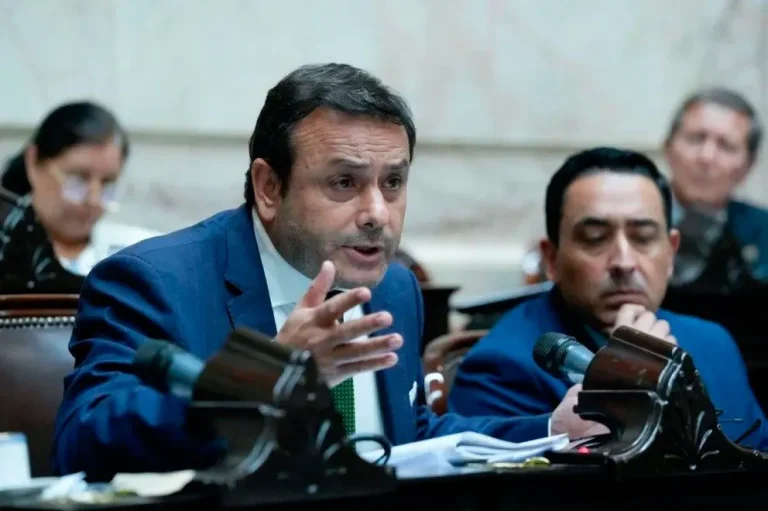
The Catamarca Chamber of Deputies turned the composition of electricity bills into a debate over provincial autonomy, municipal resources and energy costs. Juan Carlos Ledesma, head of the Frente de Todos bloc, answered Libertarian deputy Francisco Monti, who challenged the inclusion of local charges in bills. Ledesma defended the existing scheme and argued that the issue cannot be reduced to deleting one line from a receipt: it involves constitutional powers, service financing and national decisions that changed what users pay.
Monti's position drew on a resolution by the national Commerce Secretariat seeking to restrict charges unrelated to the contracted service on public-utility bills. The national policy has been presented as a transparency and consumer-relief measure. In Catamarca, however, its application creates a legal and political dispute. Libertarian opposition members say municipalities should not use the electricity bill as a collection mechanism; the provincial government argues that the Nation cannot impose that ban on a service under local jurisdiction.
Ledesma argued that electricity provision belongs to the province and that the distributor operates under Catamarca rules recognising provincial and municipal powers. On that reading, a national administrative resolution cannot alter local laws or displace constitutionally protected autonomy. The lawmaker did not claim that every charge is automatically valid; he focused on the allocation of authority. The question will require coordinated interpretation of the rules and could eventually reach the courts if institutional positions remain opposed.
The disputed charge equals 6 per cent and goes to municipalities. Ledesma said removing it from the bill would not eliminate the need to finance local services, but would move collection to another instrument. For municipalities, the bill provides regularity and lowers collection costs; critics say it mixes different services and can obscure the true cost of electricity use. The conflict therefore places two legitimate interests against each other: clarity for users and municipal capacity to fund street lighting, maintenance and other functions.
The governing-party deputy also shifted attention to the largest component of the increases. He said the reduction of national energy subsidies had a far greater effect on final bills than the 6 per cent municipal charge. His argument calls for comparing magnitudes before assigning primary responsibility to municipalities. The opposition may insist that each charge be separately justified, but a complete discussion must distinguish wholesale energy prices, distribution, taxes, fees and subsidies to identify which public decision explains each part of the total.
The speech also addressed the distributor's finances and its relationship with CAMMESA. Ledesma disputed opposition assessments of company management and recalled that debt accumulated with the wholesale electricity market was connected to periods of non-payment. This added another layer: a bill finances not only consumption and municipal services, but a system in which the province, distributor, national government and users have different obligations. An isolated change may alter that balance without solving structural income and cost problems.
The argument unfolds as households and businesses try to understand rising bills and local administrations face tight budgets. A useful legislative debate must disclose how much each municipality collects, what service the charge supports, how users are informed and which collection alternative exists if the current mechanism ends. It must also determine whether the national rule applies and through what procedure. Without those facts, the exchange risks becoming trapped between slogans about autonomy and promises of reductions that may not deliver equivalent relief.
Ledesma said he was willing to continue the exchange at the next sitting and seek a political definition. That step will allow Monti to formalise his objections and the governing bloc to present the scheme's legal and budgetary basis. Until then, the charge remains on bills and no legislative decision orders its removal. The next stage must determine not only political strength, but which level of government has authority, how municipal revenue is protected and what part of the bill can actually be reduced without defunding services.