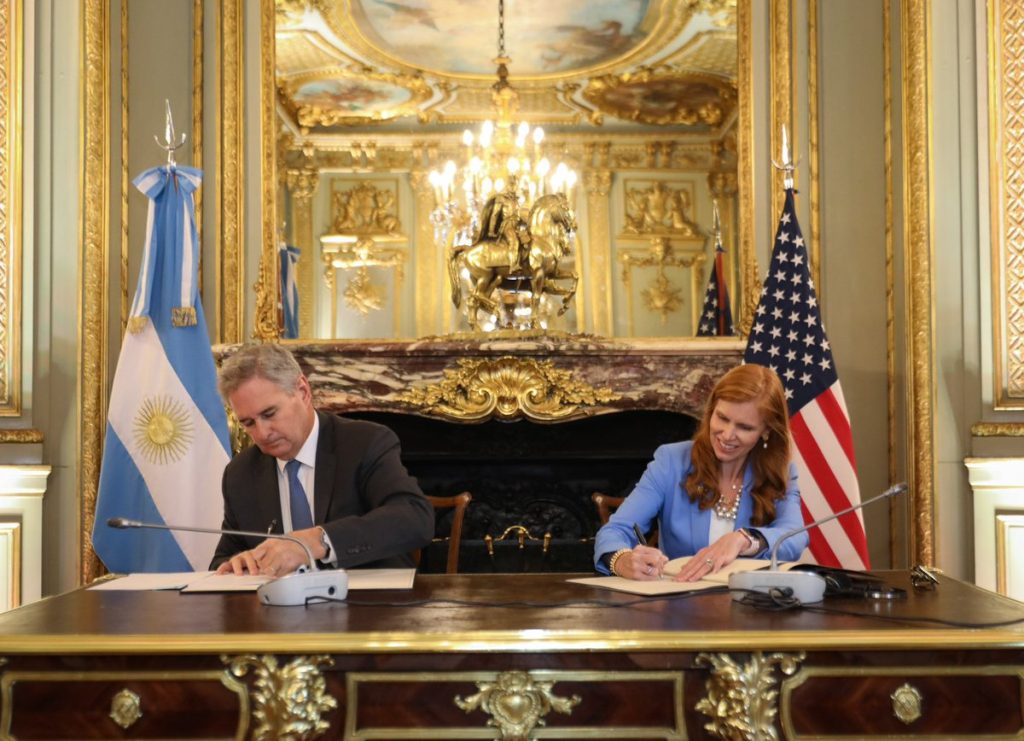
Argentina joined the Geneva Consensus on the Promotion of Women's Health and Strengthening of the Family. The adherence was signed by Chancellor Pablo Quirno, with the participation of the U. S. ambassador in Buenos Aires, Peter Lamelas, and Bethany Kozma, officer of the Office of Global Affairs of Department of Health and Human Services of United States.
Quirno presented the decision as a tool to defend human life, strengthen the family, and preserve the sovereignty of countries when defining public policies. Although in his presentation he did not explicitly mention abortion, the statement maintains that there is no international right to that practice and asserts that it should not be promoted as a method of family planning.
The Geneva Consensus was created in 2020 during the first administration of Donald Trump. It brings together more than 40 countries and promotes the coordination of positions in multilateral bodies. It does not constitute an international treaty nor create binding legal obligations: each State retains the power to enact its laws and establish its health policy within its internal framework.
United States had abandoned the mechanism during the presidency of Joe Biden. With Trump's return, Washington reintegrated it and assumed the secretariat that Hungría held. The Argentine incorporation is also part of the diplomatic approach between the governments of Javier Milei and Trump, which have expressed agreements in foreign policy and in debates related to gender and culture.
The signing does not by itself change Argentine law. Law 27.610, in force since January 2021, allows voluntary termination of pregnancy through week 14 inclusive and guarantees access within the health system. The Government announced neither a bill to repeal it nor immediate changes to the procedures established by that law.
The adhesion does incorporate the country into an international political platform opposed to the recognition of abortion as a right. It can influence diplomatic positions and reopen the internal debate, but any alteration of the existing regime would require subsequent national decisions and legislative agreements that were not reported. The confirmed scope is declarative and political; it does not imply an automatic reform of Argentine law.