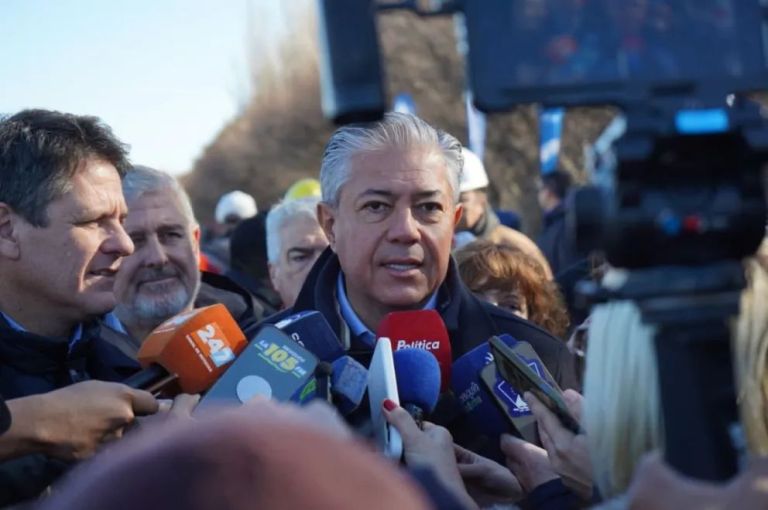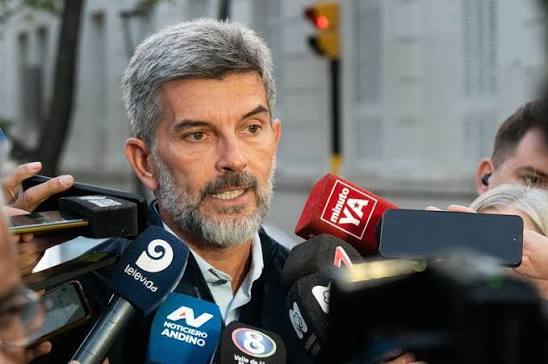
The mayor of the City of Mendoza, Ulpiano Suárez, rejected the possibility that votes to modify the cold zone regime be negotiated in exchange for electricity subsidies for northern provinces. The discussion arose after a meeting of Diego Santilli and Luis Caputo with ten governors, and is based on versions of a possible exchange that was not officially confirmed.
Suárez maintained that an energy policy should not pit some provinces against others. He defended Mendoza's inclusion among the territories covered by the benefit and stated that low temperatures constitute a verifiable climatic condition, not a variable that can be defined solely based on fiscal needs or parliamentary agreements.
The Mendoza government and Alfredo Cornejo question aspects of the current legislation because it included areas that, in their opinion, should not receive the subsidy. That criticism does not imply accepting the exclusion of Mendoza. The provincial position seeks to review the registry and focus the aid without losing the recognition of the departments where gas consumption increases for climatic reasons.
The versions attribute to the national Government the intention of reducing a universe close to four million users in Buenos Aires, Santa Fe, Córdoba, San Luis and Mendoza. The scheme would retain coverage in Patagonia, the Puna and Malargüe, in addition to vulnerable sectors under stricter criteria. This is guidance informed within the framework of negotiations, not a reform already approved.
The project remained stalled in the Senate, and the votes of the people from Mendoza Rodolfo Suárez and Mariana Juri were relevant. Journalistic reports indicated that Casa Rosada could gather support in September, but they did not confirm a closed agreement with the governors of the north. Ulpiano Suárez reacted precisely to that hypothesis and demanded a solution that takes into account the particularities of each region.
The definition corresponds to Congress and it can still change during the process. Until then, neither the reduction of beneficiaries nor the supposed exchange for electricity subsidies constitute firm decisions. The intervention of the mayor sets a political line: Mendoza agrees to discuss the targeting of the scheme, but rejects that the continuity of the cold zone be used as a bargaining chip between provinces.