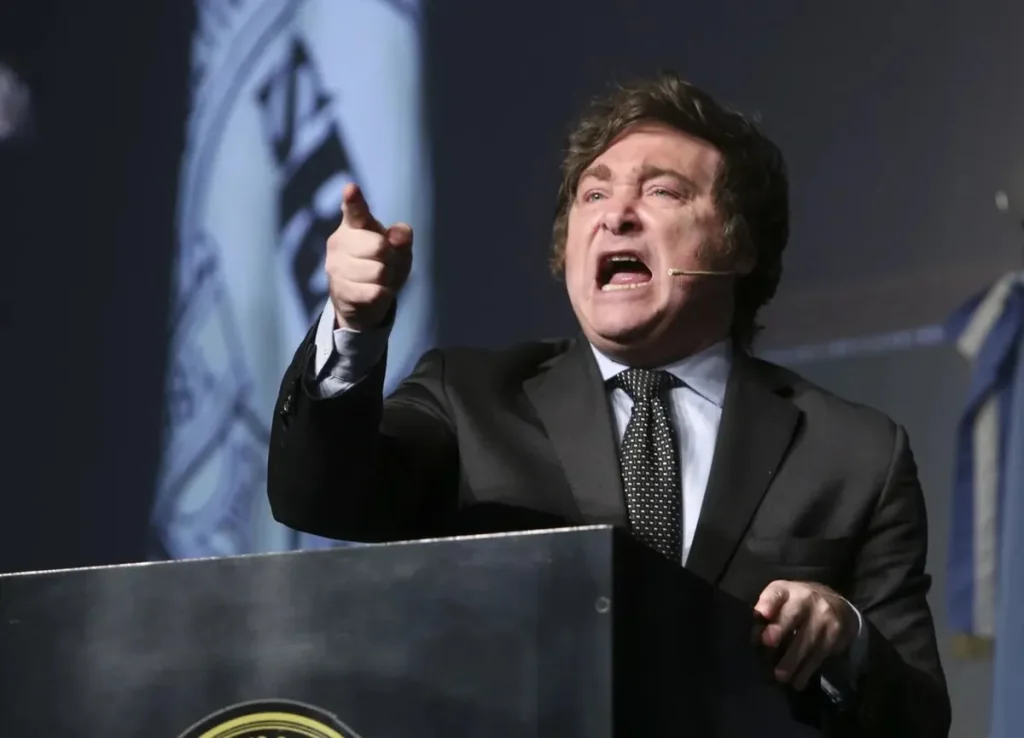
Javier Milei began a week of high exposure with government meetings, speeches, a trip to Chile, and a scheduled visit to Misiones. The concentration of activities came after several days without a public schedule, a period that official sources downplayed. The schedule shows a decision to regain political and territorial initiative, although not all announced actions have the same degree of concrteness: some are confirmed meetings and others remain as projects subject to negotiation.
The first act was the opening of the American Congress of the International Automobile Federation at the headquarters of the Argentine Automobile Club. Milei linked the meeting with his intention to promote the return of Formula 1 to the country, but the holding of a race has not yet been confirmed. The presence of the international event, which returned after almost fifteen years, constitutes an institutional signal; it does not replace the sports, commercial, logistical, and financial agreements necessary to organize a race.
On Tuesday the President will resume Cabinet meetings, the second in two weeks, and will once again convene the political table. There, the debate over the elimination of the PASO, promoted by Patricia Bullrich, remains latent. The ruling party acknowledges that it does not have guaranteed support and will have to talk with allied governors, interested in obtaining guarantees for 2027. A source stated that the matter was not addressed at the previous table, so the reform must be presented as an intention under discussion and not as an agreed decision.
The agenda includes the closing of the Vientos de Cambio sessions, organized by the Fundación Libertad y Progreso in Buenos Aires. Luis Caputo will participate after returning from a G20 meeting in the United States. That same day, the Unión Industrial Argentina will celebrate Industry Day with around 200 guests in Malvinas Argentinas. Milei will not attend and will be represented by Diego Santilli, in a context of tension with the manufacturing sector. The absence and institutional representation will coexist: they do not imply a formal interruption of the dialogue.
On Thursday, Milei will travel to Chile to participate in the Madrid Forum. He has meetings scheduled with Sarah Rogers, U. S. Undersecretary for Public Diplomacy, and with the Chilean president José Antonio Kast at the Palacio de La Moneda. These meetings are part of his strategy to position himself as a regional reference for the right and to strengthen ties with the Republican administration. He is also preparing a summit in Buenos Aires with like-minded leaders, but that meeting still has no set date.
Towards the end of the week, the president plans to travel to Puerto Iguazú for the convention of the Argentine Institute of Finance Executives. Yerba mate sectors announced a protest due to his presence, while La Libertad Avanza in Misiones launched a tool to monitor provincial spending and targeted the government of Hugo Passalacqua. The visit combines management, economic discourse, and party building, but any mobilization or agenda change will need to be verified when it happens.
In parallel, teams from the Presidency, Security, and Foreign Affairs will work with representatives from the Vatican on the visit of Pope Leo XIV, scheduled from 8 to 11 in November. Authorities from Buenos Aires, Córdoba, and CABA will also participate to define the routes. Papal coordination is a logistical and institutional task separate from the electoral strategy, although both occupy the same presidential agenda. The weekly report will depend on results: international agreements, legislative support, industrial response, development of the visit to Misiones, and logistical progress of the papal trip. It will also be necessary to register if any activity is modified due to protests, negotiations, or security requirements. For now, the central fact is the reactivation of the presidential presence, not the automatic realization of all the initiatives included in the schedule.