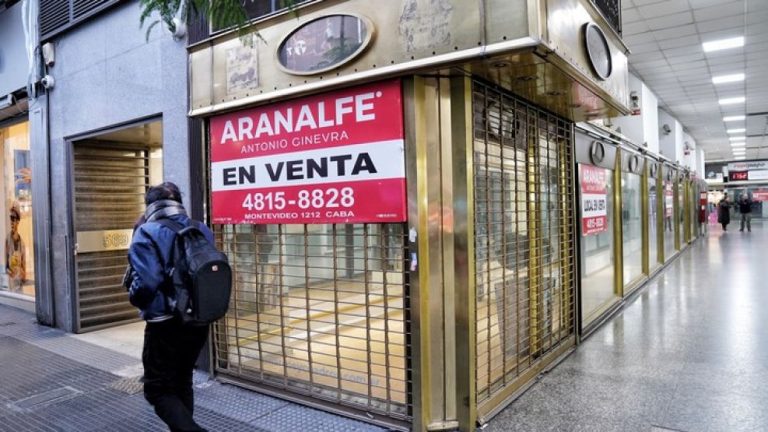
The center of Tandil shows a growing presence of closed commercial premises that remain empty for longer periods. Merchandise clearances before vacating the properties and signs advertising business sales have become recurring images in the downtown area. The phenomenon is visible on streets like Rodríguez, although the available information does not provide a local survey that would allow specifying how many establishments have ceased operating.
José Larraburu, Secretary General of Sindicato de Empleados de Comercio de Tandil, described the situation as worrying. His main observation is not limited to the fact that there are closures: it also changed the speed of replacement. At other times, a vacant store could quickly receive a new investment; now the shutters remain down for longer, waiting for ventures that do not arrive.
The contraction of consumption appears as the immediate framework of that vacancy. Families reduce expenses and resort to debt to support basic purchases, while businesses lose traffic. When billing does not suffice, businesses liquidate stock and leave the premises. That sequence describes a commercial crisis in progress, but it does not authorize turning every empty store into a closure that occurred during the same period.
The local diagnosis was accompanied by national figures released by the Buenos Aires government. Minister Carlos Bianco cited a statistic that places the loss of commercial firms in the country at 7.567 and spoke of approximately 30 fewer businesses per day. He also stated that, since the change of national government, more than 28.000 companies have closed. These are figures of Argentine scope and not a specific count of Tandil.
Bianco added that seven out of ten companies carried out layoffs during the first half of the year to reduce costs in response to the drop in sales; he also pointed out that 64% of the workers did not receive salary increases and that 35% of the companies planned to continue reducing staff. These statements were presented as political and labor context. The strictly Tandil evidence remains qualitative: more closed shutters and longer periods of vacancy.
The next necessary data will be a systematic survey of the downtown area that distinguishes closed premises, rental properties, relocations, and businesses replaced by another activity. Until that measurement exists, the verifiable signal is the deterioration of commercial turnover noted by the union and visible in the downtown area. The duration of vacancy matters because it prolongs the loss of activity, employment, and traffic on each affected block.