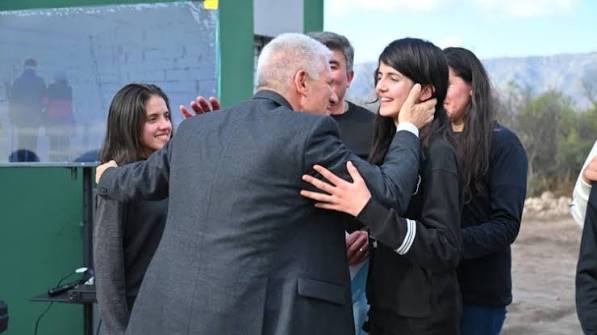
Two photos, two stagings, were the highlights this week for the government, which is trying to turn the page on Adornigate to focus on its reelection plans. One was Luis Caputo's conference on Monday: there the minister announced that he has secured financing to meet the enormous debt commitments ahead. The other was in Tucumán, the president surrounded by half plus one of the governors whose votes he needs to eliminate the primaries, a key element if he wants to be reelected.
The question that should be asked is whom he is speaking to in each case, if we take for granted that investors and large funds know the country's numbers perfectly well and that governors, while negotiating, do not deny anyone a photo. What happened looks very much like an old tale from the world of finance.
A man wants to secure his son's future; to do so he tries to marry him to the heiress of a great fortune. His possible co-father-in-law asks why he would accept the marriage, to which he replies, “because he is a director of an important investment bank.” The man leaves there, goes to the investment bank and proposes his son for the board. When asked for his arguments, he replies that he is the future husband of a rich heiress.
Milei has what the Anglo-Saxon world calls an egg and chicken problem. His main card for reelection is his much-disputed macroeconomic stability, based on a high exchange rate that destroys employment, income and consumption, and a fiscal surplus that many consider deferred spending.
That model has high social costs, which affect his image and his electoral chances. What investors are asking themselves is precisely that: whether there will be one more round of financial business in Argentina or whether this is a good time to unwind positions and cover themselves against electoral risk.
Today his support stands, depending on who measures it, between 30 and 35 points, always below 40. The obvious consequence is that he would lose a runoff, practically against any rival. His only option, then, is to win in the first round.
Argentine electoral law imposes one of two conditions for that to happen: 40 total points or more than ten points of difference over the runner-up. The first looks practically impossible. For the second, it is necessary to divide Peronism, the main opposition force. Today it is practically broken and needs the primaries as an ordering element. To eliminate them, Milei needs to build a legislative majority that he does not have today.
Like the character in the tale, Milei builds crossed lies. The Economy minister's conference on Monday was aimed at local politics. “There will be no currency run, debt crisis or turbulence of any kind; I have everything cleared through 2027. Get on now, there are tickets,” that was the subtext. Conversely. The photo in Tucumán sought to build confidence among bondholders: “I have all the political support I need to be reelected. Do not sell.”
What Milei proposes is more or less in sight, although now an additional problem has emerged, exposing the fragility of his approach. War returned to Hormuz and the most likely outcome is that oil and interest rates will rise and Trump's electoral chances in the midterms will fall even further. In short, it is a house of cards that for now, and only for now, remains standing. The other relevant question is when the opposition will show its cards.