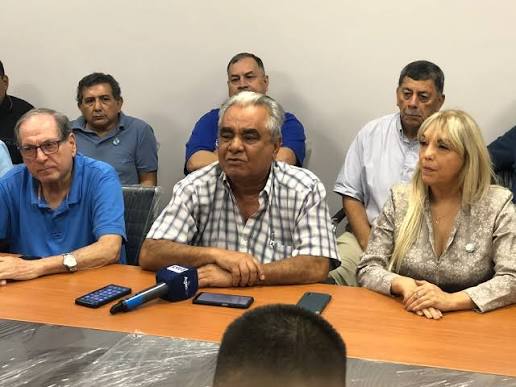
The Formosa regional branch of the General Confederation of Labor commemorated José Ignacio Rucci and turned the tribute into a statement on Argentina's economic and labor situation. The organization highlighted the former CGT secretary-general's career, defended union organization and unity, and criticized the national government's adjustment policies. The document connected the historical memory of the labor leader with a current position in defense of labor and social rights.
Rucci came from the Metalworkers' Union and led the national CGT between 1970 and 1973, during a period of intense conflict and political reorganization. The Formosa branch emphasized his role in coordinating the labor movement and in the process that accompanied Juan Domingo Perón's return after eighteen years in exile. It also recalled his participation in the 1957 creation of the 62 Peronist Organizations, a labor and political representation space linked to Justicialism.
Another focus of the tribute was Rucci's role in the Social Pact signed on June 8, 1973, by representatives of the state, business and labor. That agreement sought to coordinate prices, wages and productive decisions in a difficult economic context. The Formosa CGT presented the experience as a precedent for concertation and argued that labor participation in national decisions should be part of any strategy intended to organize the economy and promote development.
Rucci was killed on September 25, 1973, while he still held a central place in union leadership. The Formosa commemoration did not reduce his legacy to that episode and instead focused on his organizing career, his pursuit of agreements and his defense of a unified labor structure. For the regional branch, that legacy is summarized in the need to sustain a permanent struggle, redouble efforts and foster unity when workers face pressure.
Using that historical reference, the organization directed its criticism at Javier Milei's administration. The Formosa CGT said national economic measures were having negative effects on broad social sectors, particularly on people who depend on wages. It described the official course as an adjustment policy and maintained that it affected labor and social rights while worsening existing economic difficulties. Those statements reflected the union's position and were presented as the basis for its call to organize.
The statement did not set out a detailed alternative program, but it established three priorities: strengthening union organization, maintaining labor movement unity and defending acquired rights. The regional branch linked those tasks to more active worker participation in political, economic and social life. In this way, the tribute also became an intervention in the contemporary debate over the role of unions in responding to national decisions and their consequences in the provinces.
The Formosa CGT also included a definition regarding provincial politics. It highlighted the functioning of local democratic institutions and reaffirmed its commitment to a Peronist-oriented project that, according to the statement, should place the population's needs at the center of public action. That declaration positions the regional branch not only as a labor representative but also as a political actor in Formosa, with an explicit view of the course it seeks to maintain.
The next step will depend on how this position is translated into union action, specific demands and coordination with other organizations. For now, the regional branch used a historical commemoration to state its reading of the present: it defended concertation among the state, business and labor, rejected national adjustment and called for union cohesion. The declaration outlines an agenda of mobilization and rights defense, although it announces no dates, strikes or specific negotiations with national or provincial authorities.