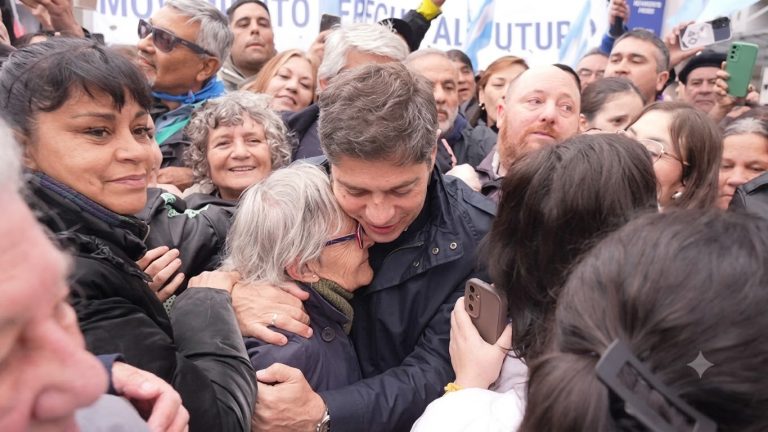
Axel Kicillof joined the demonstration outside Congress while the Senate debated the Private Property Inviolability Bill. The Buenos Aires province governor arrived with cabinet members, mayors and activists, choosing to support in the street a coalition of social organisations, unions, political groups, tenants' movements, teachers and self-organised residents. The provincial presence was intended to keep the opposition alive even after the government changed one of the provisions that had generated the strongest resistance.
The national government withdrew the chapter that sought to raise the ceiling on rural land in foreign hands from 15% to 25%, a decision taken because it lacked the political consensus needed for approval. Kicillof portrayed that retreat as a result of public pressure but warned that he did not consider the dispute settled. His argument was that removing the land section did not correct the rest of a bill that, in his view, still threatened rights and strategic resources.
The demonstration continued to focus on the proposed changes to eviction procedures and the Fire Management Law. Participating organisations argued that the new rules would weaken protections for people facing housing litigation and opposed easing restrictions on productive land and grasslands affected by fires. The mobilisation therefore shifted from a single focus on foreign ownership of land to a broader challenge to the bill as a whole.
During the march, Kicillof described the protest as a cross-sector response and said different groups had understood the purpose of the president's programme. He also accused Javier Milei of seeking to sell and fragment Argentine territory. Those claims reflected the political position of the governor and demonstrators; the verifiable change in the parliamentary process at that point was the withdrawal of the land chapter and the continuation of debate on the remaining provisions.
There were tense moments near the barriers surrounding Congress. Federal forces used water-cannon trucks, pepper spray and rubber pellets to disperse demonstrators in several areas. Television broadcasts showed people affected by gas and some injuries, while participants denounced the operation as repression. The incidents occurred while the session was still under way and added another political front to a debate already shaped by pressure from governors, lawmakers and organisations.
The Senate continued considering the bill without the section that expanded foreign ownership of rural land. Voting on the remaining chapters thus became the decisive next step in determining whether objections concerning evictions, expropriations and fire management would produce further changes. Kicillof made clear that the Province would maintain its opposition, while the mobilisation treated the government's partial retreat as a starting point rather than the end of the conflict.