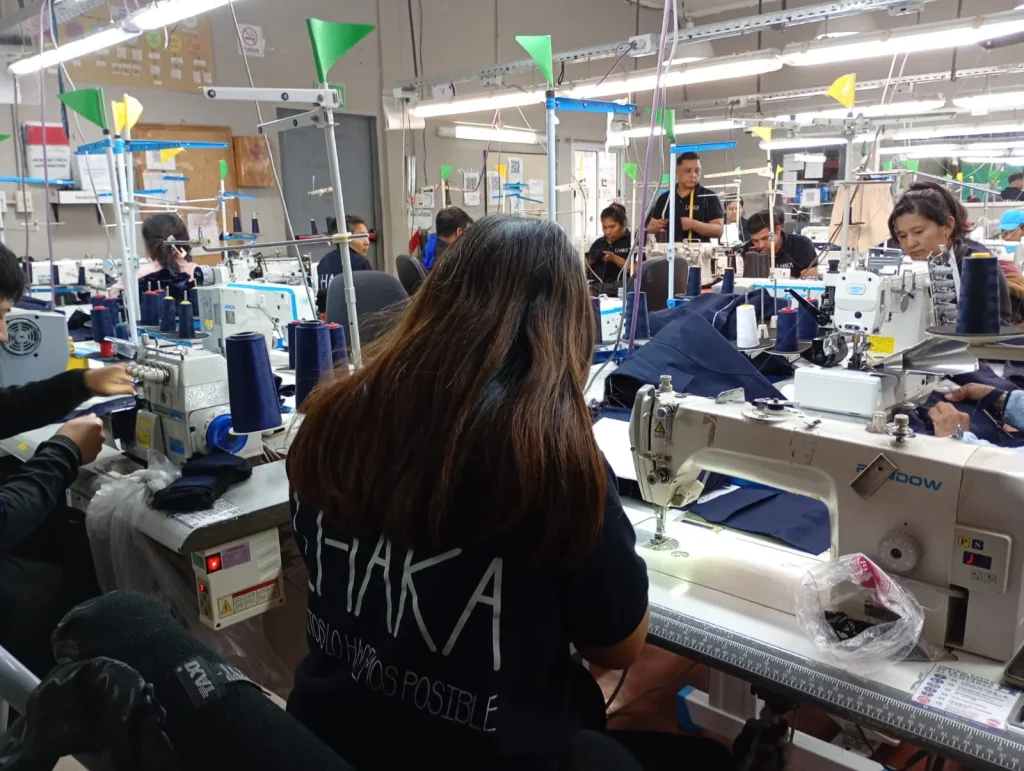
LHAKA, brand of Cooperativa de Trabajo San Ignacio de Loyola, seeks to become a supplier for mining in Salta from a Wichí community near Hickman, almost 360 kilometers from the provincial capital. The textile workshop was born in a territory with difficulties in transportation, services, and access to formal employment, and it evolved until it acquired industrial capacity and a portfolio of major clients.
The initiative began 13 years ago following a request from Chief Dino Salas to Aldo Navilli, owner of Molinos Cañuelas. After experimenting with gardens, crafts, and bricks, the community found in sewing an activity capable of sustaining stable work. The first workshop brought together about ten people; currently, the staff fluctuates between 60 and 65, and more than 60% belong to the Wichí community.
Jumbo was the first major client, followed by Carrefour, Chango Más, and other buyers. LHAKA makes fashion, uniforms, and work clothes, as well as garments for distribution centers and pants for Policía de Salta. In supermarket seasons, it handled orders of 10.000 to 12.000 garments and reached 15.000. Those volumes are production records, not already received mining orders.
The cooperative organized cutting, production, quality, and shipping areas, trained staff, and arranged the logistics to receive fabrics and send merchandise. It also provides transportation for workers and children in the community. Part of the impact extends to meals, suppliers, and nearby services. For many members, the job at the factory was their first formal employment.
Work clothing is a line that has been developed for approximately two and a half years. LHAKA obtained the ISO 9001 certification after a process of about a year and a half and claims that it can meet requirements of traceability, quality, deadlines, and technical specifications. The company does not ask to be chosen for its community identity, but to compete based on capacity, structure, and compliance.
The target market includes mining companies, contractors, construction companies, and a mentioned network of around 900 provincial suppliers. LHAKA announced that it will participate in Argentina Mining to present its production and seek clients. That will be the first verifiable commercial step: no contracts with the sector have been reported yet. Its challenge is to turn textile standards and experience into orders capable of expanding employment and local activity.