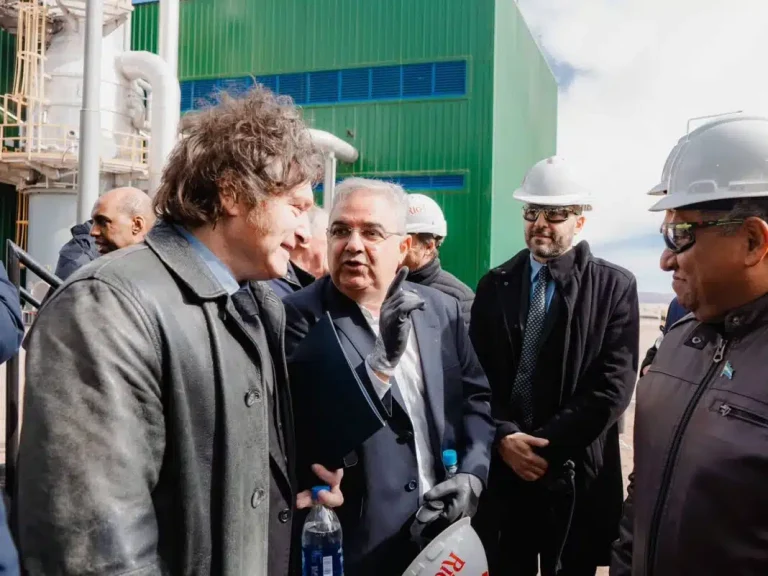
Exar has begun a new infrastructure phase at the Cauchari-Olaroz salt flat under the RIGI. Governor Carlos Sadir presented the investment as an opportunity for jobs, suppliers and development in the Puna. The company expects about 140 workers to be added, with execution assigned to a consortium of Jujuy firms.
The works support lithium-carbonate production and the infrastructure needed to sustain it. Exar president Simón Pérez Alsina credited the RIGI with providing long-term predictability. Public evaluation should nevertheless include production commitments, deadlines, tax benefits and territorial results.
The provincial government emphasizes local content. Contracts for Jujuy companies, local hiring and specialized suppliers can multiply the impact beyond the mine. Verification requires published shares of provincial purchases, participating firms, contract duration and wage trends.
Workers from nearby communities are involved in different stages. Seven Atacama communities participate in a monthly table on employment, suppliers, development programs and environmental concerns. Its legitimacy depends on minutes, access to information and real influence.
Jemse also highlighted the use of provincial energy infrastructure and electricity from the Cauchari solar complex. Lithium and renewable power support an energy-transition narrative, but water, brines, waste, biodiversity and traffic still require independent monitoring.
Training is another central issue. Links with universities can create technicians, operators, professionals and suppliers who remain in Jujuy after a project cycle changes. Investment should leave transferable capabilities, not only temporary construction jobs.
The RIGI offers incentives and stability, but provincial returns should be measured through jobs, procurement, taxes, community participation and environmental performance. Without indicators, development risks becoming only an announcement.
The next step is monitoring execution, confirming the 140 jobs and measuring how much spending stays in Jujuy. Success will depend on job quality, supplier diversification, transparency and community trust, not only increased production capacity.