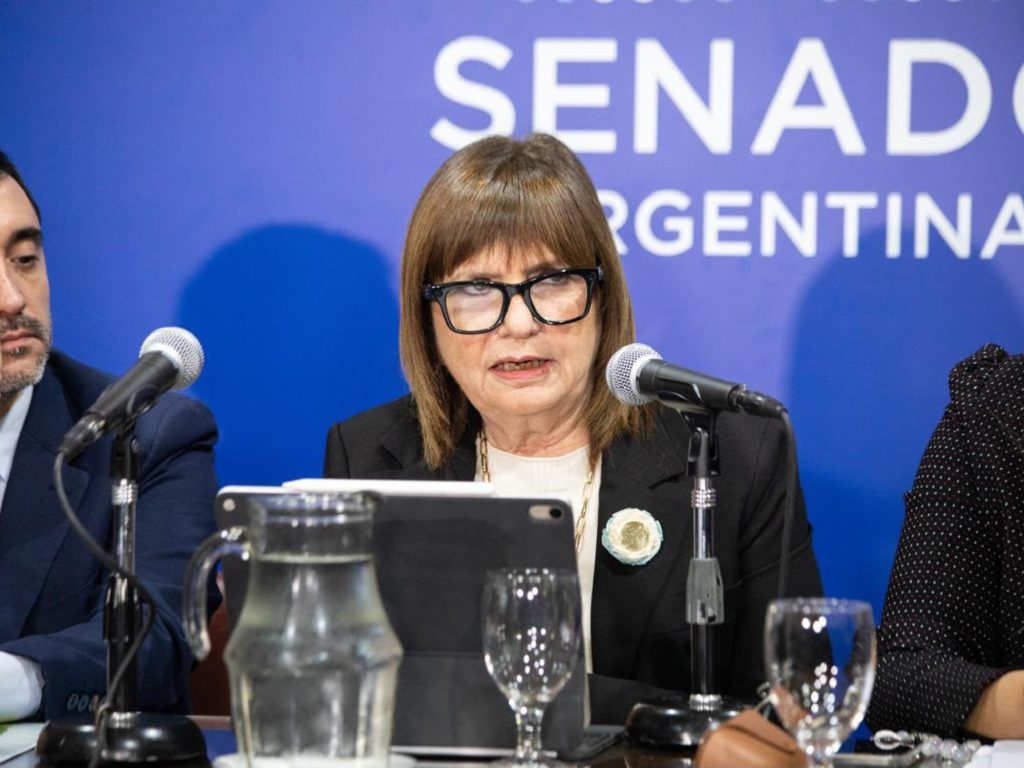
The Government presented a new ruling on the land law to avoid another defeat in the Senate session convened for Thursday. The original project eliminated limits on the purchase of productive rural land by foreign individuals or companies. The version announced by Patricia Bullrich maintains a larger opening than the current regulation, but raises the cap from 15% to 25% instead of completely removing it.
The limit will be applied both on the national territory and on that of each province. Bullrich also stated that foreign states will not be able to acquire rural lands in Argentina. Legal entities, temporary unions, collaboration groups, or other associative links with direct or indirect state participation will need the joint approval of the Nation and the corresponding province.
Article 25 also incorporates a registration obligation. Any purchase of rural land by a foreign natural or legal person must be registered in the provincial property registry through a special entry that records the data and nationality of the purchaser. The head of the La Libertad Avanza bloc presented these changes accompanied by Agustín Coto and Nadia Márquez, presidents of the Commissions on Constitutional Affairs and General Legislation.
The ruling also modifies the rules on expropriations. It maintains the possibility of expropriating property for public utility, but requires that this declaration be interpreted restrictively and specifically identify the purpose pursued. It also establishes that the expropriation must be suitable, necessary, and proportional, and Bullrich emphasized that any national or provincial decision must include the corresponding payment.
The concession responds to the loss of support among dialogue-seeking blocs and to social rejection of a total opening. The ruling party estimates that the new wording could gather between 38 and 40 votes, although there are still objections in radical sectors, from PRO, and from provincial forces. The Misiones senators Carlos Arce and Sonia Rojas Decut faced pressure in their province, while Victoria Villarruel publicly expressed her opposition to the project.
Villarruel will not preside over the session because she will be in charge of the Executive Branch during Javier Milei's trip to Ecuador. The change in leadership does not resolve, however, the parliamentary arithmetic. Bullrich stated that the text was agreed upon with the groups that made contributions; on Thursday it will be verified whether the new limit, the registry controls, and the conditions on expropriation are sufficient to turn those discussions into an effective majority.