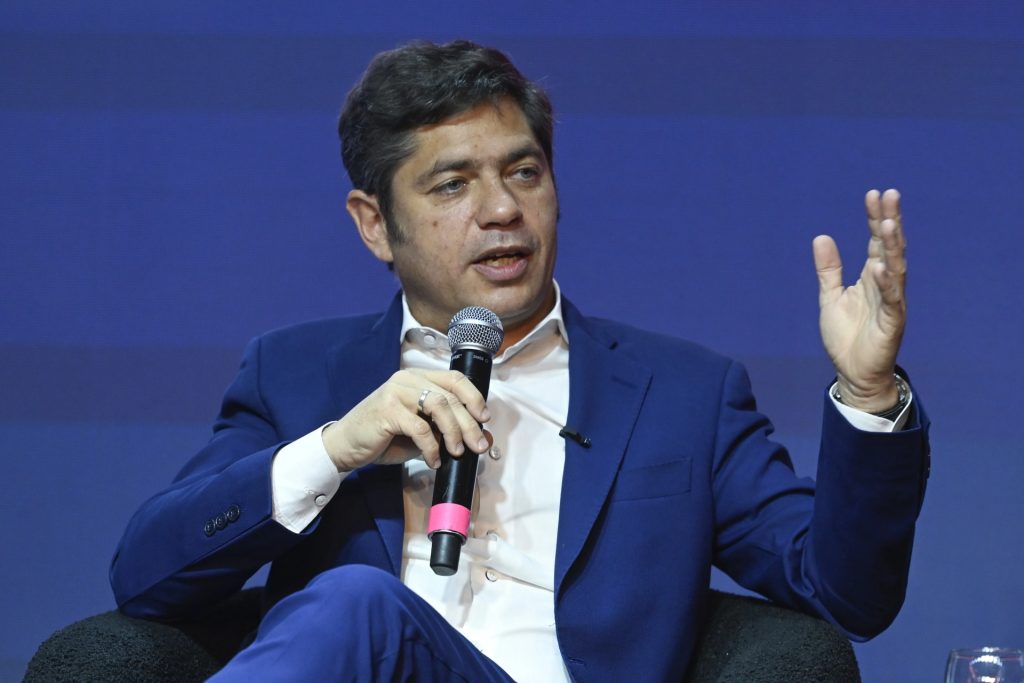
The renewal of the Buenos Aires Province Judicial Council advanced along two paths that converged almost simultaneously. Governor Axel Kicillof appointed three full members and three alternates by decree to represent the Executive Branch, while the provincial Chamber of Deputies approved its own delegates. Those moves filled key vacancies, although the body's full composition was not yet complete.
The Council takes part in selecting judges and judicial officials in the province, so its composition affects the processing of court vacancies. Law 11,868 reserves four seats for the Executive and gives the governor authority to appoint them. The decree published in the Official Gazette filled the positions that this branch still had pending.
Lawyers Santiago Carlos Pérez Teruel, Carlos Lisandro Pellegrini and Santiago Eduardo Révora were appointed as full members. Each has a designated replacement: Gabriela Demaria is Pérez Teruel's alternate, Ana Laura Ramos fills that role for Pellegrini, and Gustavo Alberto Gamino does the same for Révora. The individual pairings allow the representation to continue when a member is absent.
The six appointees join an Executive group that already included Buenos Aires Justice Minister Juan Martín Mena and his alternate, Inti Nahuel Pérez Aznar. That completed the four full seats the law assigns to the governor and their corresponding replacements. The decision does not alter the Council's institutional distribution; it completes the Executive's allotted participation.
At the same time, the Chamber of Deputies approved Mariano Cascallares as a full council member and Sofía Vanelli as his alternate for the Legislature. That step occurred one day before the decree and allowed another part of the body to settle its own vacancy. The Council therefore moved toward completion through separate decisions by branches that must ultimately sit at the same table.
One piece of the process nevertheless remains pending. The Buenos Aires Senate still has to choose a representative and was expected to consider that decision on the Thursday following the appointments. Until that seat is filled, the Executive's representation and part of the Legislature's will be settled, but the Council's overall membership will remain incomplete.
The delay matters because filling judicial vacancies is among the principal demands facing the provincial court system. Kicillof's decrees and the lower-house vote clear much of the institutional structure, but they do not replace the remaining step. The Senate's next decision will determine when the Council can become fully constituted to sustain the selection of judges and judicial officials.