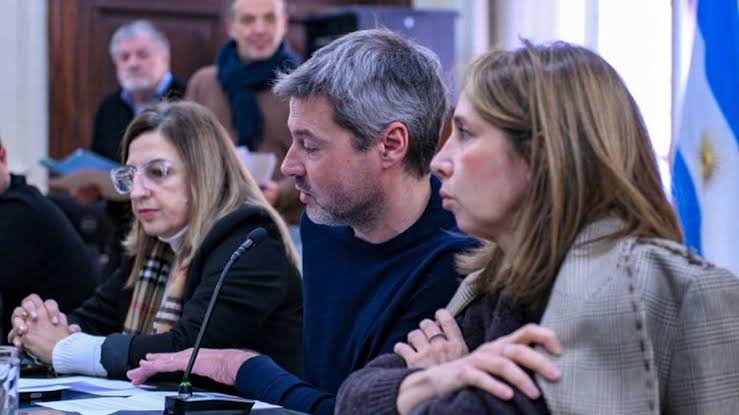
Buenos Aires City's legislature approved the first nominees for the new local labor court system. The six reports considered received 50 votes in favor, two against and one abstention, showing broad political agreement.
The governing Vamos por Más coalition obtained opposition support despite lacking its own majority. Peronist blocs, La Libertad Avanza, Ciudadanos Unidos/UCR and Confianza y Desarrollo backed the nominations.
The files came from a joint report by the Ethics Board and Justice Committee. Law 6,789 initially provides for ten first-instance courts, two prosecutor offices, an Appeals Chamber, an appeals prosecutor and two child-protection advisers.
The ten first-instance nominees are María Sol Loredo, María Paula Nievas Ibáñez, Laura Victoria Bonhote, Laura Alejandra Calogero, Francisco Elissondo, Agustina Bergonzelli, Antonella Stringhini, Itatí Canido, Pablo Andrés Liste and Sebastián Luis Caset.
The Appeals Chamber will include Diego Tula, Martín Furchi, Patricia Ceriani, Silvia Gutiérrez Garay, Gabriela Fernández and Horacio Pitrau. Viviana Laura Díaz and Mariana Paula Mansilla will serve as first-instance prosecutors and Germán Helvio Queipo at the appeals level.
Federico Kaimakamian Carrau was also approved as a first-instance child-protection adviser and Damián Natalio Ariel Corti for the Appeals Chamber. All candidates had previously passed selection procedures conducted by the city Judicial Council.
Approval does not mean the new courts can begin operating immediately. The city and federal governments are still negotiating the funding agreement for the transfer of powers, with estimates of roughly 150 billion pesos for a broad structure.
The city government plans to start with a smaller system and expand later. With the appointments approved, the decisive issues are now funding and the final number of courts and panels that will actually begin operating.