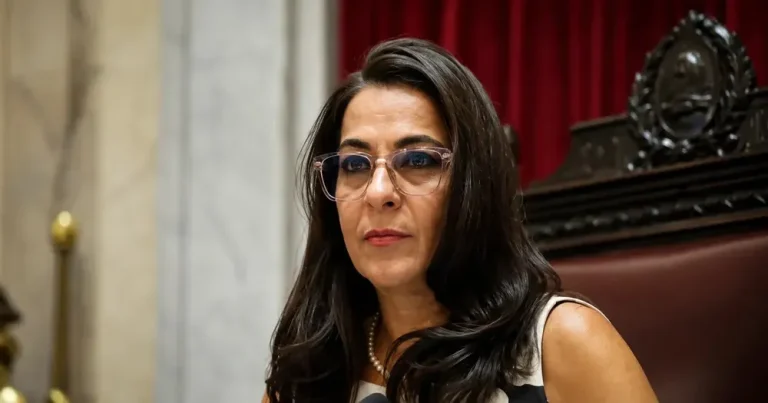
The national deputy for Mendoza Lourdes Arrieta expressed her disappointment with the government of Javier Milei and expanded on her differences with the political space that took her to Congress. The legislator, a former member of La Libertad Avanza and currently part of the Provincias Unidas block, confirmed in a radio interview that she no longer feels represented by the direction of the national administration.
Arrieta explained that she decided to support Milei due to her initial identification with libertarian ideas, but distanced herself from the role of Karina Milei and from the evolution of the official discourse. She criticized the presence of hatred, violence, and manipulation mechanisms on social media. She also demanded greater attention to education, health, security, and vulnerable sectors.
The deputy linked these national criticisms with a specific request for Mendoza. She reported that she submitted a request to the Executive Branch to know the destination of the funds collected from the liquid fuel tax. Her argument is based on the fact that a portion of what is paid per liter should finance the maintenance and repair of national roads.
Arrieta stated that the people of Mendoza pay this tax component and, at the same time, face other expenditures destined for road works, a situation she described as a double payment. She called the condition of the rutas nacionales 7 y 40 deplorable and stated that their condition affects tourism, the connection with Chile, and travel between different points in the province.
He also rejected the possibility of implementing tolls in ruta 7 while the tax intended for road financing continues to be collected. Before moving forward with that system, he asked to know how much was collected, what works were carried out, and how the funds were applied. In the same interview, he mentioned problems with school infrastructure and heating, as well as difficulties in the tourism and gastronomic activities.
The statements combine a political rupture with the ruling party and an institutional request for information. The questioning about roads, schools, and economic activity corresponds to Arrieta's evaluation and was not accompanied by responses from the Executive in the information released. The formal fact is the submission of the information request; the destination of the resources and the scope of possible tolls remain without official clarification.