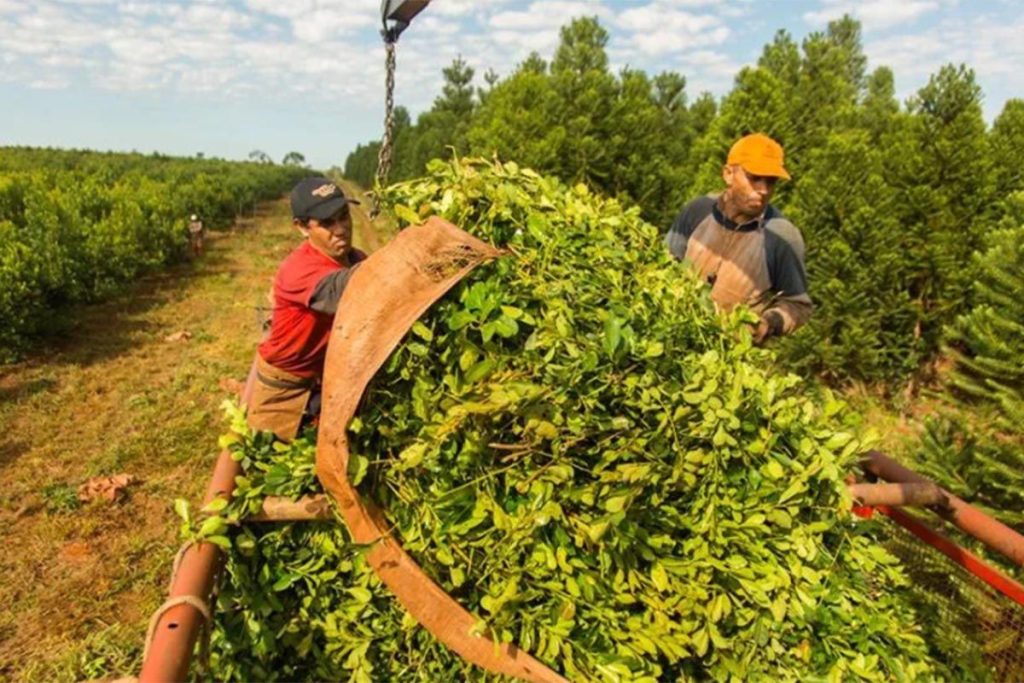
The Regional Economies Scorecard of CONINAGRO kept yerba mate and cassava in red during June 2026. Tobacco and forestry remained in yellow. For Misiones, the combination shows different difficulties within four main chains: insufficient prices for the producer, market weakness, increasing external purchases, and costs rising faster than primary income.
The survey analyzes 19 activities through three components: business, production, and market. Four were marked green, eight yellow, and seven red. The only change compared to the previous assessment was the shift of peanuts from red to yellow. Along with yerba mate and cassava, the critical group included rice, wine and must, vegetables, cotton, and milk; cattle, sheep, grains, and honey were marked green.
Mate herb accumulated 27 consecutive months in the red since April of 2024. In June, the producer received around 260.000 pesos per ton of green leaf, a real year-on-year drop of 13%. The five-year average, measured at constant values, was close to 632.000 pesos. The area remained at 231.000 hectares and the twelve-month production reached 856.000 tons, 2% less than the previous 873.000.
Domestic consumption of yerba was around 6 kilos per inhabitant per year. Exports generated USD 128 million, 12,6% more, while imports fell 9% to USD 20,5 million. However, in May the producer received 15% of the final price paid by the consumer, eight points less than the historical average of 23% for that month. The export improvement did not compensate for the deterioration of the primary link.
Cassava showed a different structure. The bag of 40 kilos was paid 28.190 pesos and rose 137% nominal year-on-year, but the market remained weak. There were no export revenues in the past twelve months, and imports reached USD 7,5 million, 223% more. In the first half of the year, they totaled USD 5 million, 113% above the historical average, although they represented less than 1% of the external purchases of the 19 analyzed economies.
Tobacco and forestry were left in yellow. The price of tobacco increased 30% against an inflation of 33,5%; its exports amounted to USD 597 million. In forestry, pine was around 44.000 pesos per ton and eucalyptus 39.750, both with an improvement of 7%. The next scorecard will show if prices recover ground; until then, favorable business signals do not eliminate the relative loss of those who produce.