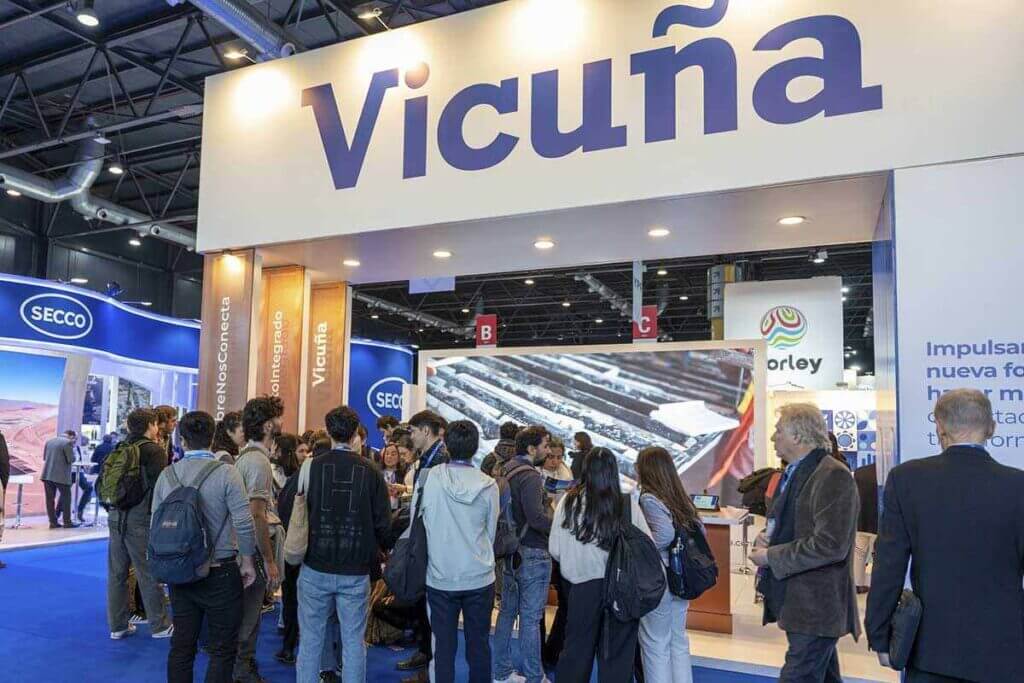
The national government approved the Vicuña mining project's entry into the Large Investment Incentive Regime, a decision that enables the deployment of the largest private investment recorded for Argentine mining.
The deposit, located in north-western San Juan, contains copper, gold and silver and will be operated jointly by Australia's BHP and Canada's Lundin Mining. The planned initial investment amounts to 9.712 billion dollars.
The disbursement plan could scale in later stages to 18 billion dollars. With that level of capital, Vicuña is consolidating as a strategic project for San Juan's mountain region and for Argentina's position in the global copper market.
Entry into the RIGI gives the consortium fiscal, foreign-exchange and customs stability for 30 years. Such predictability is central for large-scale projects with long maturation periods and high infrastructure requirements.
Once in commercial operation, the project is expected to generate more than 2.6 billion dollars in annual exports. That flow could make copper one of the country's most important export complexes, alongside lithium, gold and unconventional hydrocarbons.
The expected labour impact is also substantial. The construction phase would require 12,000 direct jobs, while operations would sustain around 5,000 direct jobs and about 19,000 indirect positions across the value chain.
The companies estimate that 90% of technical and operational staff will be local. Vicuña's supplier network already includes 245 contractors, 150 of which are based and taxed in San Juan.
The challenge will be to turn fiscal incentives into verifiable territorial development. For San Juan, Vicuña combines export scale, jobs, suppliers and an opportunity to reposition the province as a central mining district in Argentina.