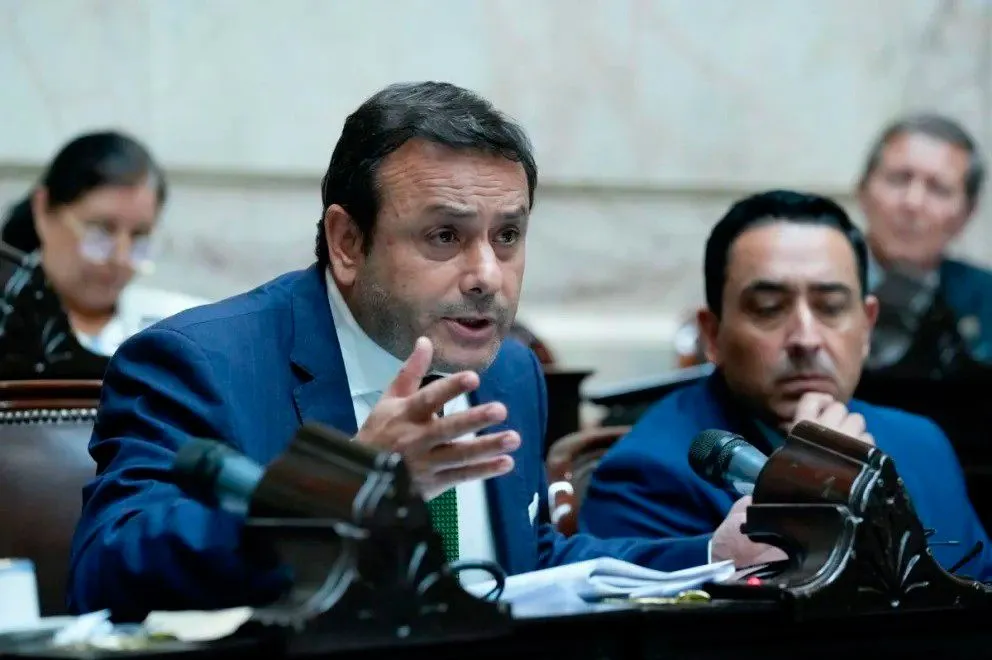
The governor of Misiones, Hugo Passalacqua, supported the formation of Argentina Federal, a bloc of nine national deputies from four provinces. The caucus will be chaired by the missionary Oscar Herrera Ahuad and seeks to turn territorial votes into parliamentary bargaining power. The decision reorganizes representatives who had been operating in other spaces, but does not by itself constitute a national electoral alliance nor guarantee that everyone will always vote the same way.
Misiones contributes four members: Herrera Ahuad, Alberto Arrúa, Yamila Ruiz and Daniel Vancsik. Salta adds Bernardo Biella, Pablo Outes and Yolanda Vega. Claudio Álvarez represents San Luis and Gerardo Gustavo González Formosa. The composition shows a provincial axis that tries to coordinate demands before the Executive Branch and Congress. The nine members maintain local belongings and agendas, so the agreement provides for common positions evaluated on a case-by-case basis.
Passalacqua and the governor of Salta Gustavo Sáenz appear as political backers of the initiative. The declared goal is to negotiate resources, works, and sectoral policies that the provinces consider necessary. That purpose does not imply systematic opposition to President Javier Milei nor automatic support for every official project. The effectiveness of the bloc will depend on its discipline, the proximity of the votes, and the Government's willingness to exchange verifiable commitments.
Argentina Federal reconfigures the space that functioned as Innovación Federal. At the time of the presentation, the formal records of the Chamber could still show some deputies within their previous bloc. That administrative transition must be distinguished from the announced political decision. The update of authorities, payroll, and memberships in the parliamentary systems will be one of the first elements to confirm that the new arrangement is fully operational in the chamber.
The presidency of Herrera Ahuad grants Misiones a coordination role. Its task will consist of organizing positions of provinces with different productive and fiscal interests, and representing the bloc in parliamentary work. Nine seats can be decisive in close votes, but its influence is not measured only by the number. It also depends on rulings, quorum, alliances with other groups, and the ability to uphold agreements beyond a particular project. The presidency will have to manage these differences without erasing the priorities of each district.
The federal approach seeks for national negotiations to include transfers, infrastructure, and regional economies. To evaluate results, it will be necessary to identify concrete commitments, budgetary allocations, agreements, and implementations. A meeting or promise does not equate to funds transferred or projects initiated. Similarly, supporting a national law does not by itself demonstrate that a province has received a consideration. The traceability of each decision will be necessary to avoid inferences about undocumented exchanges.
The new bloc also modifies the map of the Chamber, where the ruling party and the opposition need variable alliances to reach a quorum and majorities. Argentina Federal can accompany, reject, or propose changes depending on the matter. That flexibility constitutes its main tool and, at the same time, a challenge for the public identity of the space. If behaviors are too scattered, it will lose collective capacity; if it unifies excessively, it will have to reconcile potentially contradictory provincial demands in each future legislative negotiation.
The next steps will be formal registration, the appointment of authorities, participation in committees, and the first joint parliamentary votes. It will also need to be observed whether the caucus presents its own bills and how it reports the benefits sought for each territory. The confirmed fact is the decision of nine deputies and the support of Passalacqua and Sáenz. Their negotiating power, the stability of the agreement, and the results in resources or works can only be measured based on subsequent parliamentary and administrative actions.