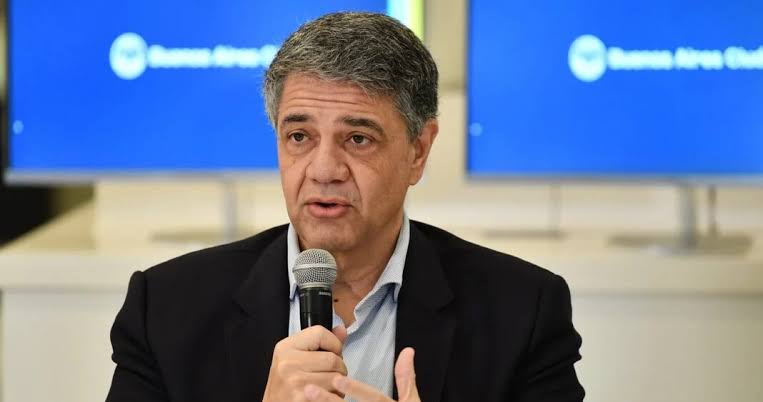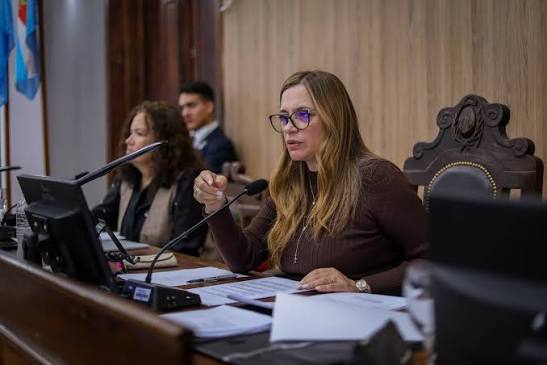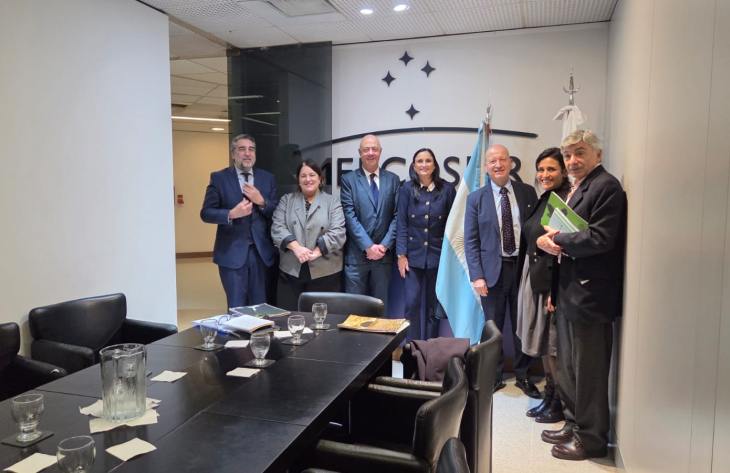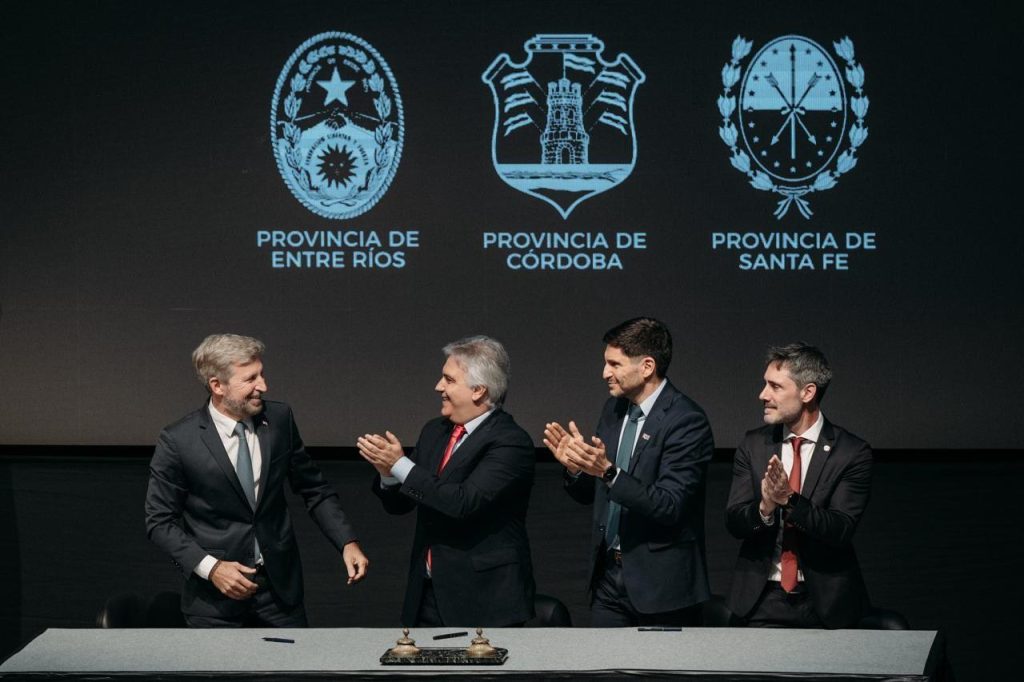
The governors Martín Llaryora, Maximiliano Pullaro, and Rogelio Frigerio brought a joint agenda of the Región Centro to Casa Rosada. The leaders of Córdoba, Santa Fe, and Entre Ríos met with the Chief of Staff, Diego Santilli, to discuss road infrastructure, energy, and the cold zone regime. The meeting formalized shared demands of a productive corridor that seeks to negotiate with the Nation from a regional position rather than through isolated proposals from each province.
The road network took a central place due to its impact on connectivity, logistics, and costs. Provincial governments consider it a priority to recover corridors used by agro-industrial production, freight transport, and interurban circulation. The meeting did not report awards, schedules, or new budgets. Therefore, the exchange should be understood as an instance of coordination and negotiation. The evaluation of results will require identifying which sections progress, which jurisdiction will carry out the works, and how financing and maintenance will be distributed.
Another point was the situation of large industrial users of electric energy. The three provinces concentrate companies whose competitiveness depends on tariffs, available capacity, and quality of supply. The governors raised the costs faced by this network, but a closed mechanism for compensation or refinancing was not announced. Any solution will need to define beneficiaries, applicable periods, enforcing authority, and fiscal impact. A political discussion alone does not change contracts, bills, or obligations within the electricity market.
The cold zone regime added a distributive dimension. Its treatment continues to be under discussion in the Senate and is linked to energy subsidies differentiated by climatic conditions. The Región Centro seeks to preserve or redefine benefits while the Nation negotiates schemes for the warm northern zones. The problem combines technical, territorial, and budgetary criteria: expanding coverage can relieve households, but it requires determining who pays the cost and what indicators justify the inclusion or exclusion of each area.
Llaryora arrived as governor of Córdoba and member of a regional body that has sought to coordinate positions on production and infrastructure. The joint presence with Pullaro and Frigerio strengthens the capacity for dialogue with the national government. However, management agreements do not eliminate party differences nor commit to a common electoral strategy. The Región Centro functions here as an institutional platform to defend shared interests, not as a formalized political front for the 2027. elections.
Santilli received the proposal on a day marked by other negotiations with governors and parties. His role will be to transform the demands into technical meetings with the Economy, Energy, and Road departments, where numbers and responsibilities will need to emerge. The value of the meeting depends on that administrative continuity. Without files, resolutions, or subsequent agreements, the regional agenda will retain political visibility, but it will not produce verifiable changes in roads, tariffs, or industrial costs.
The meeting consolidated three priorities: infrastructure for the productive corridor, energy predictability for the industry, and territorial treatment of subsidies. It also showed that Córdoba seeks to amplify its claims through a stable interprovincial alliance. For companies, the key will be whether the measures reduce costs or improve works; for households, whether the tariff scheme maintains protection without generating inequalities that are difficult to justify. The Región Centro should also publish a common project matrix so that each announcement can be tracked across jurisdictions. The balance cannot be measured by the photograph in Casa Rosada, but by future decisions with deadlines, financing, and responsible agencies. Until then, there was a high-level negotiation and a recognized common agenda, not a completed operational agreement. The continuity of the table will be especially relevant for Córdoba, whose industry and logistics depend on decisions that go beyond the exclusive competence of the Province. That instrument has not yet been announced.