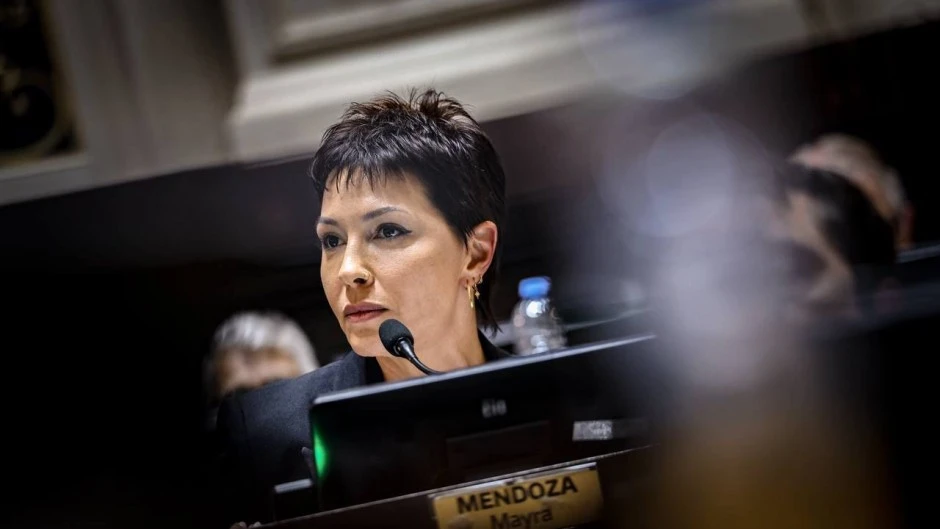
The Buenos Aires Chamber of Deputies gave preliminary approval to the project known as Ley Ema, aimed at guaranteeing a safe digital coexistence for students in the province. The initiative was promoted by Deputy Mayra Mendoza and received support in the chamber after being discussed in committees. The vote in the lower house does not complete the process: the text must be considered by the Senate provincial before it can become a binding obligation for the educational system.
The proposal is named Ema Bondaruk, a teenager whose case became associated with the non-consensual dissemination of intimate images and the extreme consequences of digital violence. This background guides the project towards early prevention, support for those affected, and institutional responsibility in the face of episodes that go beyond the physical school space. The regulation seeks to acknowledge that an aggression carried out through networks or devices can disrupt school life and requires specific responses.
Among the announced tools are the incorporation of digital citizenship content into teaching, the updating of institutional guides, and the development of protocols to detect and address risk situations. Trainings for teachers and school leaders are also planned, with the aim of enabling them to identify signals, protect victims, and activate assistance channels. The project proposes a general framework; its effectiveness will depend on regulations, allocated resources, and coordination between education, health, rights protection, and justice.
The initiative does not turn any conflict into a crime nor does it replace judicial intervention when appropriate. Its main scope is preventive, educational, and assistance-oriented: to order how institutions should act, prevent revictimization, and promote responsible use of technologies. This distinction is central because digital violence can include behaviors of very different seriousness and nature. Each case must be evaluated according to its facts, the age of the people involved, and the applicable national and provincial regulations.
The preliminary approval occurred during a session that also addressed other educational and rights measures. Legislative support expresses a consensus on the need to intervene, but it does not by itself solve operational problems such as sustained training, the availability of interdisciplinary teams, data protection, or response outside of school hours. A specific budget has not yet been reported either. Without these components, a protocol can mandate formal obligations without ensuring a homogeneous capacity across all districts in Buenos Aires Province.
The passage through the Senate may introduce modifications, approve the text without changes, or prevent its enactment. If the upper house modifies it, the Chamber of Deputies will have to review those alterations according to the legislative procedure. Only after complete enactment, promulgation, and publication will it be appropriate to speak of a law in force. Until then, the decision of 27 in August is a politically relevant partial approval and a definition of the lower house, not the immediate implementation of all the measures envisaged.
The debate also opens up a responsibility that is not limited to the educational community. Platforms, families, state agencies, and media participate in the circulation of images and messages that can cause lasting harm. Future implementation should avoid merely punitive responses and combine digital literacy, reparation, care, and clear reporting channels. It should also provide for periodic evaluation, student participation, and communication with families without violating the privacy of those who seek help. The legislative progress establishes that agenda and recognizes the problem; the decisive test will be to transform the consensus into practices accessible to schools with very different capacities and territorial realities. Prevention must be maintained throughout the entire school year and not be limited to occasional campaigns following a crisis.