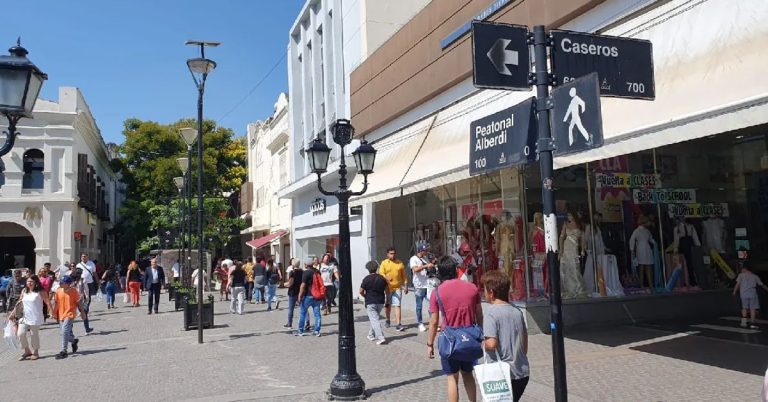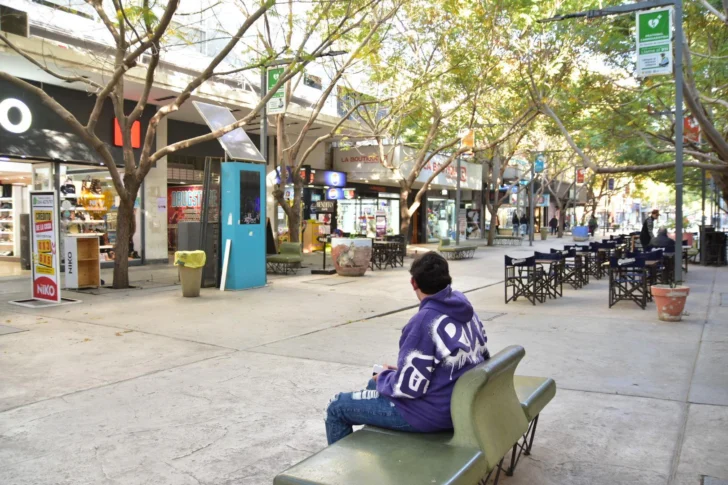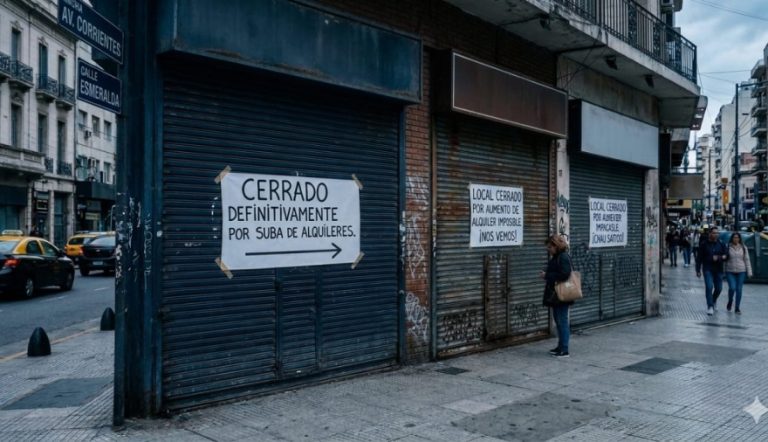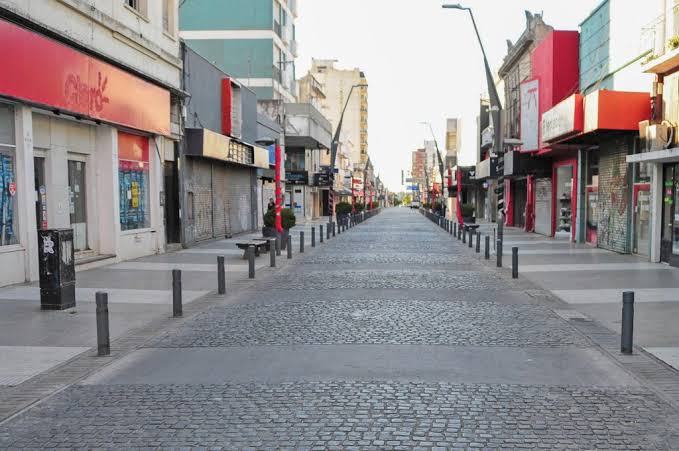
The Federación Económica de Santa Cruz estimated that the province loses between 3,5 and 4 productive units each day. The calculation combines closures of formal SMEs, cancellations of commercial permits, and contraction of independent work. Therefore, it should not be read as four employing companies closing daily. It is a composite indicator with which the entity seeks to describe the simultaneous deterioration of commerce, services, and sole proprietorship activities.
In the best-documented segment, between November 2023 and May 2026, between 350 and 400 private employer companies disappeared. The registered universe went from 3.985 firms to nearly 3.545. The year-on-year decline measured in May was 6,7%, compared to a negative national average of 3,3%. With this data, Santa Cruz was ranked as the fifth jurisdiction with the highest business destruction and lost approximately one employer with staff every two days.
The decline moved to salaried work. Data processed by Politikon Chaco and Observatorio de Economía de la Patagonia Sur indicate that between November 2023 and April 2026 formal private employment fell 16,4%. The net reduction was 10.400 jobs, leaving the total at 50.600 workers. Compared to the peak in February 2023, when 61.900 salaried positions were recorded, the accumulated difference reaches 11.300 jobs, a contraction of 18,3% in 38 months.
The provincial government also did not act as an expansionary compensation. Between December 2023 and March 2026, the public workforce decreased from 36.887 to 34.313 agents, a reduction of 7% equivalent to 2.574 positions. The report attributes this variation mainly to the freezing of vacancies generated by retirements and not to direct dismissals. When consolidating public and private employment, the loss reached 12.597 formal positions, or 12,9% of the registered wage-earning workforce in 27 months.
Río Gallegos offers the most visible municipal registration. Between 2025 and August of 2026, 637 commercial license cancellations were processed, while the active registry decreased from about 3.000 permits to approximately 2.363. The variation corresponds to a reduction of 21% and to about one cancellation per day. A license cancellation confirms the termination of an authorized activity, although it does not by itself determine whether the legal entity was dissolved, relocated, or changed its modality.
The FESC associated the chart with stagnant consumption, loss of purchasing power, lower tourist activity, oil slowdown, and an increase in rates, taxes, and other costs. Its Provincial Economic Activity Index accumulated months of decline. The entity also warned that the statistics of the Superintendencia de Riesgos del Trabajo mainly observe employers with staff, just a fraction of a framework that includes between 25.000 and 28.000 self-employed and independent workers.
The estimate of 3,5 to 4 lost units attempts to incorporate that less visible universe, but it requires a public methodology and comparable series to avoid adding overlapping categories. The central signal does appear in different records: fewer employers, fewer private positions, reduction in licenses, and lower public employment. To improve the comparison, the report should publish registrations, reopenings, changes of address, and survival of new ventures, in addition to gross deregistrations. It is also advisable to separate commerce, tourism, oil services, and construction, because each sector responds to different cycles and policies. Without that opening, the daily average serves as a warning, but it does not explain where the destruction is concentrated. The provincial response will need to differentiate between immediate commercial relief, reactivation of driving sectors, and labor protection. Measuring highs along with lows will allow knowing whether Santa Cruz is undergoing accelerated turnover or a persistent net loss of productive capacity.