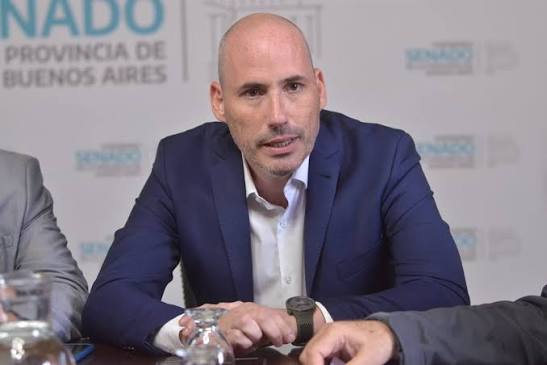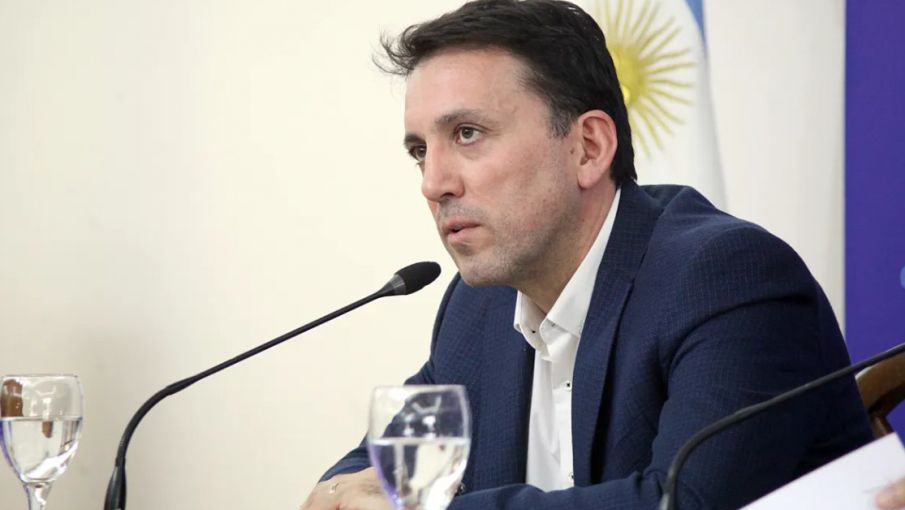
Tadeo García Zalazar supported the continuity of the PASO in Mendoza and, at the same time, asked to separate the management from the competition for the governorship in 2027. The Minister of Education, Culture, Children and DGE recognized his aspirations as a pre-candidate, but maintained that any application by an official must be built on the results of his public task and not an anticipated campaign.
The position combines two different criteria depending on the jurisdiction. García Zalazar considered the elimination of the national primaries being discussed in Congress correct, but defended the Mendoza system because, he stated, it always offered electoral competition within political spaces. This difference coincides with the position of Alfredo Cornejo's administration and preserves a tool used by the provincial ruling party to organize its internal offer.
The minister insisted that the immediate priority is the government agenda. He explained that party definitions will be adopted as electoral issues appear, but noted that today society focuses its attention on other problems. In his opinion, the conversation about candidacies circulates among the media, parties and leaders without there yet being an equivalent pre-electoral climate among the people of Mendoza.
This diagnosis coincides with that of the mayor of Godoy Cruz, Diego Costarelli, who had described the succession process as too launched and hasty. However, the agreement on timing did not eliminate the internal tension. Costarelli questioned national deputy Luis Petri, another of the names associated with the race for Sillón de San Martín, and questioned his management experience.
The mayor also linked Petri with the situation of the Institute of Social Work of the Armed Forces and used that accusation to object to his aspiration. Asked about the crossing, García Zalazar avoided going deeper into it. He responded that each leader will have a record to show during the period prior to the election and that it will be the voters who evaluate that journey when the time comes to decide.
The discussion is thus contained, but not closed. The Mendoza ruling party supports the PASO as a provincial mechanism, while several of its leaders already appear in Cornejo's succession. The next steps will not be an immediate proclamation, but rather the evolution of the efforts of García Zalazar, Costarelli and Petri and the party definition of how to use the primaries when the 2027 calendar acquires specific deadlines.