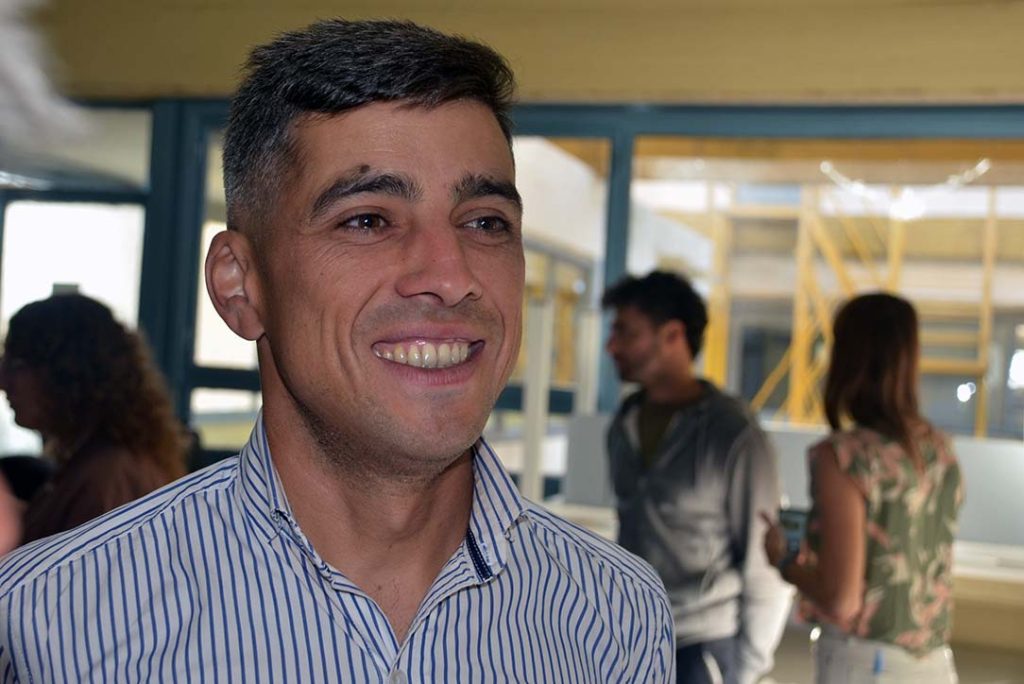
Lonquimay Mayor Manuel Feito defended the creation of Fuerza Pampa as a new provincial political tool and said the movement is not abandoning its Peronist identity, despite building outside the current structure of the Justicialist Party.
Feito explained that the new party emerged after visits to different towns and conversations with producers, business owners, mayors and residents, where he identified a demand for decision-making to be brought closer to local communities. The initiative seeks to present itself as an alternative focused on La Pampa's specific problems.
He said Fuerza Pampa was not conceived as an internal faction of the PJ but as a political force with its own structure. At the same time, he stressed that this decision does not involve moving closer to parties such as the Radical Civic Union, PRO or La Libertad Avanza.
The initiative follows the failed attempt to contest the leadership of La Pampa's Justicialist Party in 2025. Feito described that process as evidence of a desire for renewal but also as a sign of the limits of the party's current organisation.
Regarding Luciano di Nápoli, he said they share views and ideas about the province's future, while clarifying that the mayor of Santa Rosa has chosen to continue building within the PJ. Fuerza Pampa, by contrast, is moving forward as a separate organisation.
Feito also said he had not yet discussed the creation of the party with Governor Sergio Ziliotto, although he considered it likely that the issue would come up when they next meet.
The new movement is now taking its first legal steps and plans to begin recruiting members once it receives the necessary authorisation. Its challenge will be to turn an emerging identity into a province-wide electoral proposal.