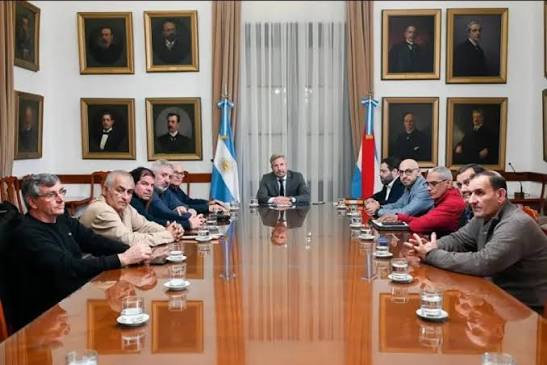
The Granja Tres Arroyos crisis reached a direct meeting between the Entre Ríos government and the unions representing the Concepción del Uruguay plant. Rogelio Frigerio received labor leaders to examine alternatives to the facility's shutdown, which has left more than 900 workers idle and claiming wages owed since late April. Government and Labor Minister Manuel Troncoso and Labor Secretary Mariano Camoirano also attended.
The governor expressed support for the affected employees and confirmed that the province would continue intervening and monitoring the dispute. That involvement already includes emergency measures. A group of workers has begun receiving a provincial subsidy of 200,000 pesos, supplemented by food assistance and a differentiated social electricity rate for families affected by the lack of activity.
The assistance provides immediate relief but does not replace restarting the plant or paying the outstanding wages. The meeting therefore focused on possible paths to recover productive and labor activity. The executive branch did not announce an agreement with the company or a date for a return to work; instead, it maintained its commitment to seek alternatives and remain in contact with the different parties involved.
Rubén Lafuente, national general secretary of the Argentine Mill Workers' Union, welcomed Frigerio's willingness to engage and said the problem extends beyond Entre Ríos because Granja Tres Arroyos operates in other provinces. He also said the governor understands the situation and is holding talks with participants in the sector. The interprovincial dimension adds actors to a crisis whose immediate impact is concentrated in Concepción del Uruguay.
Other union officials focused on preserving jobs. Carlos Molinares, organizing secretary of the Meat Federation, viewed the executive's willingness to listen to the organizations positively. Edgardo Mayer, Uatre's provincial delegate, raised the need to create conditions to attract investors capable of reviving an activity with growth potential. Daniel Leo of the Food Industry Workers' Federation highlighted the shared commitment between unions and the province to seek solutions.
The talks left several avenues open but produced no completed solution. The provincial government will continue intervening, the unions will try to preserve more than 900 jobs, and attracting investors appears as one of the alternatives mentioned, not a confirmed transaction. While that work continues, the subsidy, food assistance and social electricity rate serve as a temporary response for families that remain without work and with unpaid wages accumulating since April.