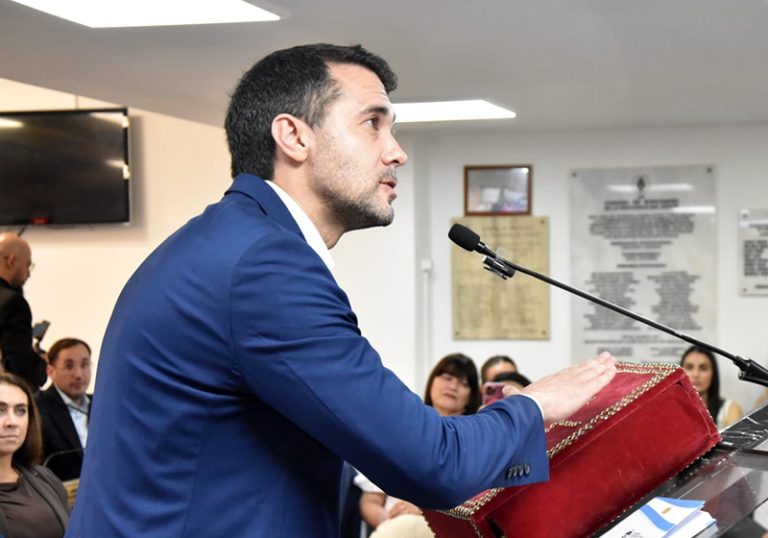
Entre Ríos' lower house completed a key stage of the 2027 budget process when the Finance and Budget Committee issued its report. Committee chair Bruno Sarubi coordinated the work, leaving the bill ready for the floor. The debate sits inside a broader agenda that includes prison staffing, public health and reform of public-works rules.
The committee report is not merely formal. It defines which observations were incorporated, which objections remain and what majority may exist for passage. In a pre-election year, the budget is also a government program because it sets resources, priorities, financial authorizations and execution capacity.
Bruno Sarubi is a central actor because the Finance Committee concentrates both technical and political negotiation. His task is not only to defend executive figures, but to organize information requests, compare revenue and spending forecasts and build predictability for floor debate.
At the same time, deputies gave preliminary approval to 100 new prison-service positions. Sarubi justified the measure with a ratio of 1,404 officers for 3,162 inmates. The figure reveals pressure on the prison system and raises issues of training, distribution, working conditions and rehabilitation capacity.
The session also moved forward on mental health, blood donation and transfers of equipment to local health services. That combination shows why the budget cannot be read separately from policies that require financing. Every new legal obligation needs funding, an authority and an evaluation mechanism.
The Public Works Committee also began reviewing amendments to Law 6,351. Reforming procurement, certification and oversight may affect how quickly budget credits become infrastructure. The challenge is faster execution without weaker transparency or competition.
Budget debate should include physical indicators as well as money. It is not enough to know allocations; legislators should know how many officers will actually be hired, which projects will finish, what deadlines apply and what outcomes are expected.
The next step is floor treatment and the subsequent legislative path. Sarubi will need to balance government discipline with room for corrections. The quality of the law will depend on realistic appropriations, limited financial authorizations and continued oversight after passage.