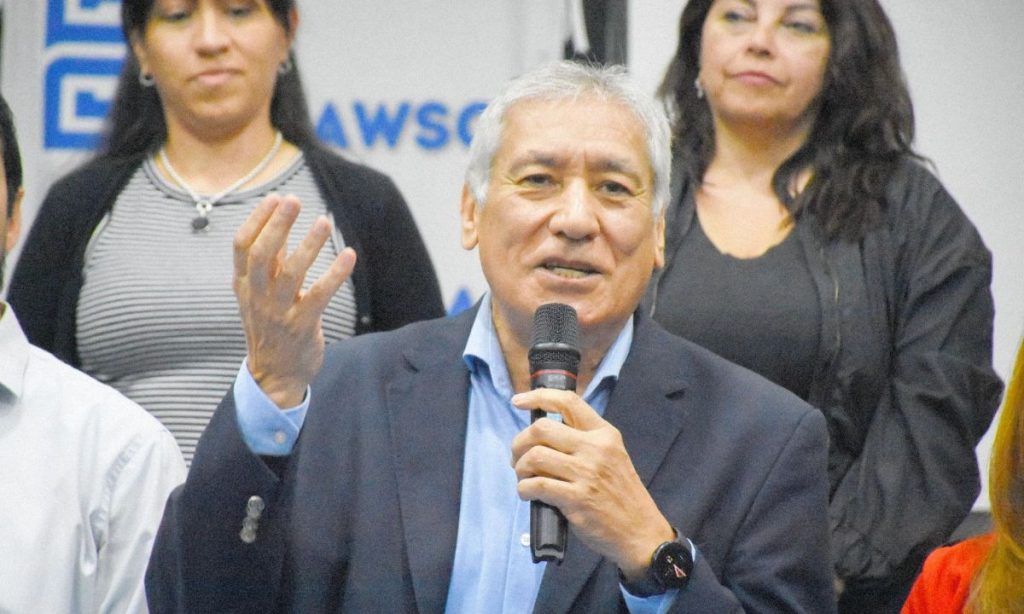
Alfredo Béliz proposed bringing forward the next provincial elections in Chubut to force the political leadership to present concrete measures in the face of the economic crisis. The head of Sindicato de Empleados de Comercio stated that he is discussing the initiative with various union and political sectors. He also reiterated that he intends to participate outside of Partido Justicialista, with an agenda focused on production, employment, and income.
The leader justified the early election as a way to prevent the province from waiting until October without discussing solutions. His assessment compares the performance of Chubut with that of Río Negro and Neuquén, districts that, he pointed out, managed to recover companies, jobs, and wages. The early election would thus function as a mechanism of pressure for each party to explain how it plans to reverse the loss of competitiveness.
Béliz argued that Patagonia needs to maintain comparative advantages capable of attracting investments and offsetting the cost of living in the south. Within this framework, he revived the concept of the Patagonian salary and announced that he will bring it to the negotiation tables. For the union leader, the historical wage difference is not a privilege, but a response to the specific economic and labor conditions of the region.
The proposal also includes a relief program for small and medium-sized businesses. Béliz maintains conversations with local SMEs and proposes tax exemptions that reduce the gap with nearby markets. The reconstruction of purchasing power and the support of the private sector appear connected in his plan: without competitive companies, he argues, the recovery of employment and wages loses a stable productive base.
The commercial reference directed his criticisms at the leaders who postpone decisions until the formal start of the campaign. He stated that the lack of commitment worsens a scenario marked by poverty, informality, and the deterioration of the social fabric. That is why he tries to shift the debate from the candidacies to the concrete tools that each group would apply to establish companies, protect SMEs, and improve income.
The initiative still does not have an agreed date or a defined institutional procedure. Its progress depends on the conversations that Béliz claims to maintain with different sectors and on the response he receives in the provincial political system. The immediate step will be to turn the union proposal into a concrete electoral proposal; until then, the advance functions as public pressure to anticipate the 2027 economic discussion.