
The growing crisis over indebtedness affecting families, which is already being addressed in various legislative projects, is also triggering decisions in public banks. The Pampas case.
Alongside Bapro, which offers refinancing for provincial and municipal state employees who receive their salaries there, and Banco Ciudad. which established a credit line to cover debts from building expenses, Banco de La Pampa is now joining in.
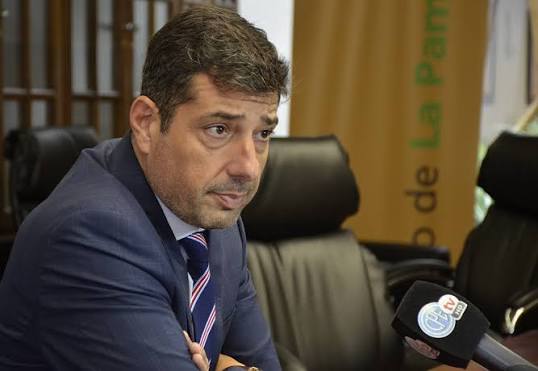
According to its head, Alexis Iviglia, the entity has already refinanced more than one billion in credit card debts and the line remains open. Both Iviglia and the province's Secretary of Labor, Marcelo Pedehontaa, are focused on presenting the proposal to different union and employer organizations, so that their members can access the benefit.
“In the case of credit cards, the Bank maintains a financing rate of 49% TNA for unpaid balances, a percentage significantly lower than the average recorded by the financial system, where rates at public banks reach 86% and those at private banks 81%, with maximums of up to 150,” they reported through a statement”.
“For those who choose to regularize their situation through a refinancing plan, the entity provides two alternatives to refinance irregular balances: one of up to 36 months, with a fixed Nominal Annual Rate (TNA) of 40%, and another of up to 72 months, with a fixed TNA of 48%. In both cases there is no amount limit and no initial payment is required to access the operation. Those rates are also below the options usually offered by the financial market,” the text adds.
The initiative by the Pampas public bank, added to the previous examples, reveals an uncomfortable reality for the national government, which tries to present it as the return of credit or the growth of consumption.
With frozen wages, public services and food on the rise, the use of cards to pay current expenses, far from being a bad decision or a marginal phenomenon. is a survival tactic for millions of Argentines, faced with the reality of their depressed wages.
*The self-employed, more complicated*
Leonardo Ferrucci is CEO of Waya, a platform that he defines as “an ecosystem of resources for entrepreneurs,” which includes a wallet and a virtual accounting adviser for monotributistas, among other services.
Waya is strong in the Buenos Aires suburbs, in traditional fairs such as La Salada, and in the provinces of the NOA. Now, it is working on its expansion toward Bolivia and Paraguay, within the framework of an agreement with Parlasur, to reduce informality, through the Latin American Organization of Independent Workers (OLTI).
“The concept of financial inclusion is often distorted, or this situation is made to look like a credit boom, when true financial inclusion does not consist of giving an expensive loan to a person. It consists of giving tools to progress without becoming trapped by indebtedness,” he illustrates.
At the same time, he warns that the problem is greater for the self-employed than for wage earners, because the blocking of an account or another type of sanction can leave them temporarily without activity. “While the Central Bank promotes banking access, thousands of people suffer account closures, preventive blocks or operational restrictions without receiving clear explanations. Each closed account represents one fewer person within the formal system”
According to his diagnosis, numerous credit lines present Total Financial Costs (CFT) above 150% and even 200% annually, while many families allocate between 40% and 60% of their income to the payment of loans and financial obligations.
In addition, he warns that currently 43% of people are in credit categories 3, 4 and 5, a situation that makes access to new financing difficult and compromises the economic sustainability of millions of households.


