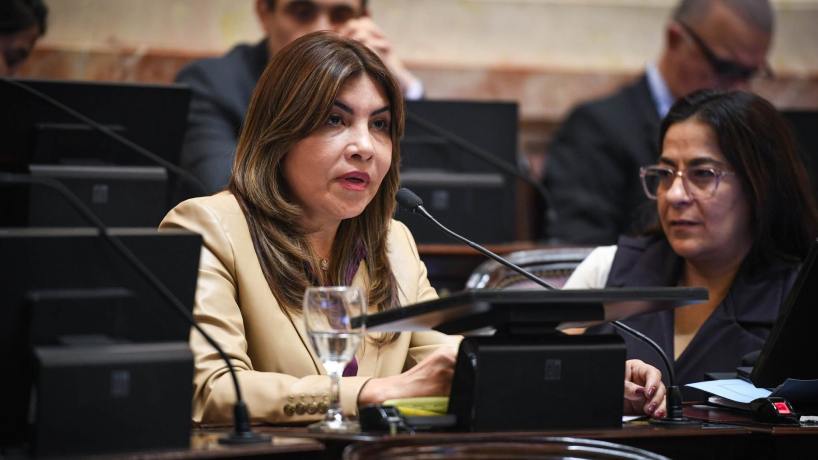
National senator Sandra Mendoza announced that she will vote against the Inviolability of Private Property project that the ruling party will take to the premises on Thursday. The Tucumán legislator, originally from Famaillá, disseminated the position of the Convicción Federal block and framed her rejection in the defense of limits on foreign ownership of rural lands.
Convicción Federal is also made up of Carolina Moisés, from Jujuy, and Guillermo Eduardo Andrada, from Catamarca. The bloc expressed a joint rejection of the foreignization of land and maintained that land should not be treated solely as a financial asset. His argument relates rural property to roots, the production of regional economies and the generation of value-added employment.
The position was disseminated after La Libertad Avanza modified its original proposal and proposed raising the limit of land in foreign hands from 15% to 25% to seek parliamentary support. Mendoza maintained his negative vote despite that correction. For his bloc, increasing the margin can favor the concentration of strategic resources in corporations and external investment funds and affect local producers.
The current Law 26,737 establishes a foreign maximum of 15% both in the national total and in each province and department. In addition, it prevents holders of the same nationality from exceeding 30% of the quota reserved for foreigners. The same foreign owner cannot acquire more than 1,000 hectares in the core zone or the equivalent surface area in other regions.
The rule also restricts operations on rural properties that contain or border permanent bodies of water and on land located in border security zones. The new scheme discussed by the Senate retains a specific prohibition for foreign states and companies directly controlled by governments of other countries. The controversy centers on how much foreign private participation can be expanded without weakening those protections.
Mendoza will arrive at the session with a definition already communicated, but the outcome will depend on the negotiation between the ruling party and the allied blocs. Convicción Federal will try to maintain a common position of its three members, while La Libertad Avanza will seek that the new 25% limit allows it to gather the majority. On Thursday it will be known if the concession modifies the result or if the rejection of the provincial representations persists.