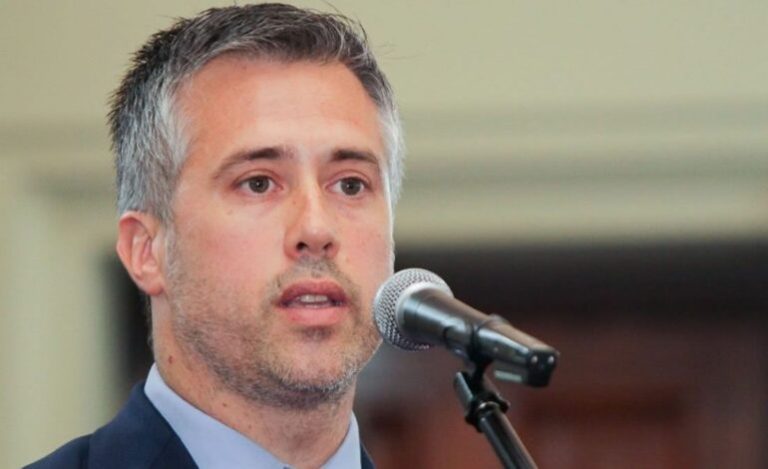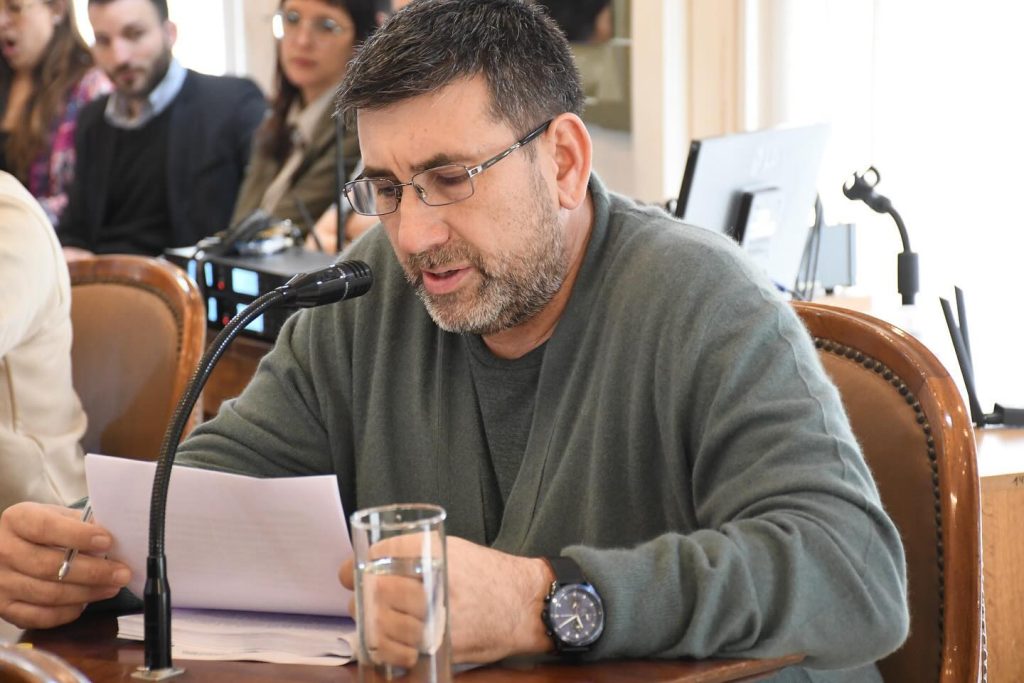
Governing-party councillor Lucas Ovejero attributed his absence during the vote on reforming Santa Rosa's Municipal Urban Services Agency to a disagreement over the pace of debate, not to a split with his caucus. His empty seat had triggered speculation because the Deliberative Council was considering a significant change to the municipal body. Ovejero said the outcome had already been decided and his presence would not have changed the approval.
Ovejero said the absence was justified and had been reported beforehand to both the caucus leader and the council president. With that explanation, he sought to dispel the idea that he had unexpectedly vanished from the chamber. The political issue, however, went beyond the formal notice: the councillor acknowledged that he had requested more time before voting on the project promoted by the municipal executive branch.
The requested delay responded to concerns raised by unions and the Construction Chamber. Those sectors wanted to be received to present observations about the EMSU reform, while the executive had decided to move ahead with approval. Ovejero believed the proposal required additional discussion and chose not to take his seat, even though he acknowledged that his decision would not prevent the initiative from securing the necessary votes.
His explanation separates two levels. Institutionally, the reform advanced despite the absence and confirmed the governing party's ability to pass it. Internally, Ovejero's conduct marked an objection to the pace chosen by the municipal government but not opposition strong enough to break the caucus. The councillor said relations within the Pampean Justicialist Front bloc remain intact because the disagreement had been discussed.
Ovejero also addressed Fuerza Pampa, the internal current promoted by a group of Justicialist Party mayors. As president of Santa Rosa's Local Council of Basic Units, he distanced himself without turning the difference into a confrontation. He said he works to strengthen the organised Peronist structure, provide tools to activists and bring in residents, while respecting leaders who seek other spaces because they do not feel represented.
The EMSU episode has thus become part of a wider political debate about how differences are processed within Santa Rosa's governing coalition. Ovejero defended the continuation of provincial policies and identified national-government decisions as the main opponent of Pampean Peronism. With the vote already concluded, the unresolved question is not the result but whether unions and builders will receive a later hearing and how the PJ will organise its internal debate.