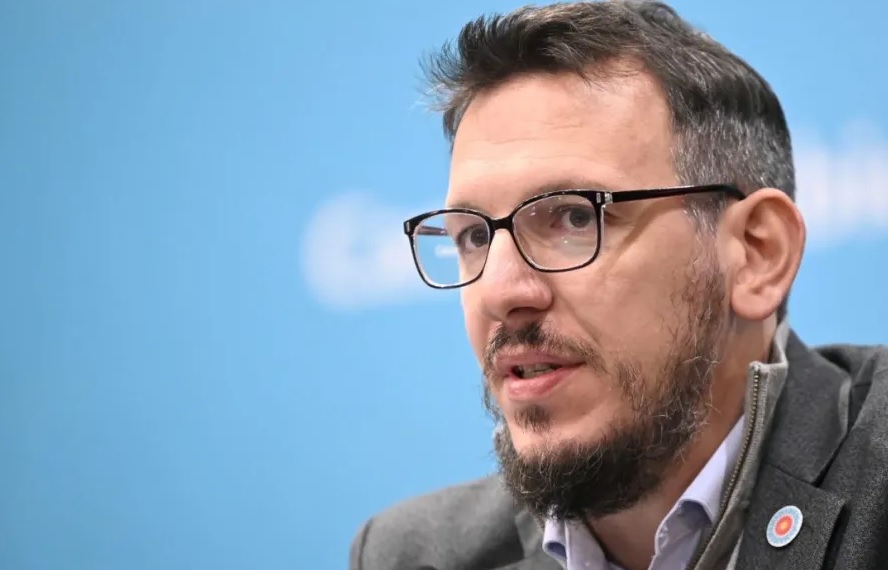
A special edition of the rural agenda brought together perspectives on investment, profitability, regulation, and agricultural technology. Juan Cuattromo, president of Banco Provincia, presented credit tools and argued that a model without investment has limits in duration. His intervention positioned productive financing as a condition to expand capacity and sustain projects in a demanding scenario.
Marcelo Regúnaga, former Secretary of Agriculture, questioned why reforms related to land and fire management had not progressed. He proposed a technical approach and asked not to apply identical criteria to regions with different environments. That position expresses his view on regulation; it does not amount to an already approved regulatory change nor to a Government definition.
The economic situation of the producers appeared in the analysis of Andrea Sarnari, president of Federación Agraria Argentina. The leader stated that 80% of the producers are not going through a good time and that numerous units have profitability problems. The percentage corresponds to her sectoral evaluation and serves to describe a concern, although it was not accompanied by a detailed statistical basis.
Innovation occupied another segment of the discussion. Marcelo Torres, from Aapresid, and Patricio Frydman, from Exponenciar, reviewed debates from the 34ª edition of the Aapresid Congress and the work alliance projected for 2027. Darío Guardado presented an overview of the meeting, which functioned as a space to exchange technical experiences and definitions regarding productive systems.
In the crops, Santiago Galán, of the Network of CREA Group Associations from the central-northern Santa Fe, he highlighted the potential of sorghum and pointed out that technology and genetics need appropriate conditions to translate into results. Fernando Bertello, for his part, reported an increase in agricultural machinery sales in July based on data from ACARA.
The set of interventions offers a broad picture, not a single conclusion. Credit, regulations, margins, genetics, technical events, and equipment sales respond to different issues. The opinions gathered make it possible to identify priorities in the agricultural sector, but the figures and proposals retain the attribution of each participant and do not in themselves constitute executed policies, investment commitments, or closed political or commercial agreements.